John Berger Reflects on the Life and Death of Palestinian Poet Mahmoud Darwish
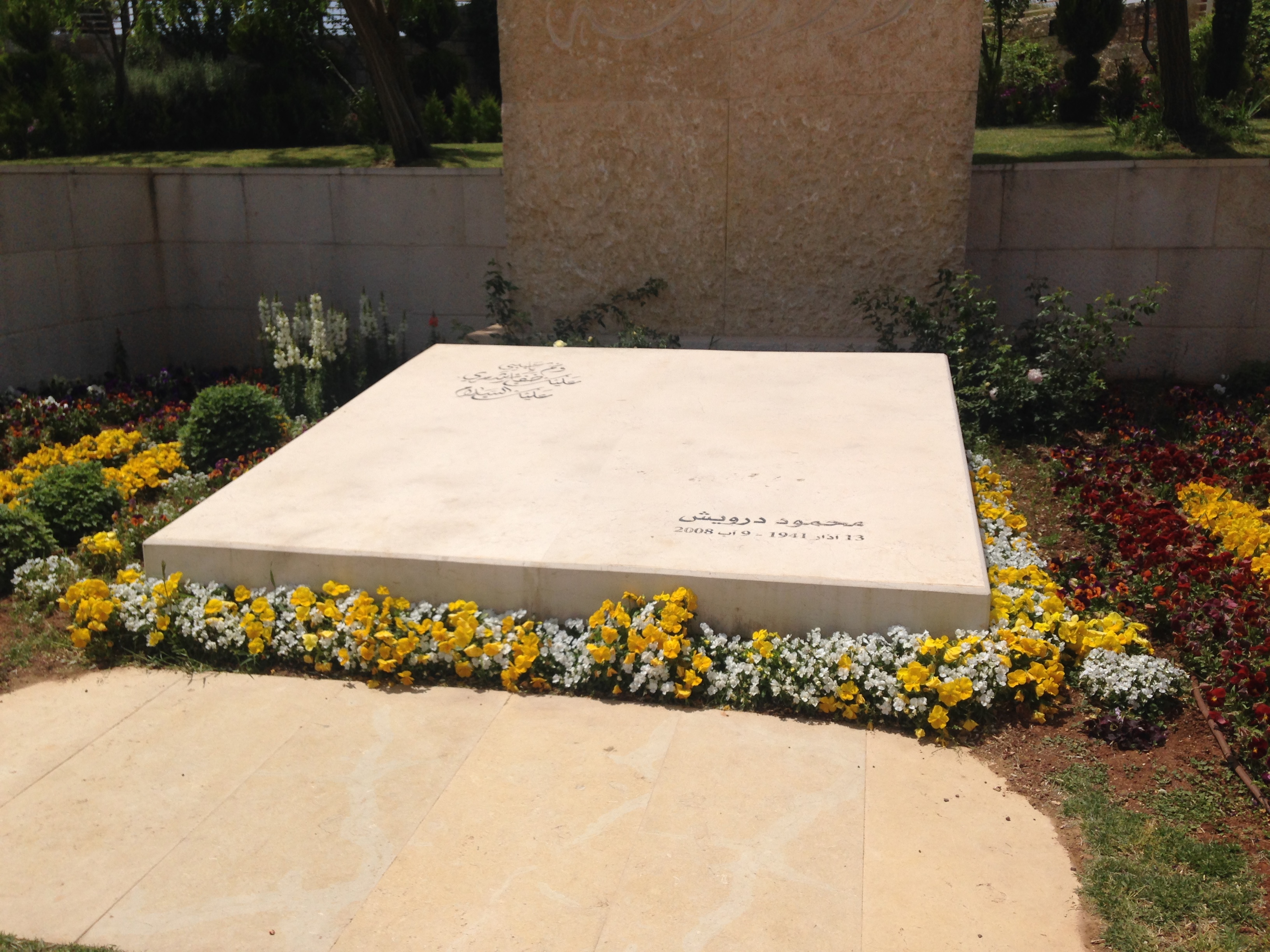
JB: There’s a small hill called Al Rabweh on the western outskirts of Ramallah, it’s at the end of Tokyo street. Near the top of this hill the poet Mahmoud Darwish is buried. It’s not a cemetery.
The street is named Tokyo because it leads to the city’s Cultural Centre, which is at the foot of the hill, and was built thanks to Japanese funding.
It was in this Centre that Darwish read some of his poems for the last time—though no one then supposed it would be the last. What does the word last mean in moments of desolation?
We went to visit the grave. There’s a headstone. The dug earth is still bare, and mourners have left on it little sheaves of green wheat—as he suggested in one of his poems. There are also red anemones, scraps of paper, photos.
He wanted to be buried in Galilee where he was born and where his mother still lives, but the Israelis forbade it.
*
JB: At the funeral tens of thousands of people assembled here, at Al Rabweh. His mother, 96 years old, addressed them. “He is the son of you all,” she said.
In exactly what arena do we speak when we speak of loved ones who have just died or been killed? Our words seem to us to resonate in a present moment more present than those we normally live. Comparable with moments of making love, of facing imminent danger, of taking an irrevocable decision, of dancing a tango. It’s not in the arena of the eternal that our words of mourning resonate, but it could be that they are in some small gallery of that arena.
I recently visited the grave of Darwish in April, 2017, when the first photo above was made; my third visit to the site in just under sixteen months.