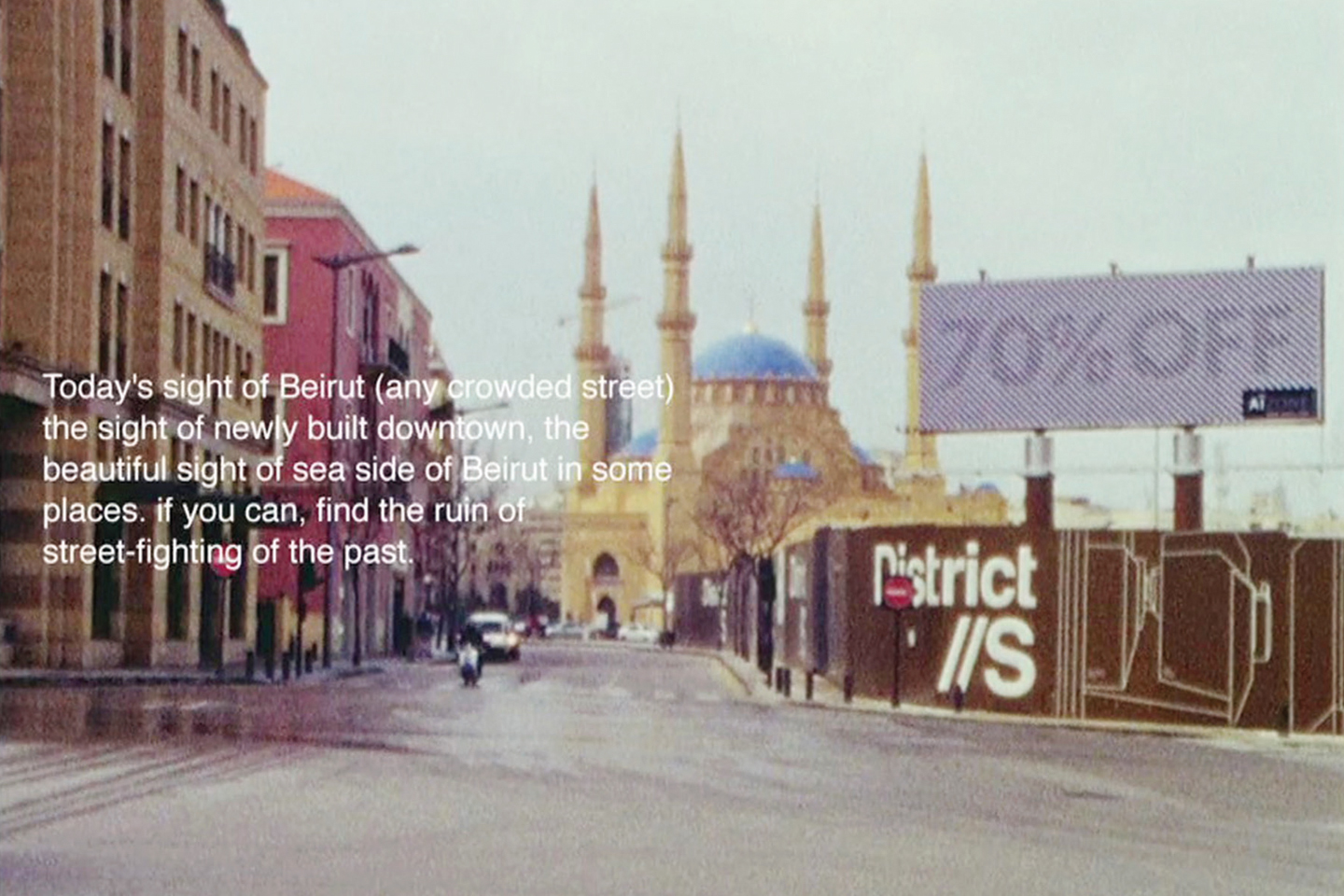
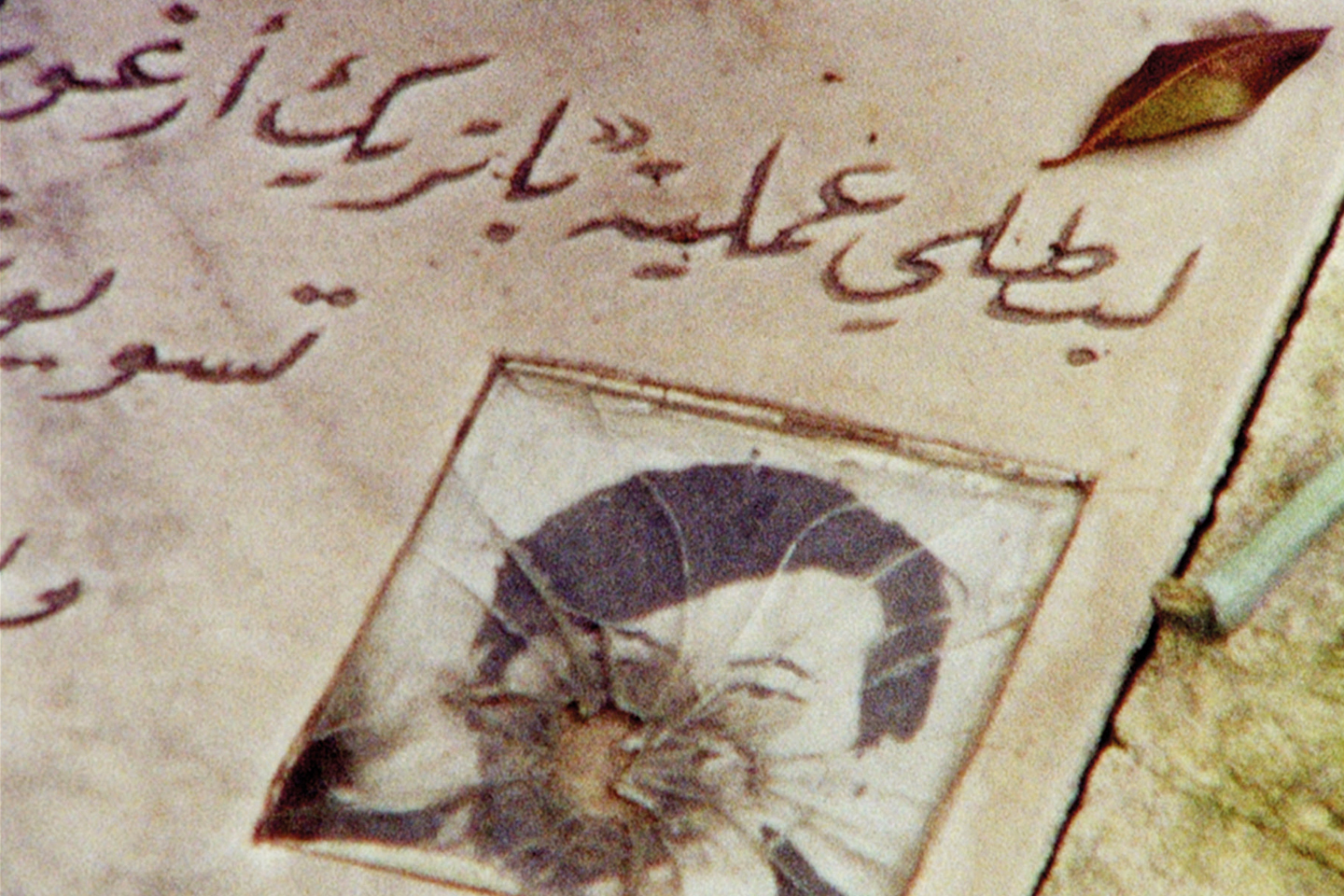
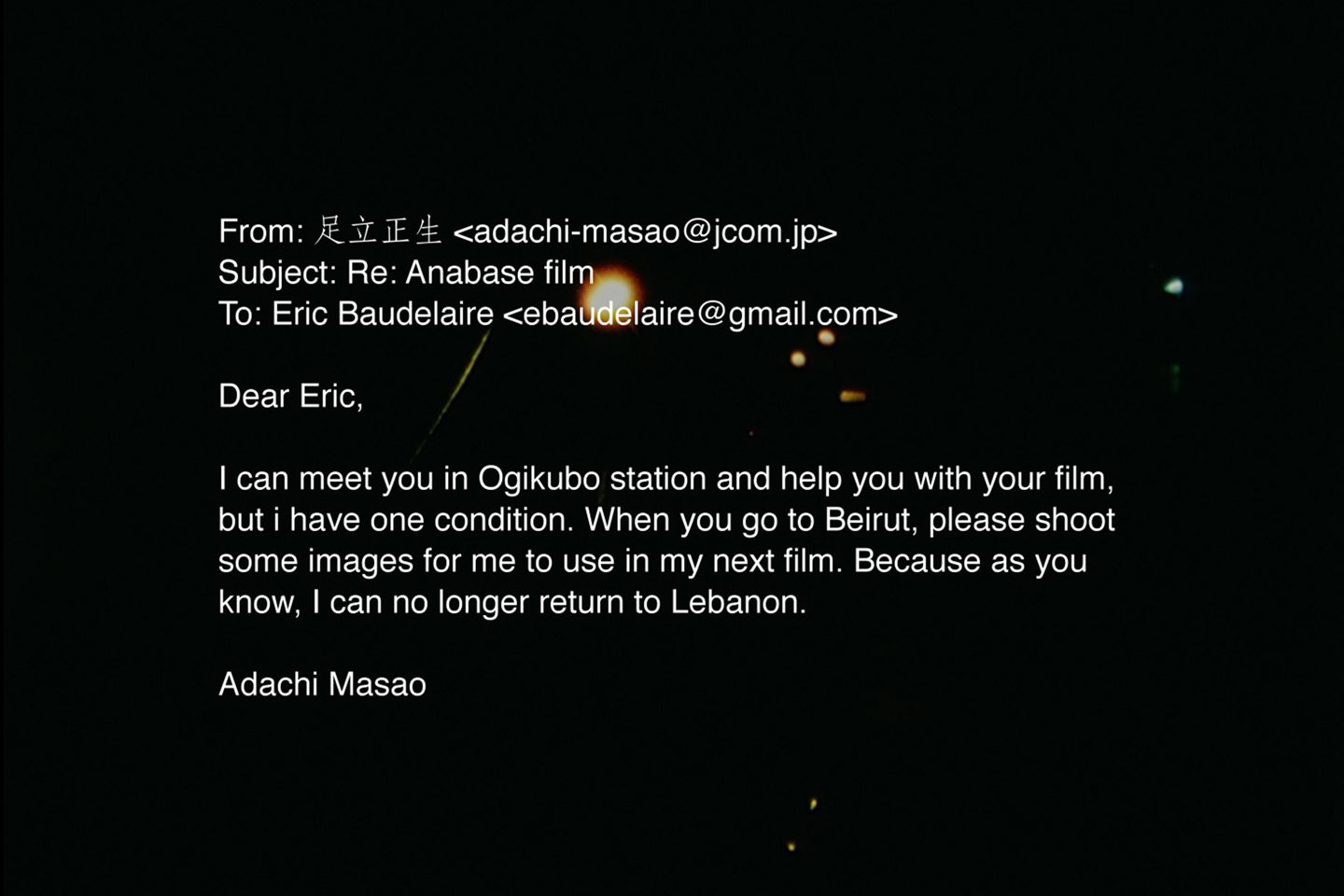
Anna Gritz: The core structure of Also Known As Jihadi is based on the combination of two types of material. First, footage of land and terrain in the tradition of Masao Adachi’s so-called landscape theory or fukeiron, a strategy that Adachi implemented in his 1969 film AKA Serial Killer, which suggests the possibility of creating a portrait of someone through capturing the physical landscape that shaped him or her during their lifetime. And second, shots of judicial documents that follow the movements and actions of the lead character and his associates. This is not the first time that you have worked with the foil of Adachi’s landscape theory. It featured prominently in your film The Anabasis of May and Fusako Shigenobu, Masao Adachi and 27 Years without Images (2011). What made you return to it for this project, and how do you see it working in relation to the legal material?
Eric Baudelaire: The important word in your question is “foil.” I am not interested in a dogmatic way in the so-called landscape theory. Not as a disciple. I am interested in its potential to raise questions about the social and political context of a place, and the relationship between this context and the kind of alienation that leads certain individuals toward trajectories of violence. It seemed like an interesting starting point to explore the journey undertaken by the young man who is the subject of Also Known As Jihadi. But the title is also important: it implies that the true nature of this person remains hors champs, outside of the frame. The film is about what he is “also known as.” I use the landscape theory as a foil because I accept the notion that it fails, that it is inexact, that it raises questions instead of giving answers, and this is the only position I feel capable of adopting for a film like this. The same ambiguity is true about the surveillance and judicial documents that form the narrative track of the film. They tell a story. But it’s the story told by the state surveillance and judicial apparatus in the face of a phenomenon it doesn’t really know how to process. A thousand French men and women have gone to Syria. Once there, it becomes very complicated to know who traveled in solidarity with the Syrian people fighting Bashar al Assad; who has followed the path because they felt they didn’t have a place in France; who traveled with hopes for martyrdom; who will return dejected and disappointed; and who will return intent on shooting up a crowd at a death metal concert. I combed through piles of court cases concerning returnees who were judged, often with a very heavy hand, in the aftermath of the November Paris attacks. I decided to look for trajectories that contained a certain ambiguity.
Empathy and Contradictions: Eric Baudelaire •Mousse Magazine