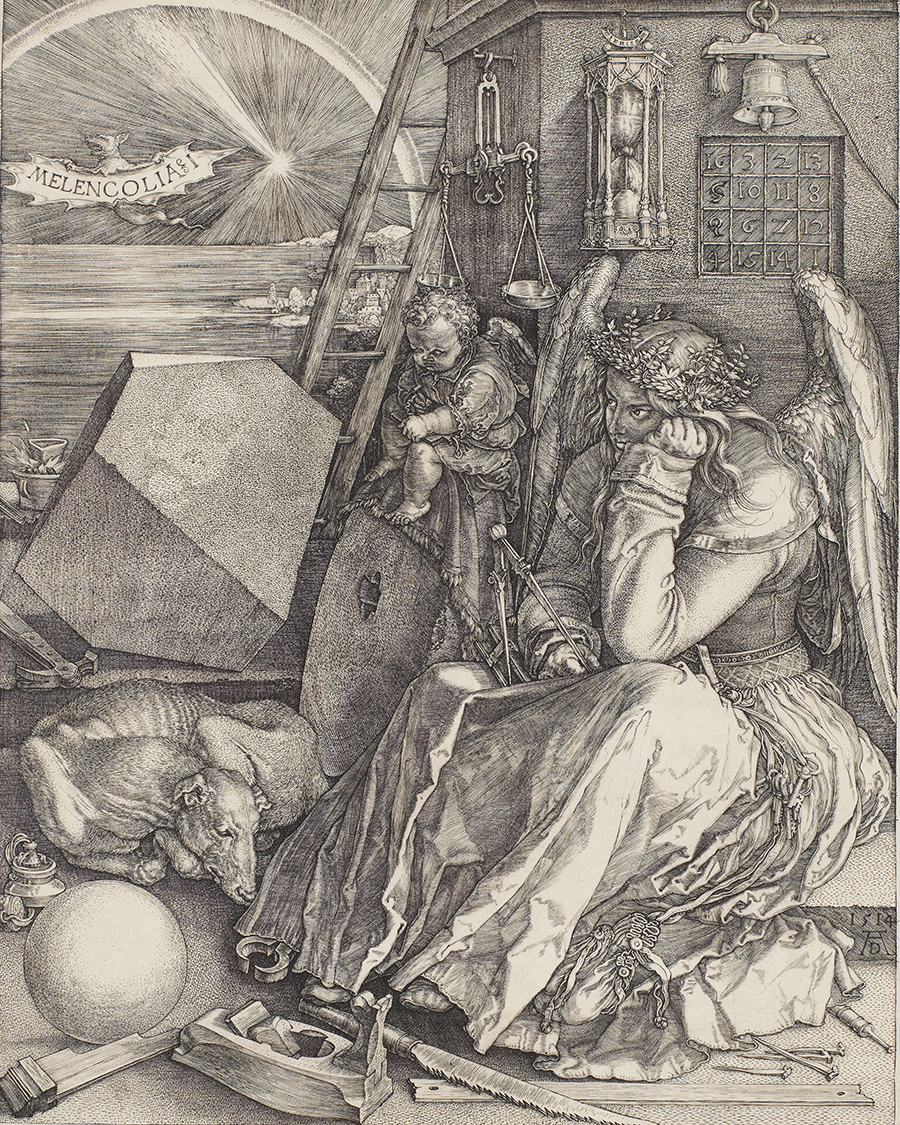
In “Revisiting Hell,” a short piece on the exhibition Melancholia. A Sebald Variation currently on display at King’s College London, Houman Barekat writes:
The late-20th-century German author W.G. Sebald was in the habit of befuddling his readers by interspersing his prose with photographs – invariably sans explanatory captions, and all the more absorbing for it – so there is something rather apt about a Sebald-themed exhibition in which visual art is foregrounded, and the written word relegated to a tersely informative minimum. ‘Melancholia: A Sebald Variation’ presented at King’s College London’s exhibition space in Somerset House, the Inigo Rooms, marks two decades since Sebald gave the Zurich lectures that would appear in book form as Luftkrieg und Literatur (1999) and later, courtesy of Anthea Bell’s translation, as the posthumous On the Natural History of Destruction (2003). These lectures looked back at the Allied fire-bombing of German towns and cities during the Second World War, and explored the reluctance of postwar German society – due to a mixture of shame, trauma and ingrained cultural diffidence – to speak openly about it. Sebald’s sensitive probing of the German collective psyche was jarringly juxtaposed with harrowing accounts of the carnage, such as this description of the bombing of Hamburg during Operation Gomorrah in 1943:
‘only a quarter of an hour after the first bombs had dropped the whole airspace was a sea of flames as far as the eye could see … At its height the storm lifted gables and roofs from buildings, flung rafters and entire advertising hoardings through the air, tore trees from the ground and drove human beings before it like living torches. Behind collapsing facades the flames shot up as high as houses, rolled like a tidal wave through the streets at a speed of over 150 kilometres an hour, spun across open squares in strange rhythms like rolling cylinders of fire. The water in some of the canals was ablaze.’
Sebald’s subject was not war per se, but memory. It is therefore fitting that the artworks in ‘Melancholia: A Sebald Variation’ do not, for the most part, bear documentary witness in the way we might expect of, say, a show at the Imperial War Museum. With the notable exceptions of Wilhelm Rudolph’s ink drawings from the ruins of Dresden made in the final months of the war, and photographs taken by Hermann Claasen, Erich Andres and Richard Peter of the wreckage of Cologne, Hamburg and Dresden respectively – Claasen’s 1946 Fronleichnamsprozession, which captures a long line of nuns filing past a backdrop of Cologne’s utter devastation, is breathtakingly arresting – the majority of the exhibits are not contemporaneous testimonies but engage with the subject allusively, at a considerable remove in time and space.
[…]
The German electorate has this week returned Chancellor Merkel to power for a fourth term, but the rise of the far-right AfD (Alternative for Germany) party, which has just won its first parliamentary seats with some 12.6% of the vote, has raised the spectre of German nationalism for the first time in generations. Germany, it seems, is far from immune to the toxic populism that has swept across much of the Western world in the past couple of years. There is an old adage that those who forget their history are doomed to repeat it. It took the German nation – with the help of Sebald and the other German writers of his generation – decades to truly confront the suffering and trauma that resulted the last time Europe gave free rein to its basest impulses. Let’s hope their efforts have not been in vain.