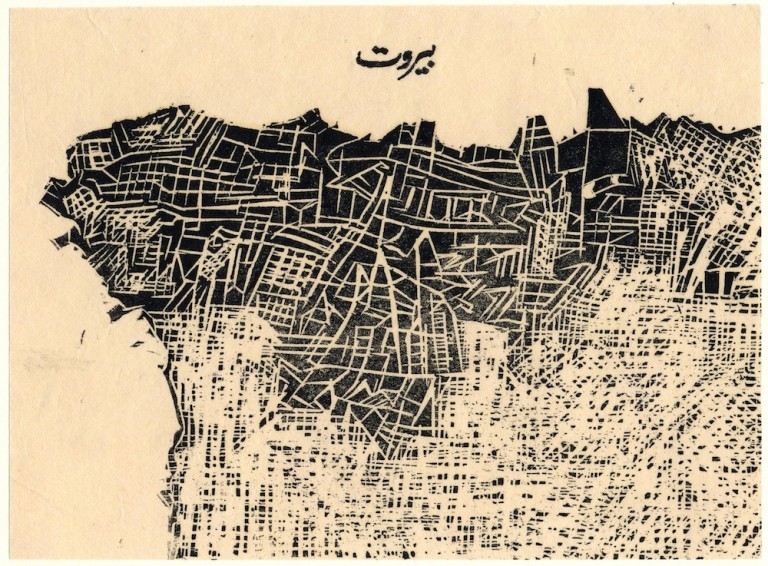
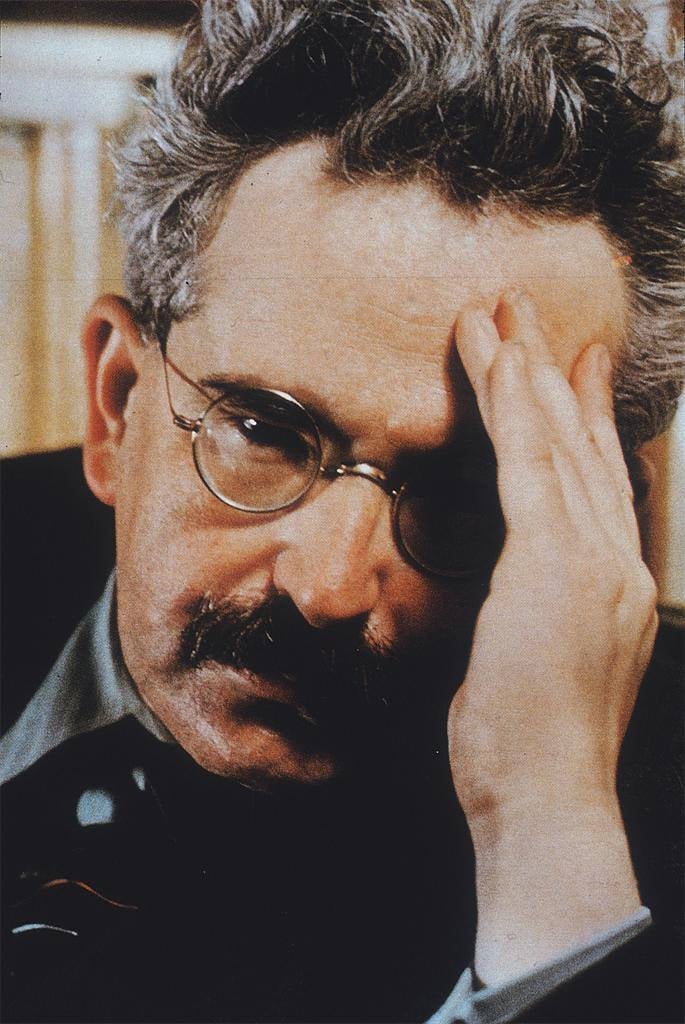
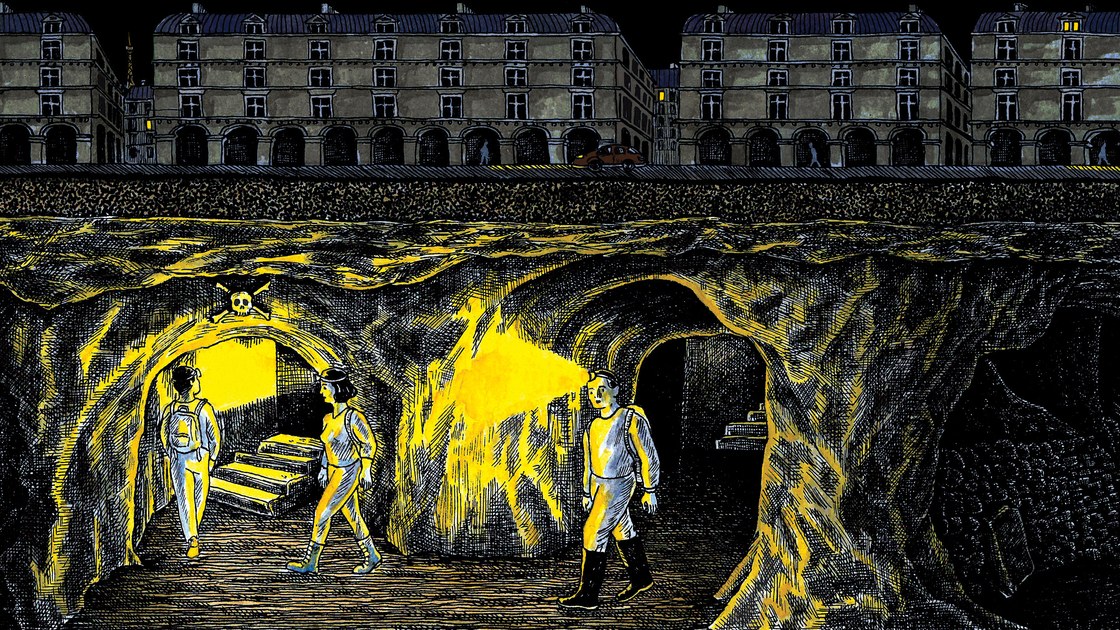
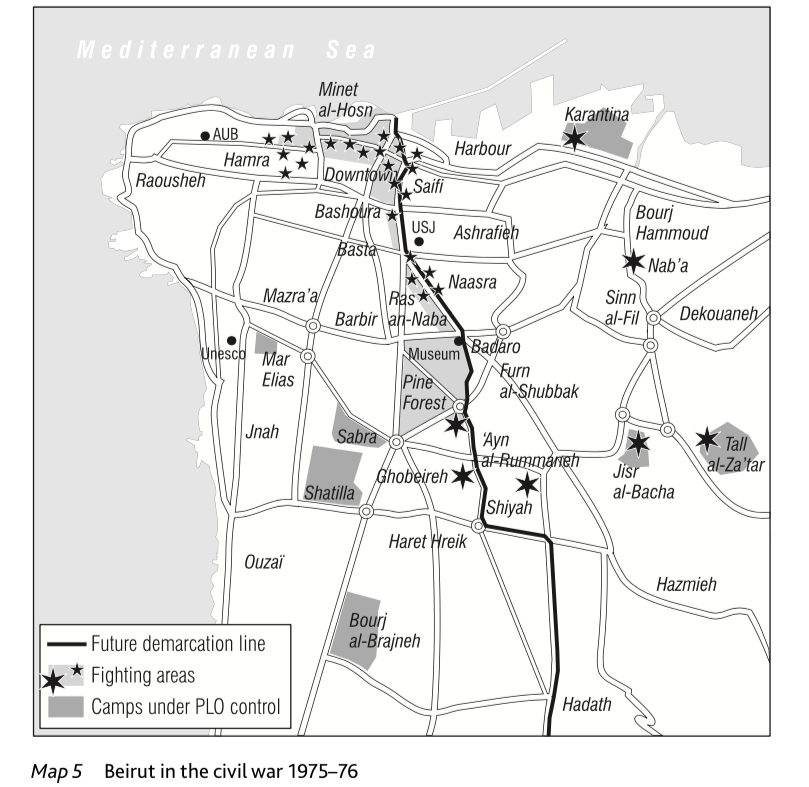
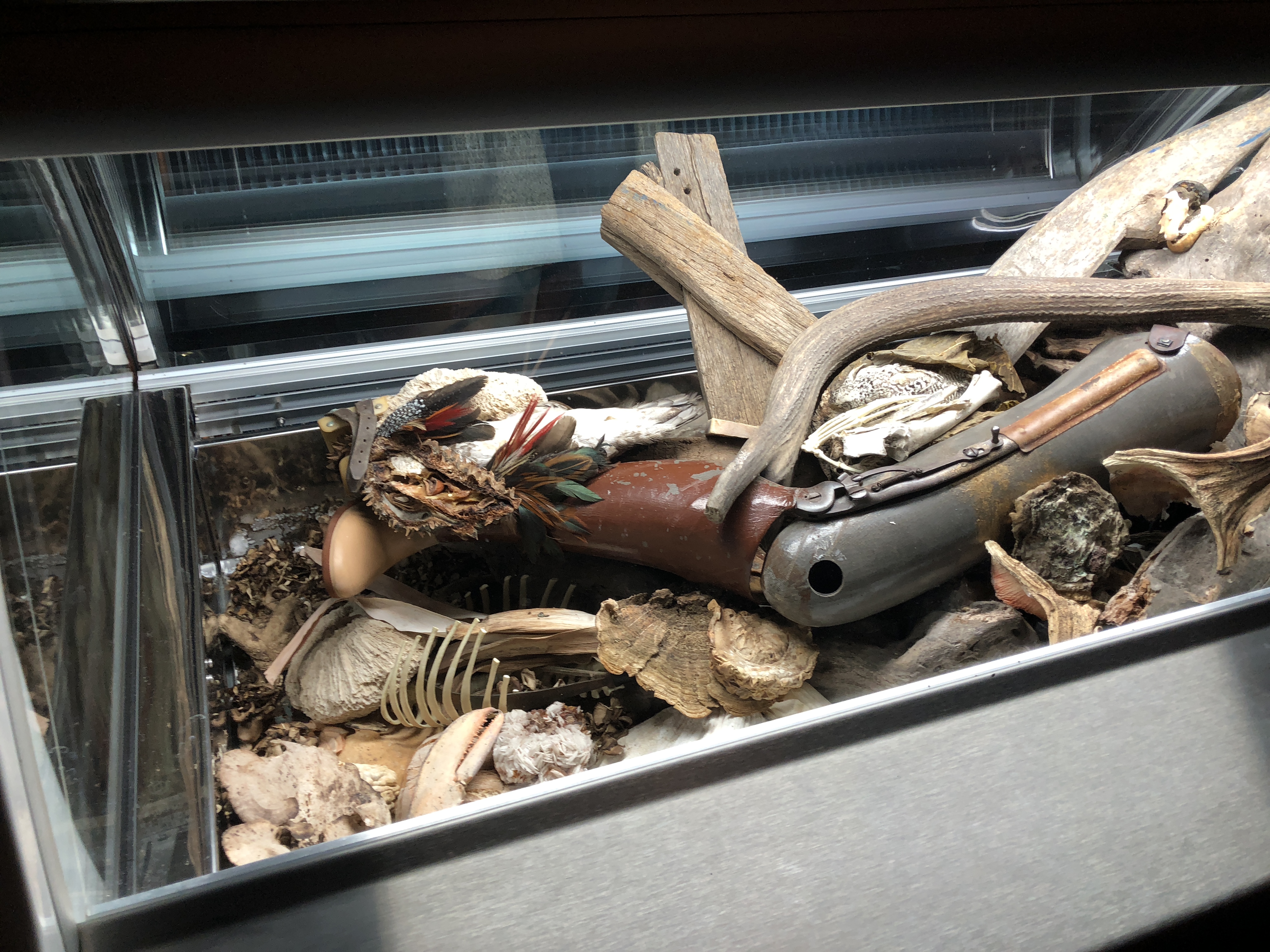
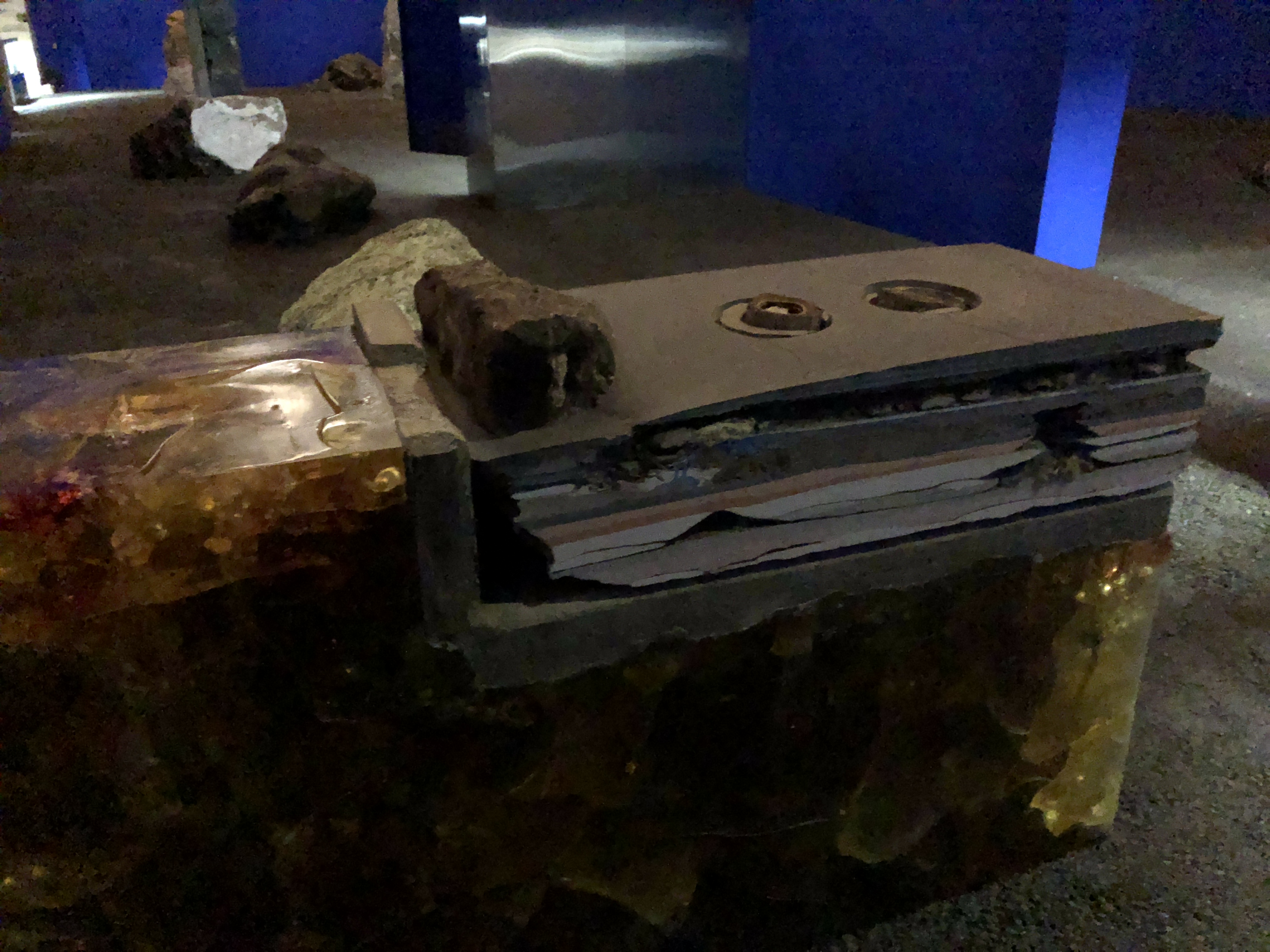
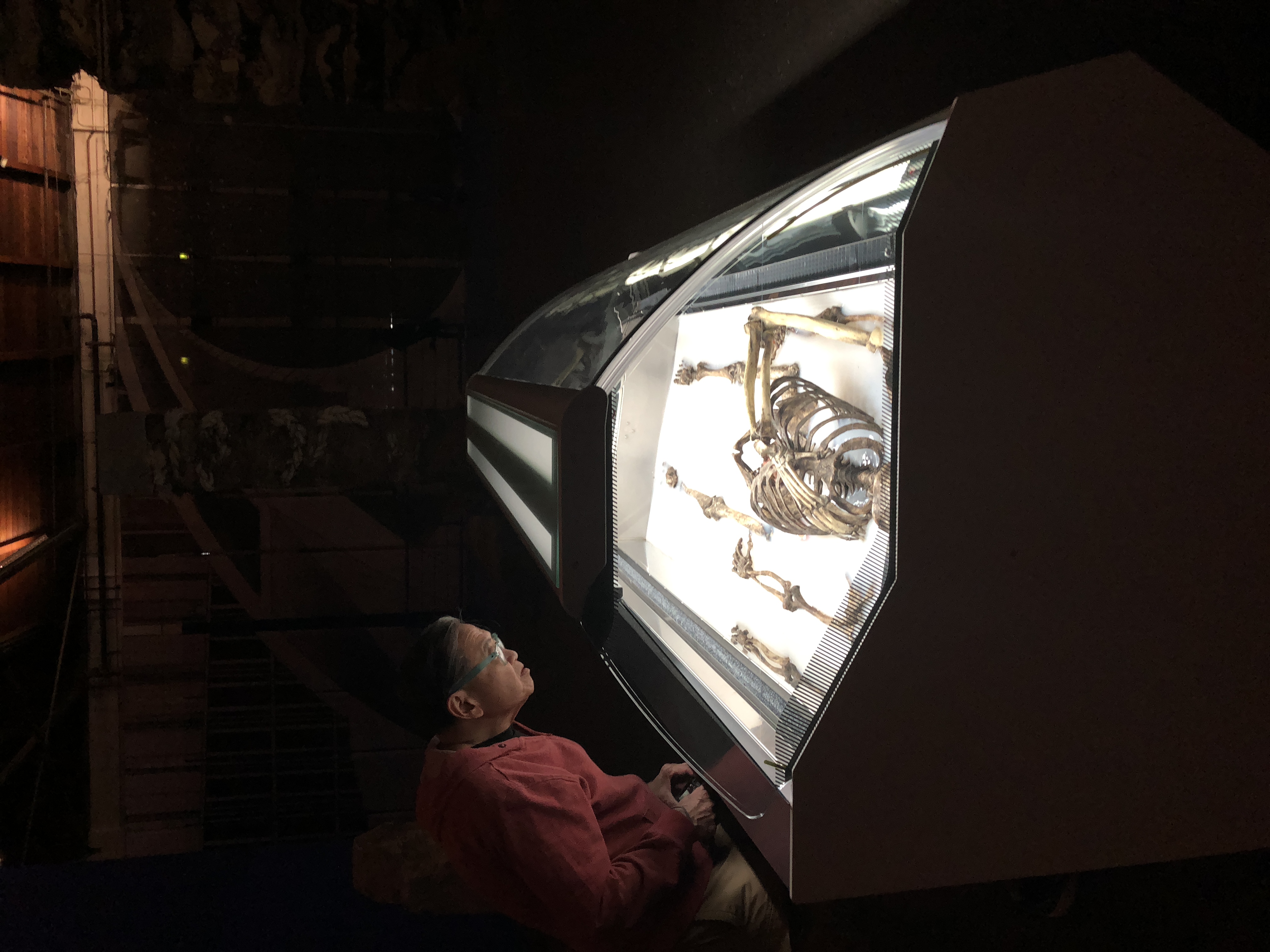
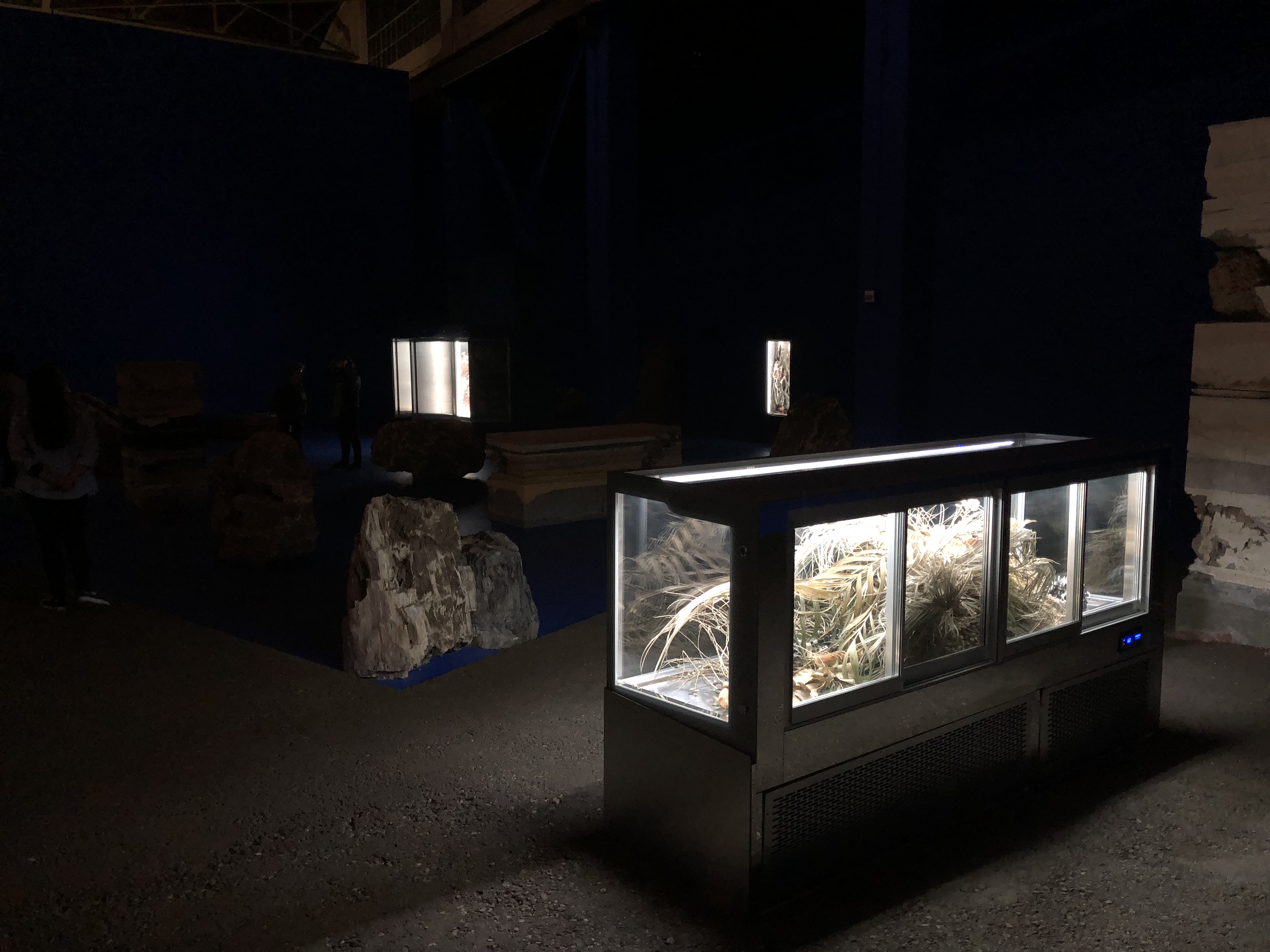
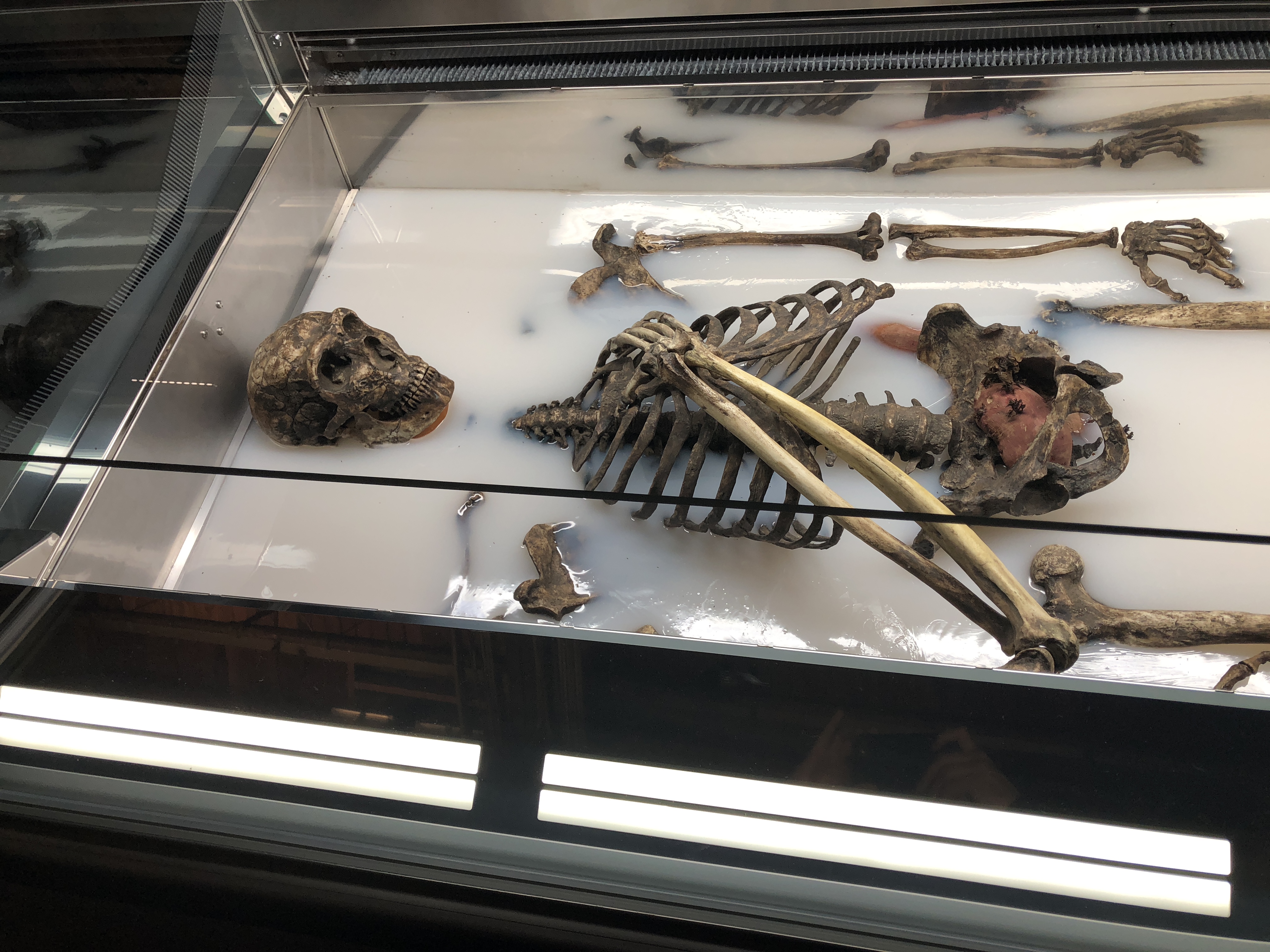
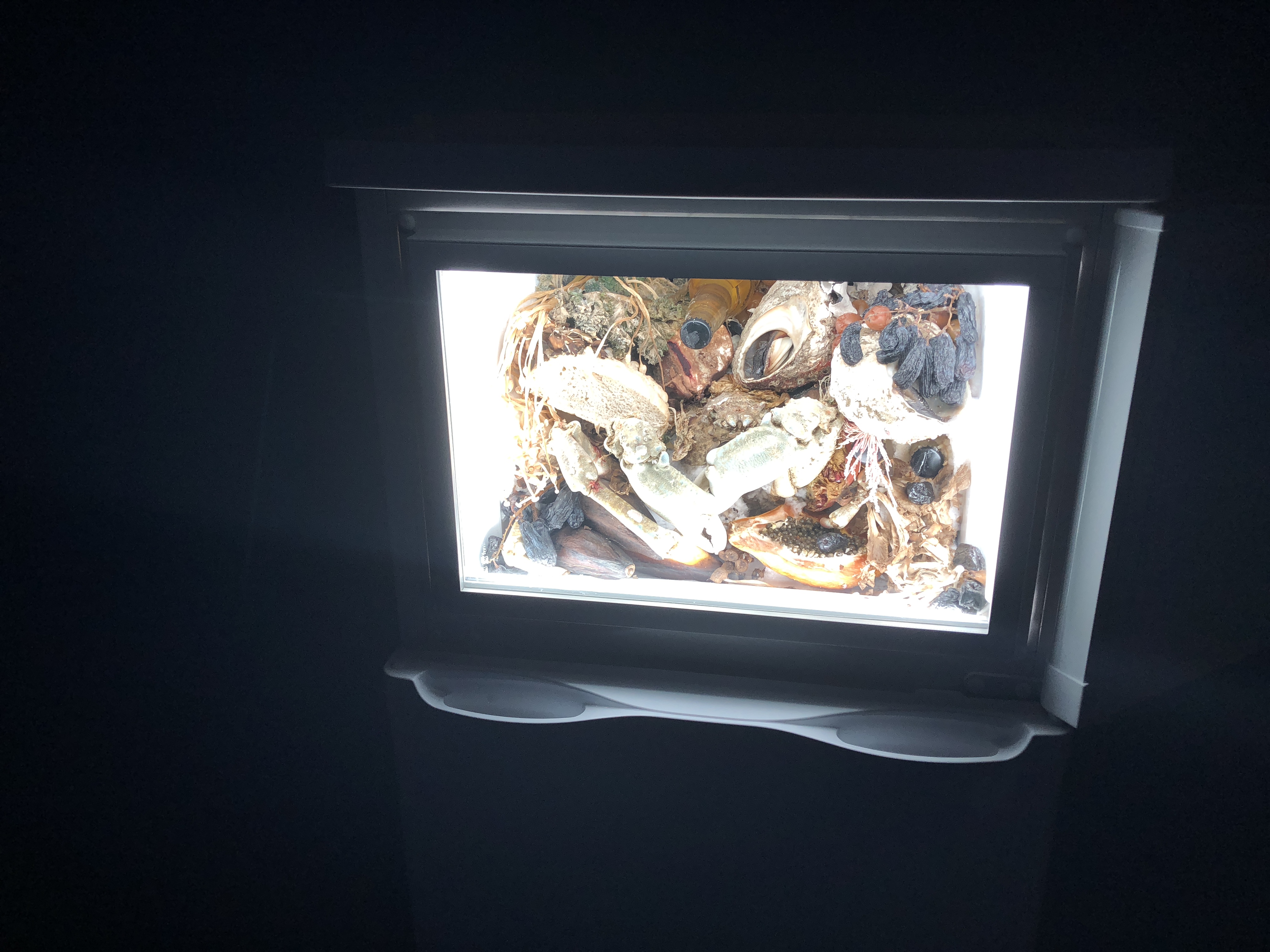
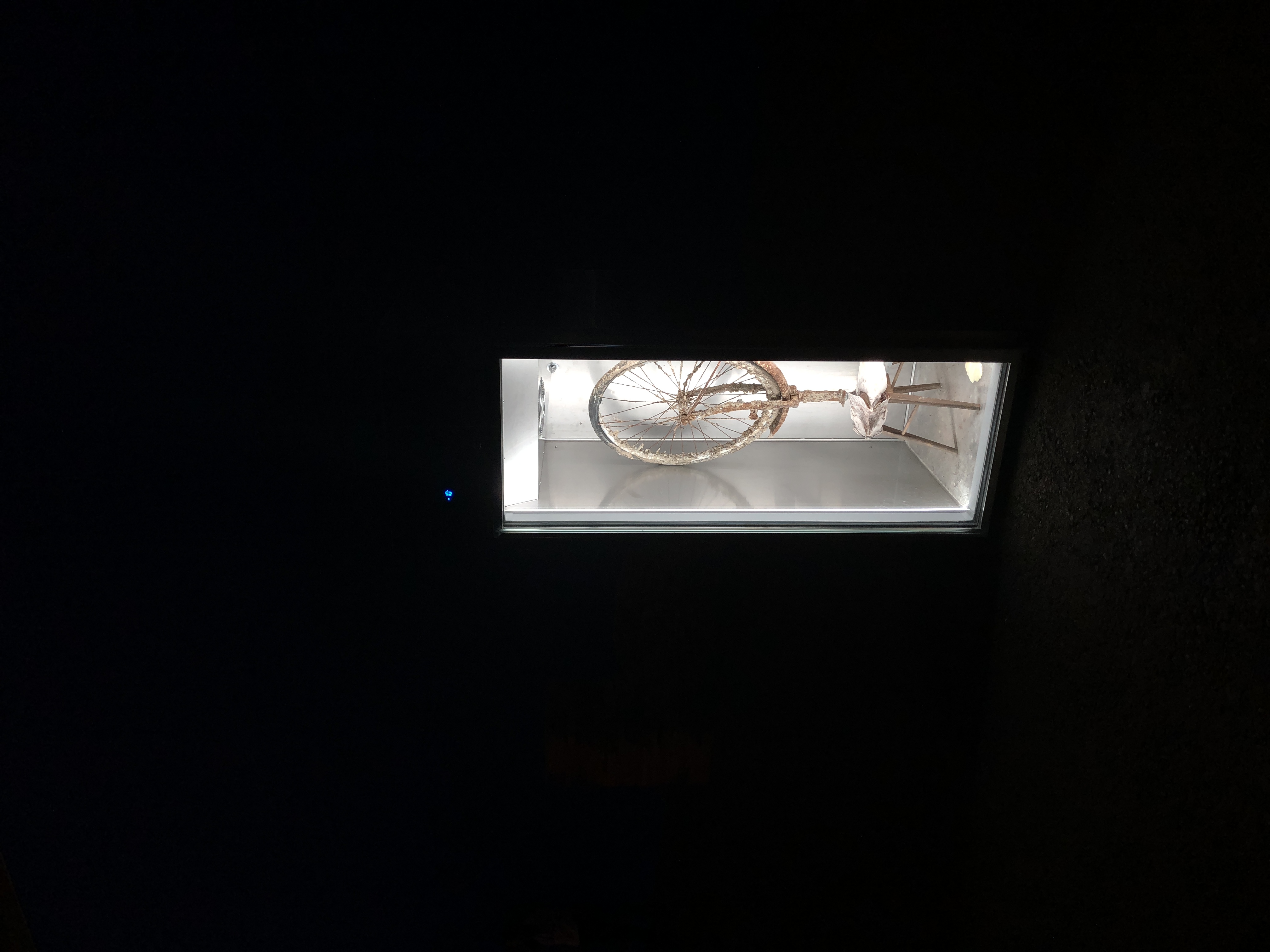
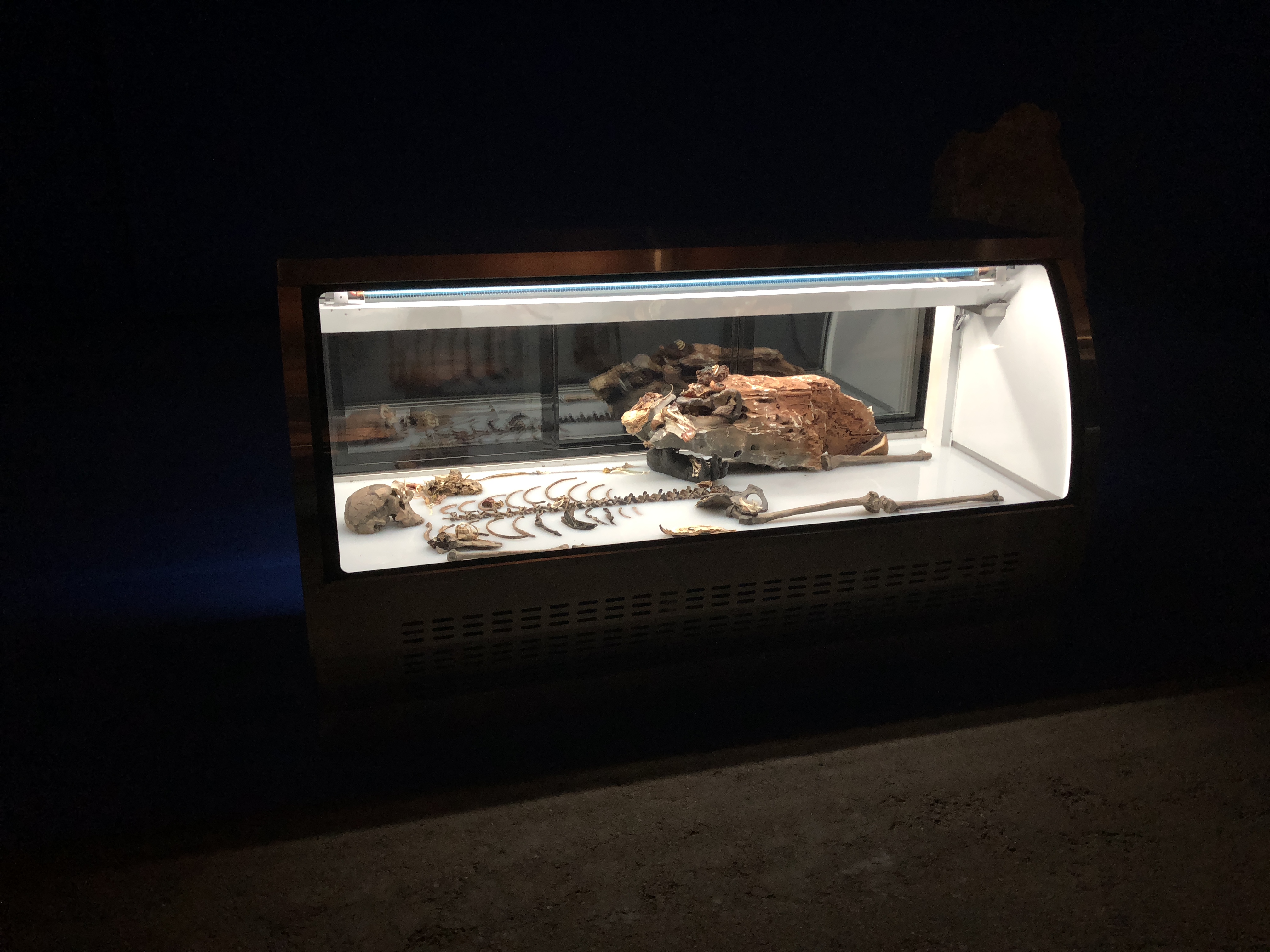
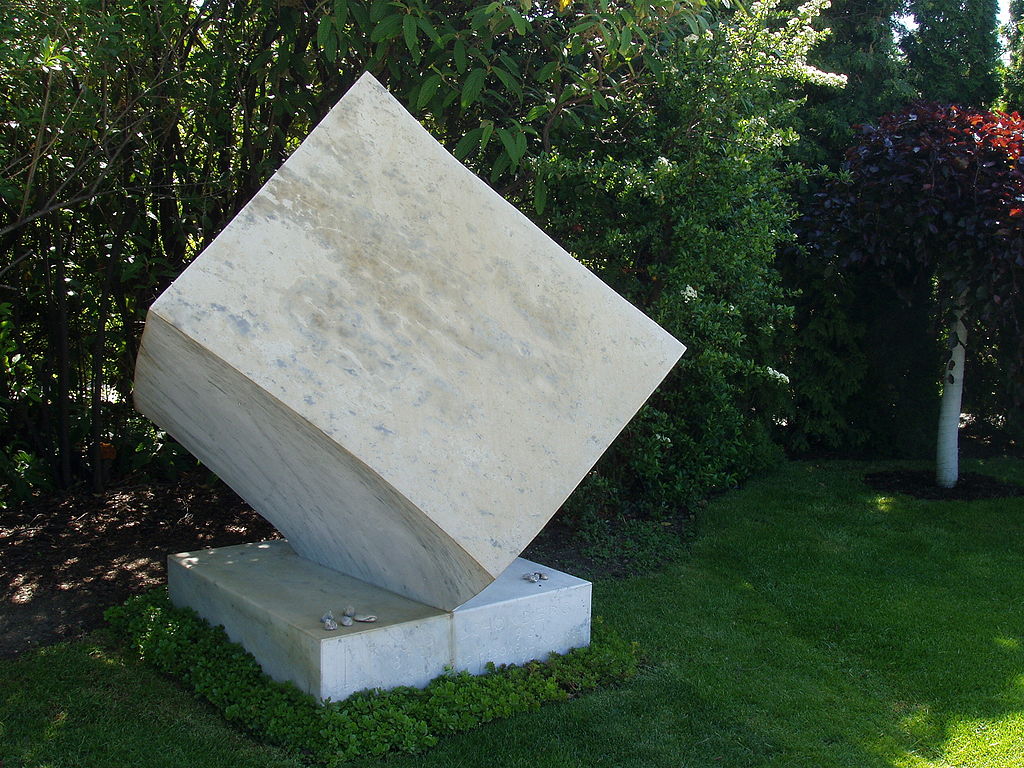
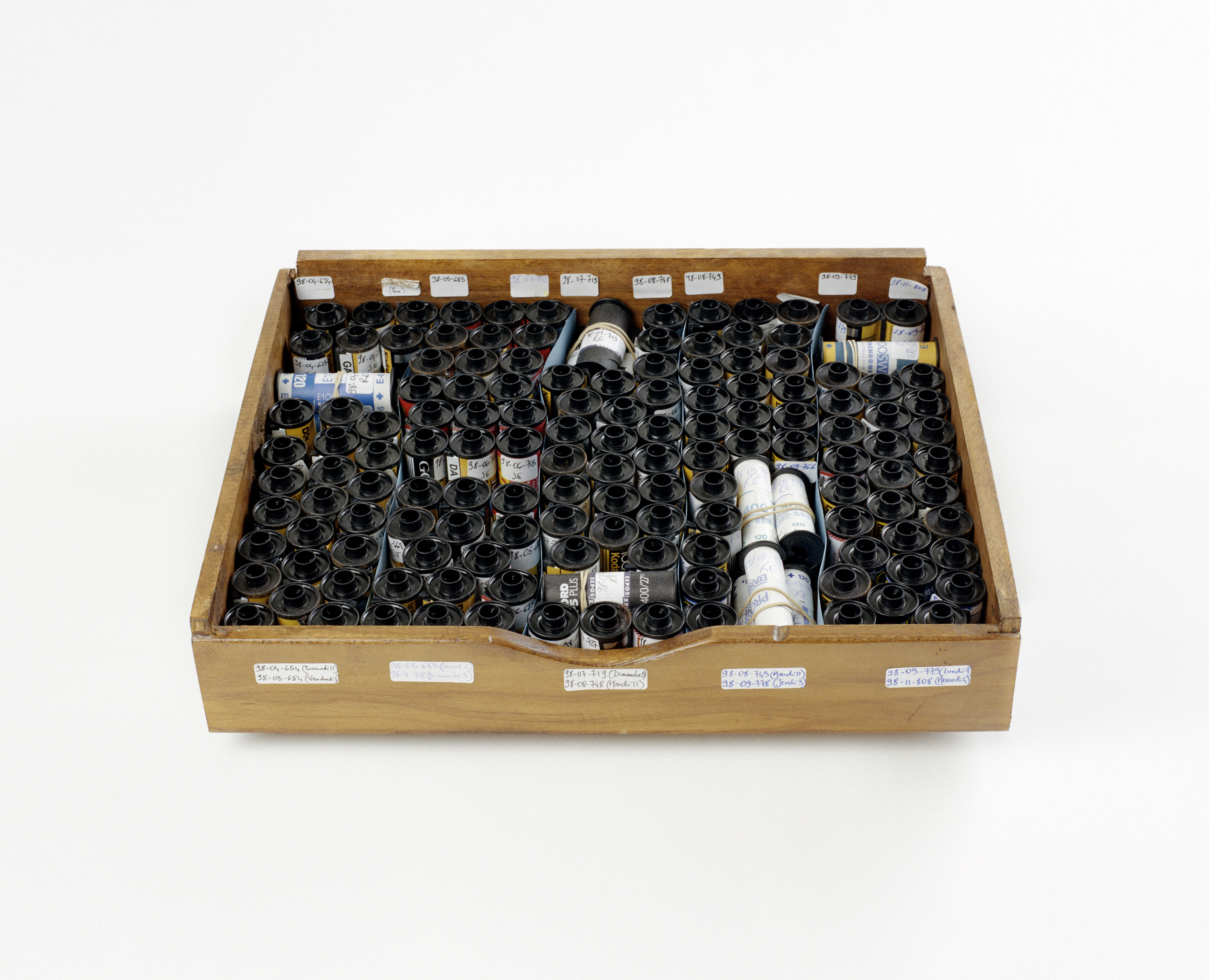
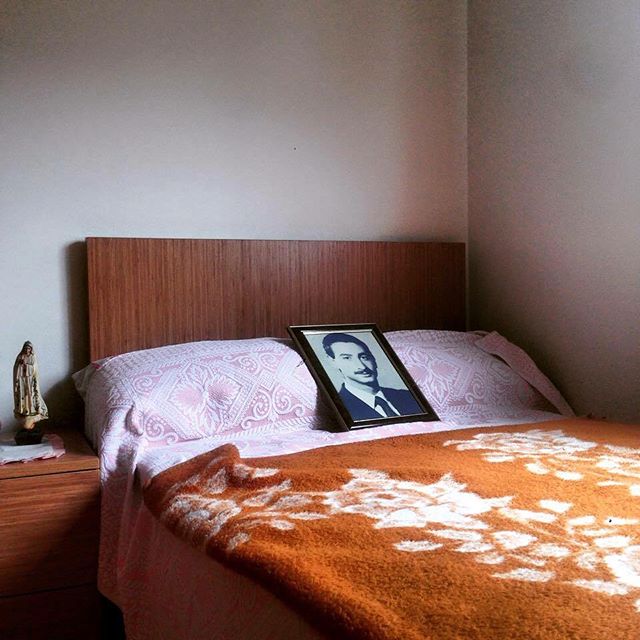
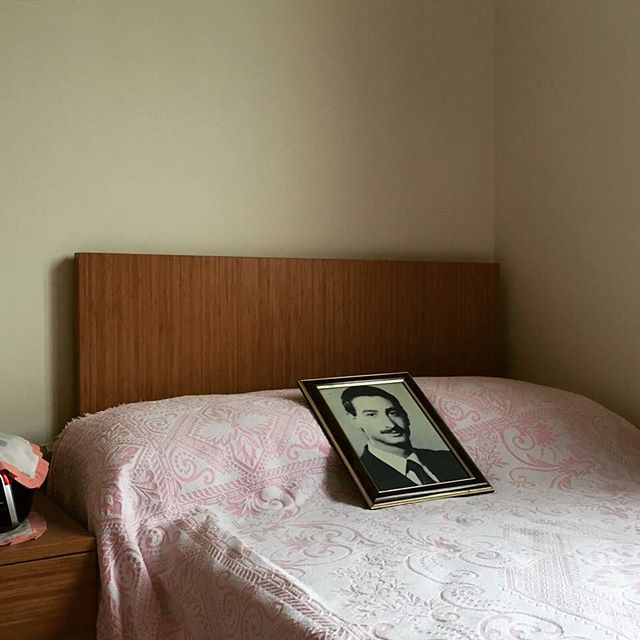
Recovered media. The original text, tags and date were not preserved in the backup.
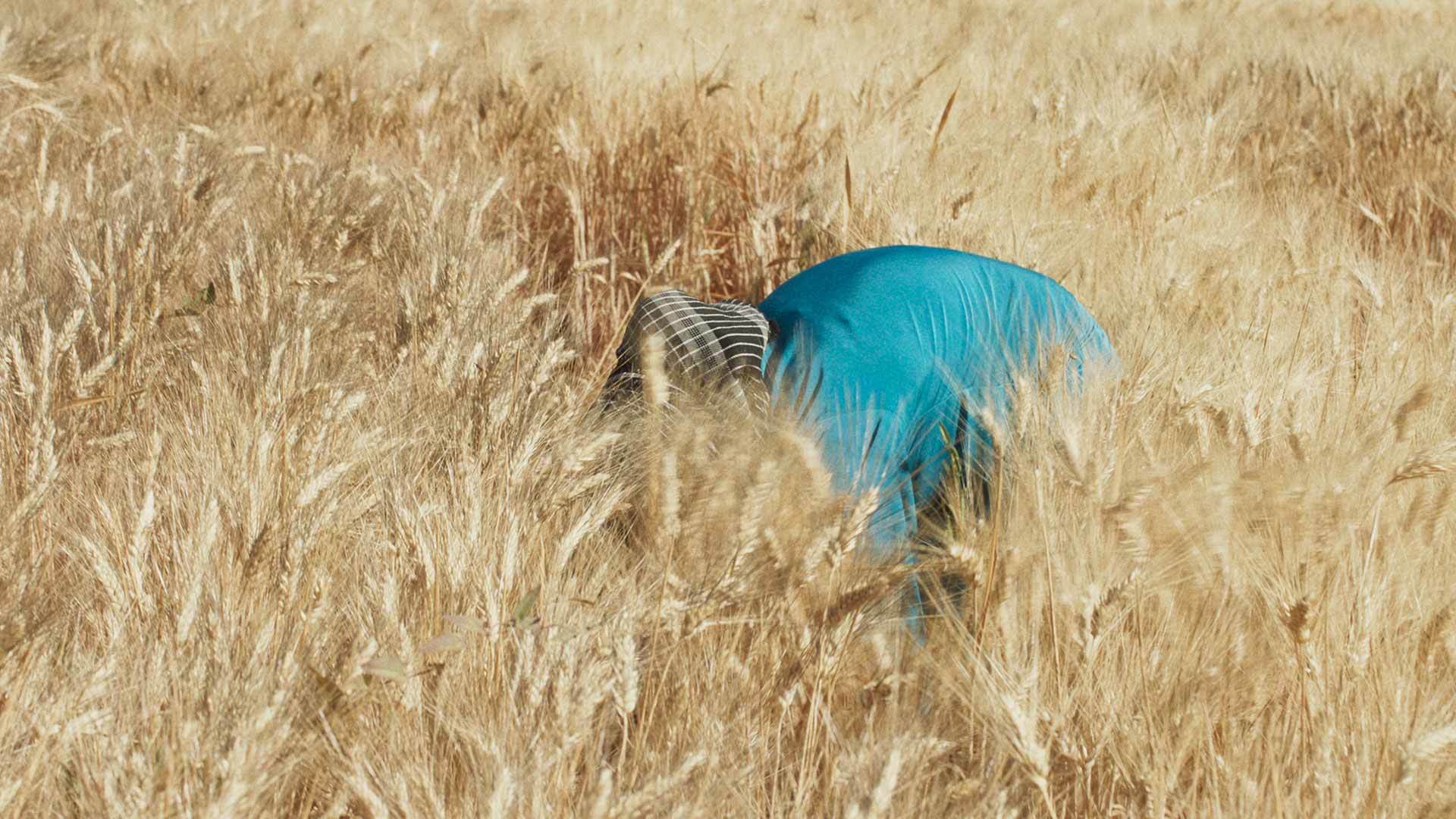
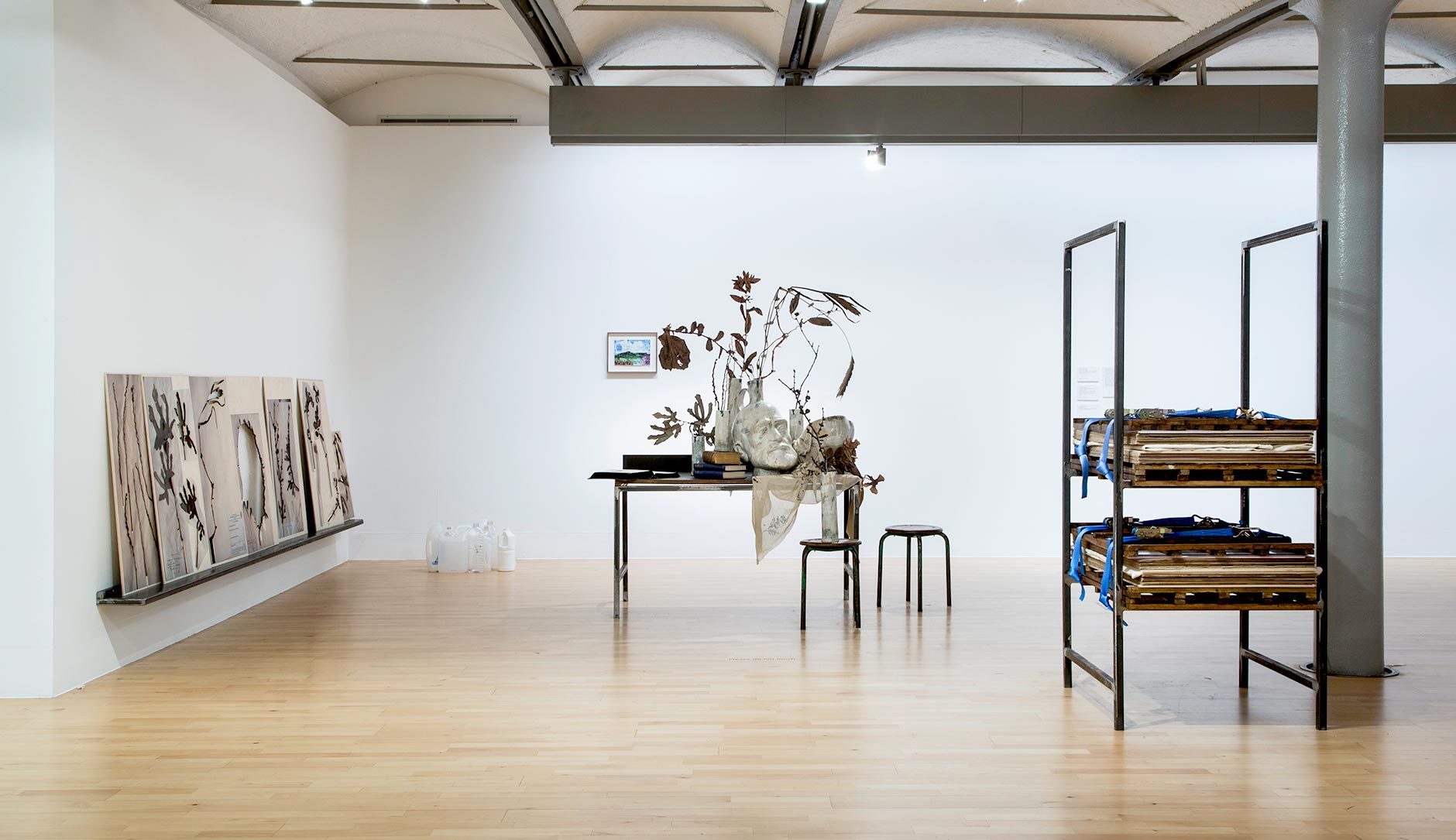
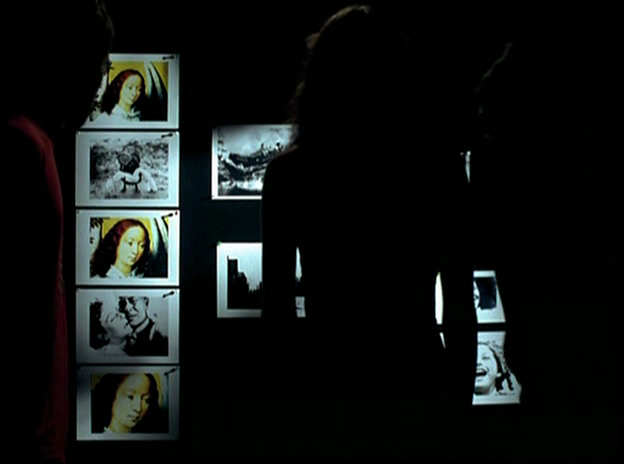
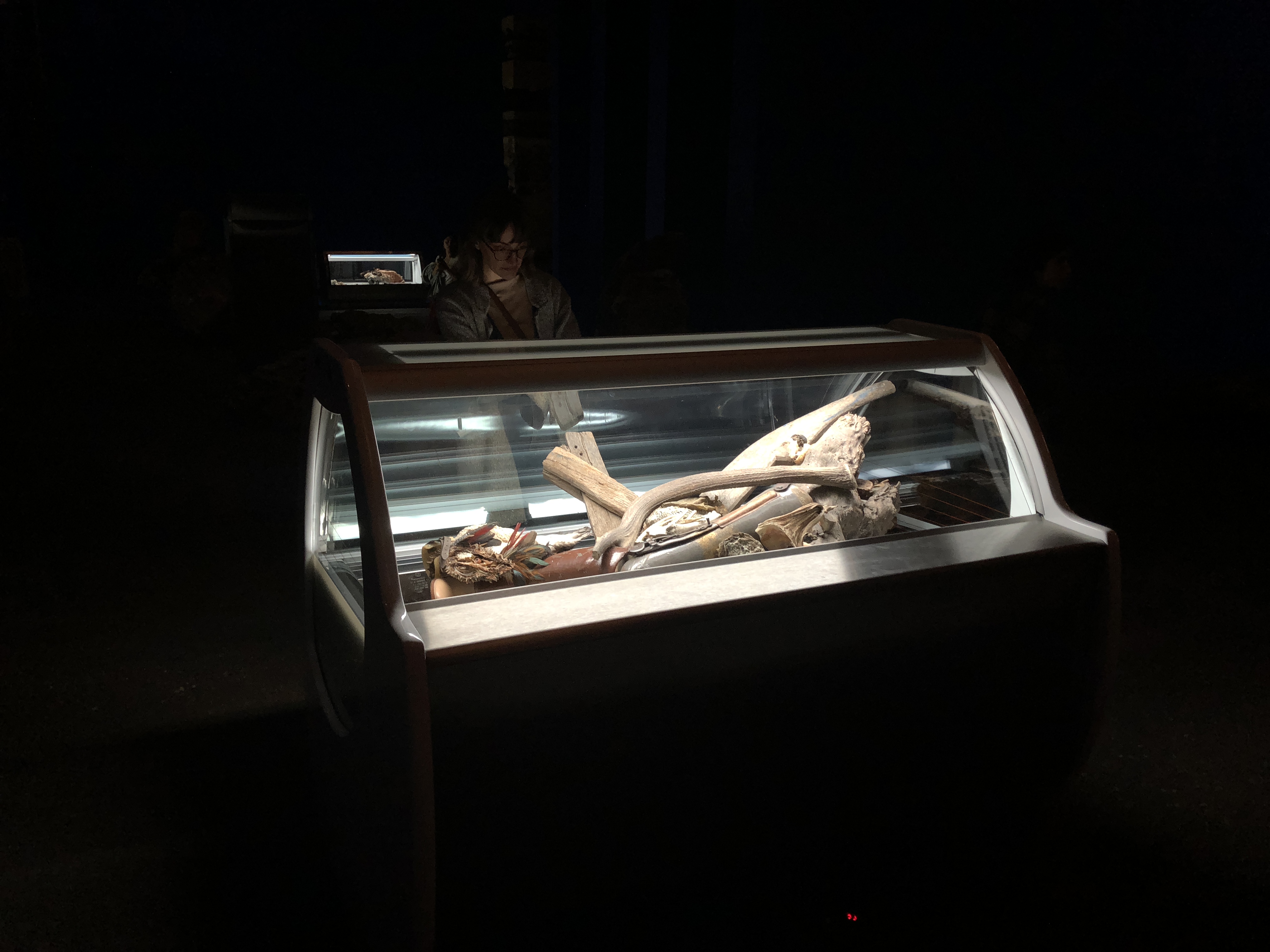
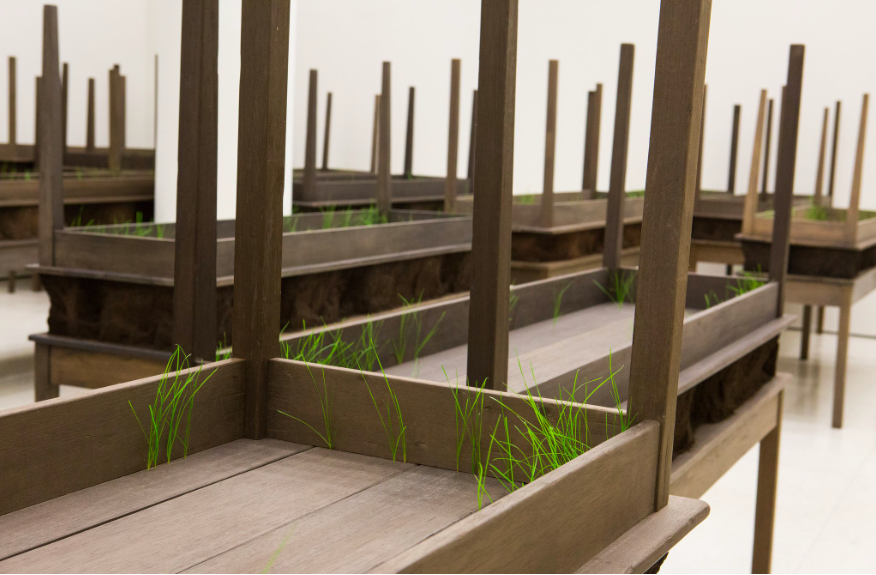
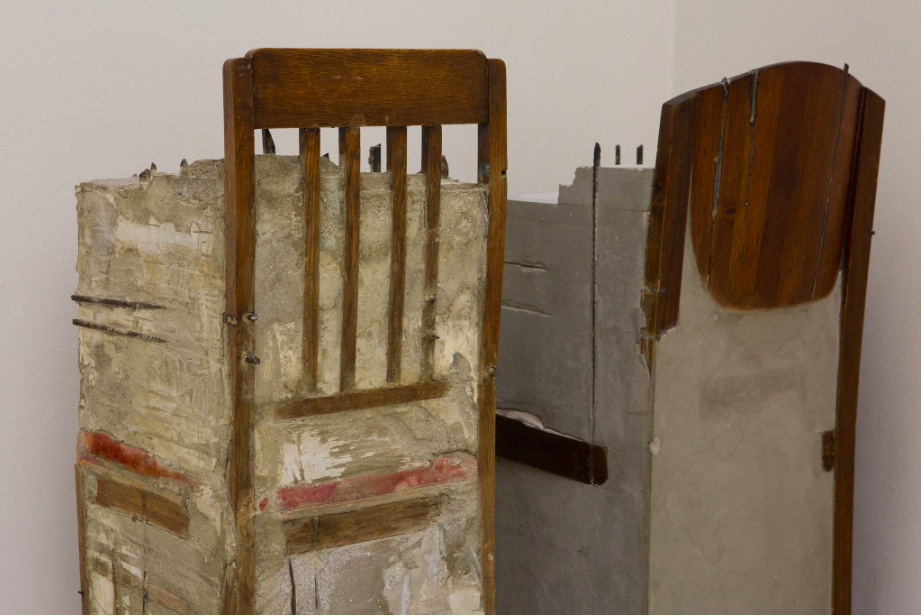
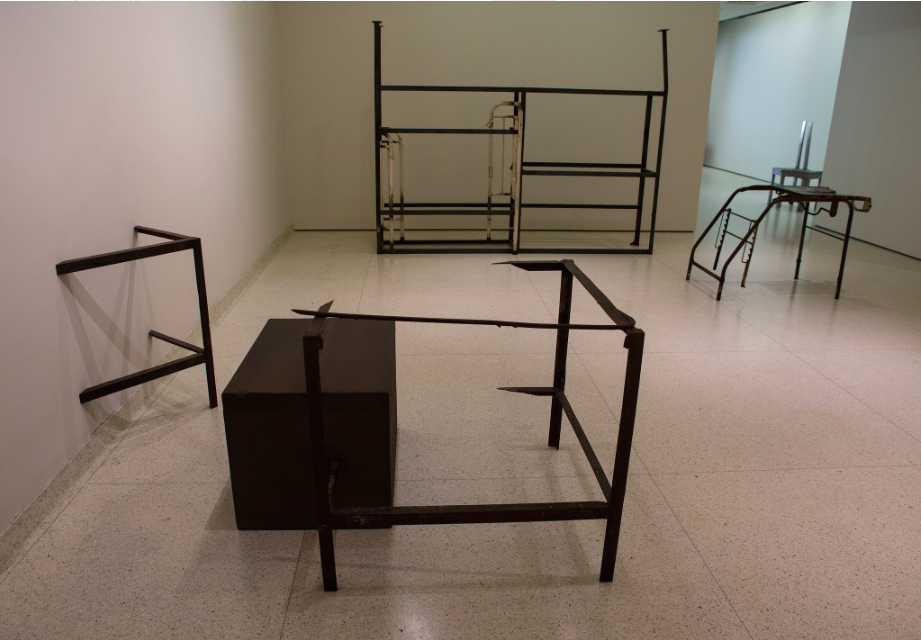
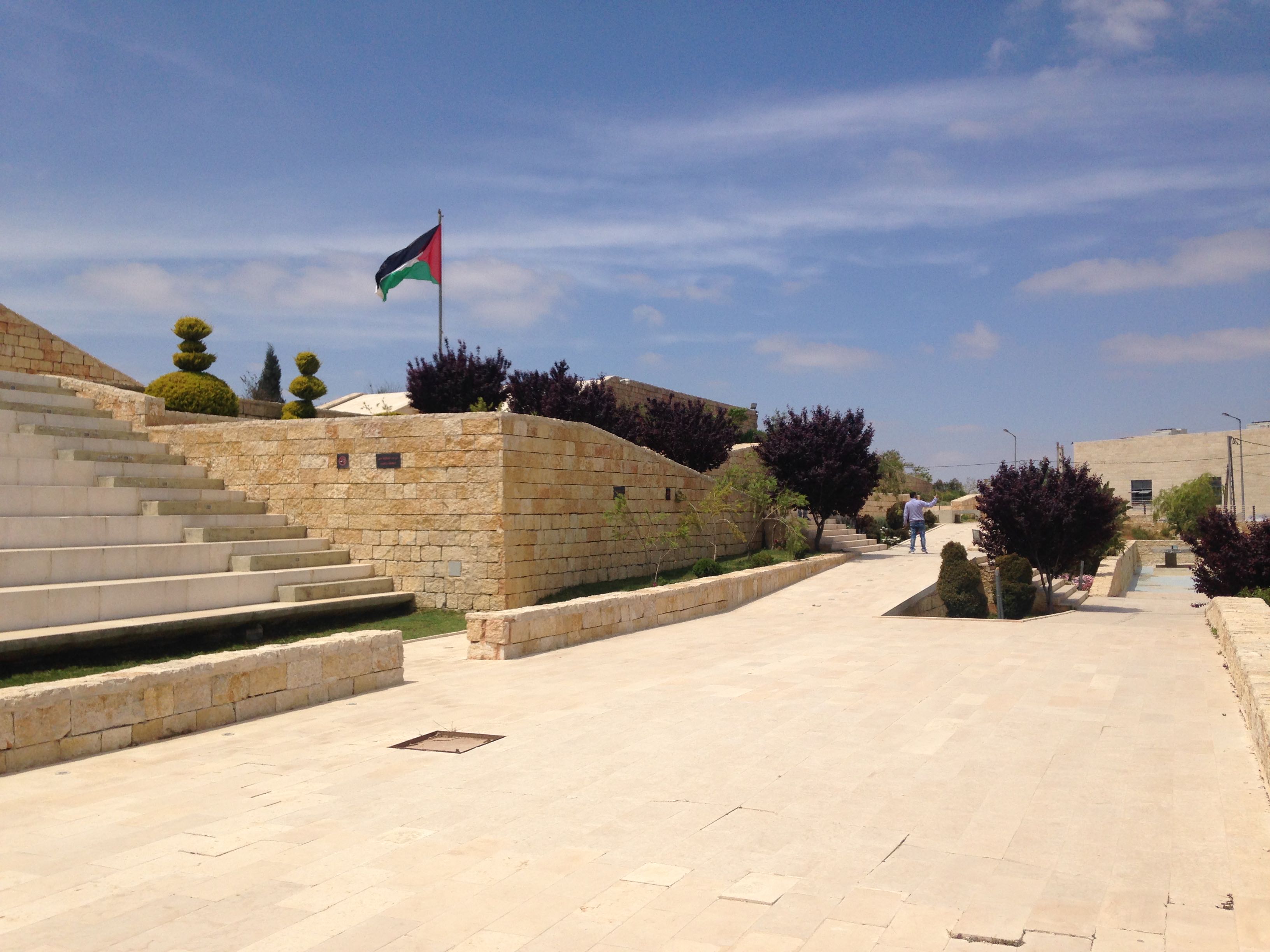
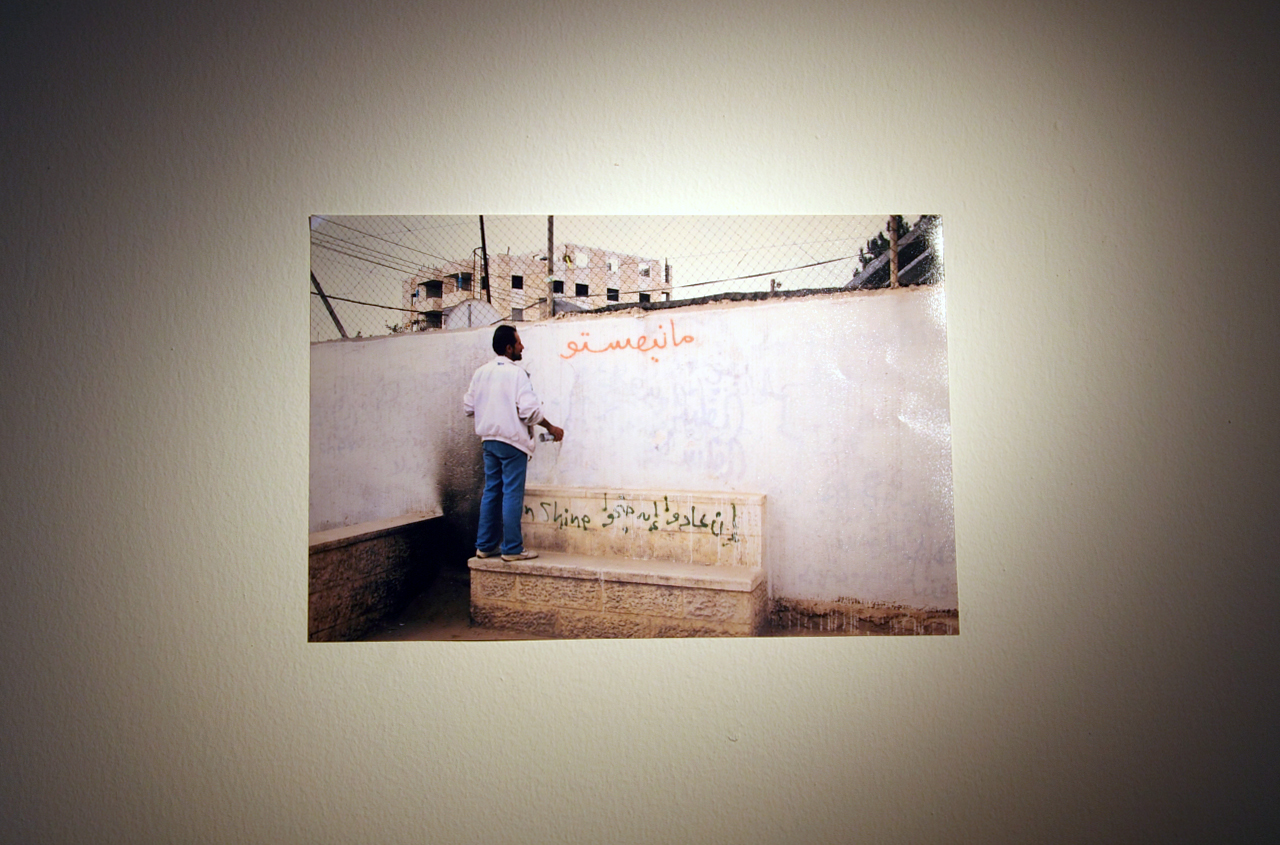
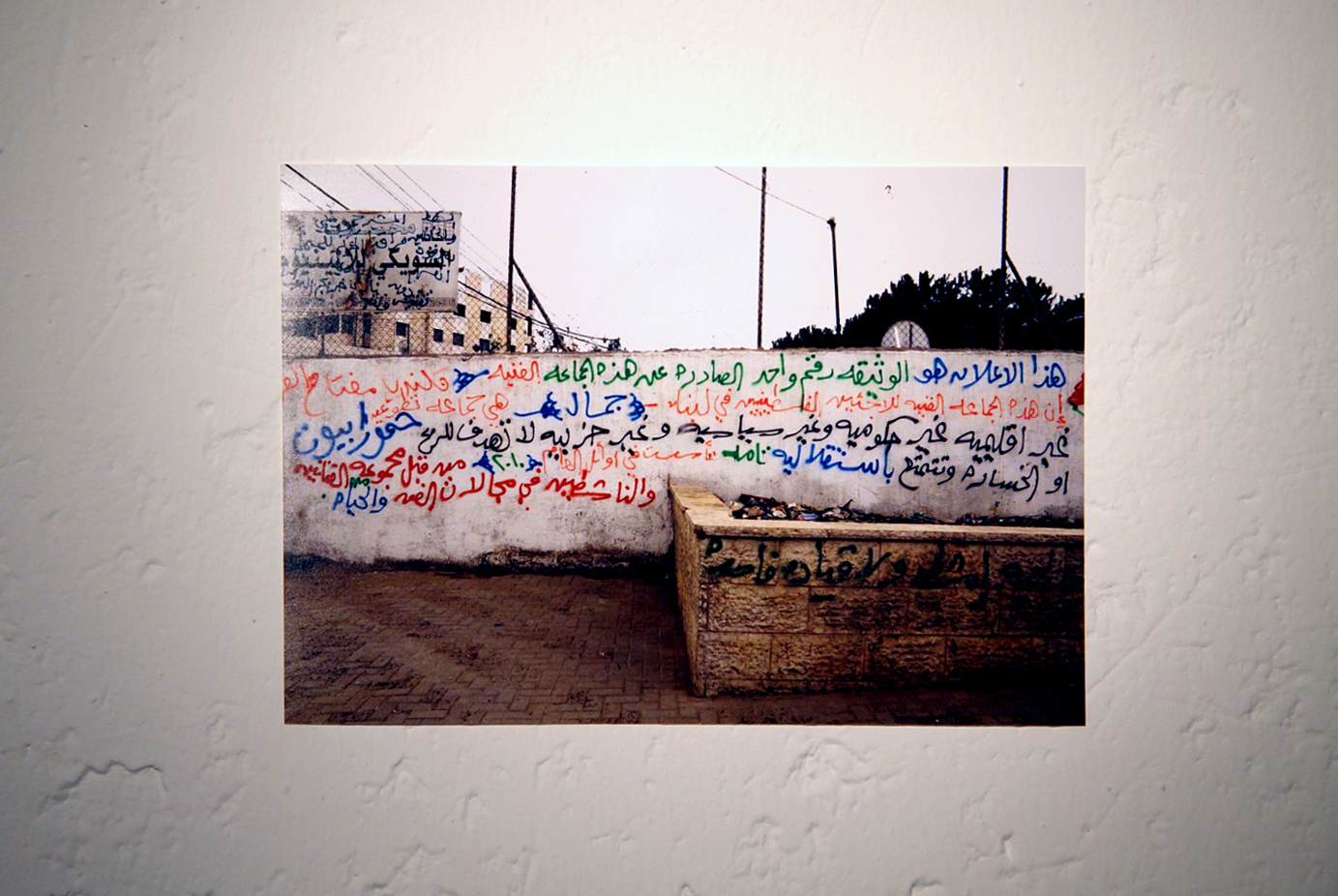
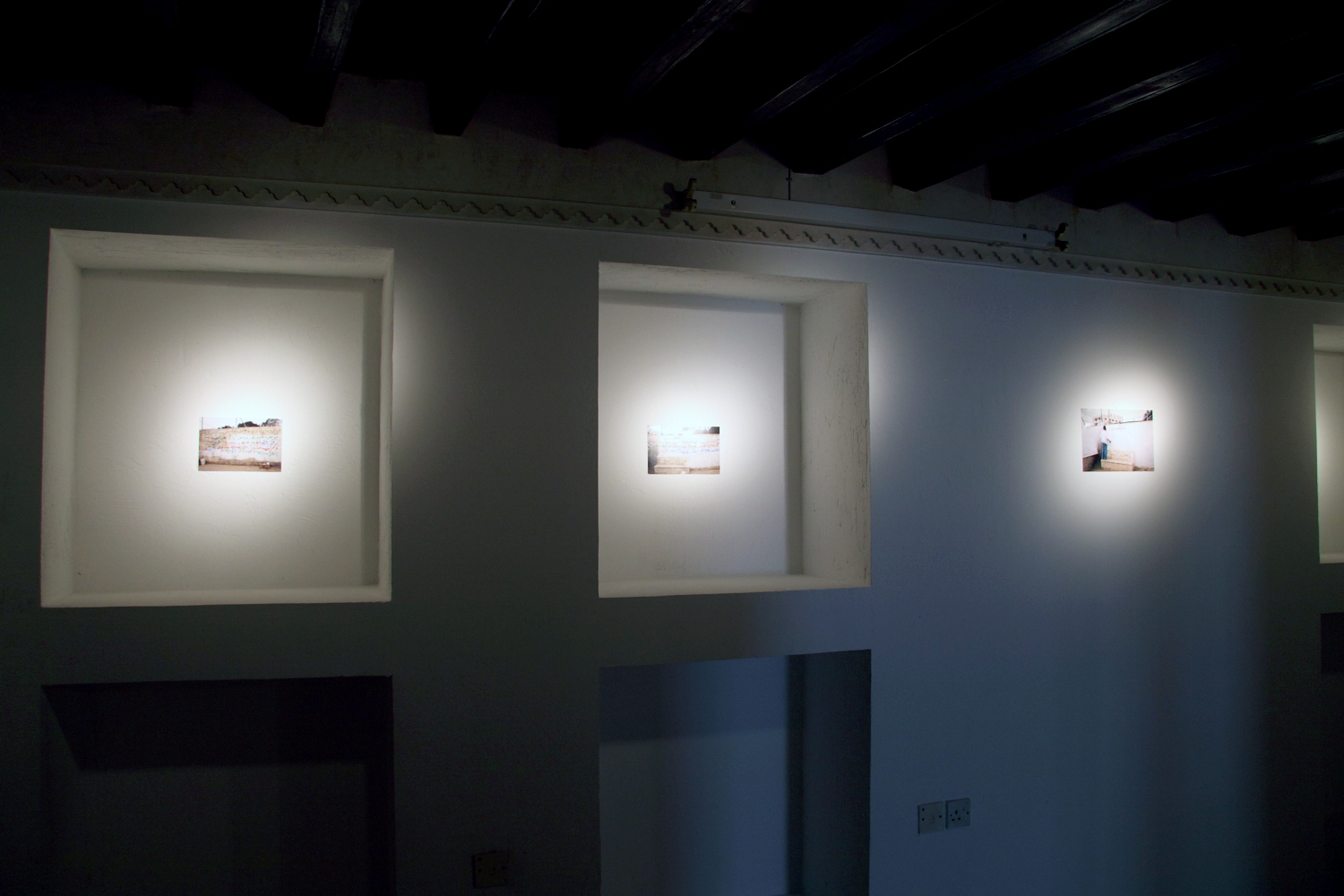
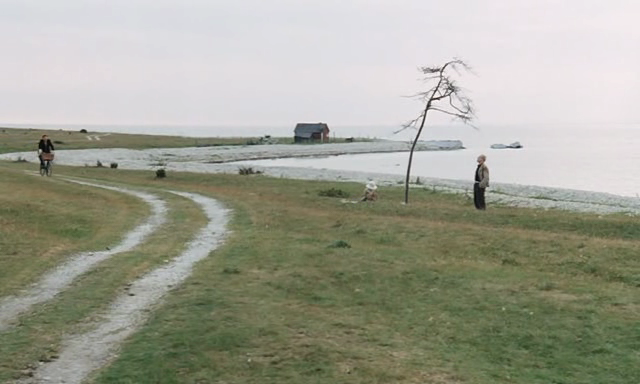
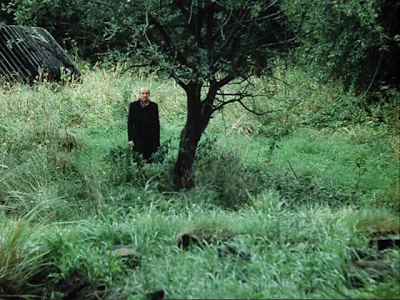
Basel Abbas and Ruanne Abou-Rahme, Until we became fire and fire us. Sharjah Walkthrough, 2023.
32 minute 7 channel video, 6 channel sound piece Sublimation prints on fabric dimensions variable, Digital prints on metal dimensions variable, 7 Steel panels dimensions variable
This work is composed of several works that come together to create a whole. The project can either be shown in its entirety or specific works from it can be shown as stand alone pieces.
Low cloud hum 50x150 cm and 50x100 cm sublimation prints on fabric Two channel sound piece with subwoofer
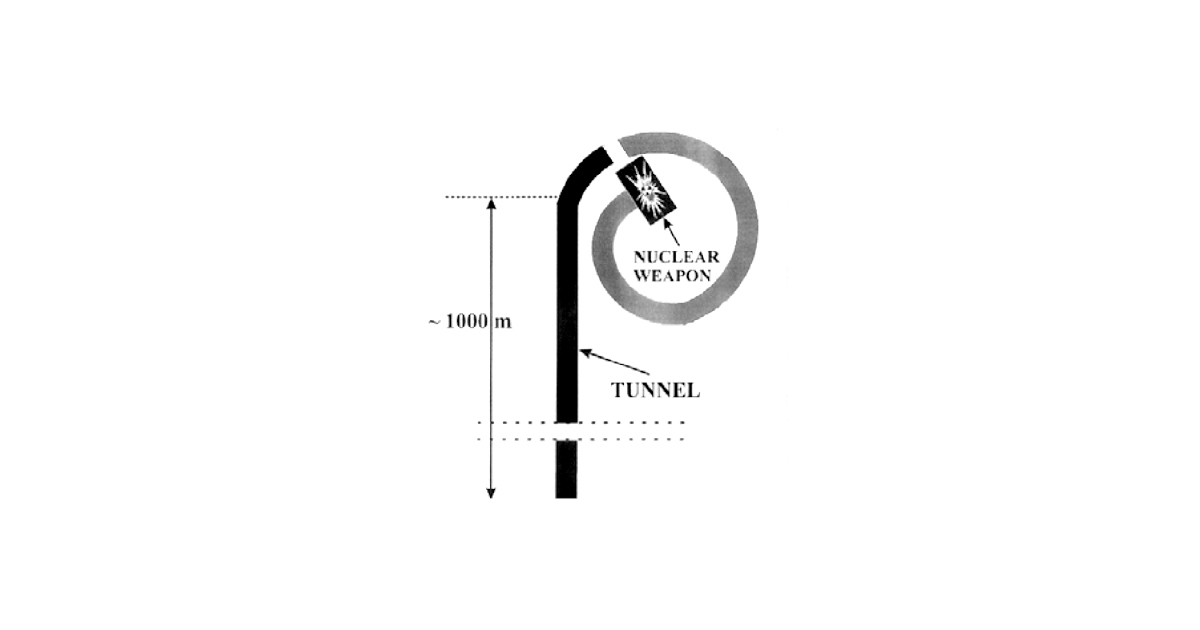
To dig a tunnel in the earth 50x150cm sublimation prints on fabric, Digital prints on metal dimensions variable, corten steel panel Subwoofer
Low cloud hang Video 32 min, Digital prints on metal dimensions variable, corten steel panel
Until we became fire and fire us 32 minute 2-4 channel video projection, 2-4 channel sound + subwoofer, concrete and metal panels size variable
***
The song is the call and the land is calling The land is calling the vanished through the song
The land haunts us And we haunt them The shadow, the echo, the ghosts of what remain
The loss of our land haunts us. Having been severed from the land we are haunted by it. A forbidden land like a forbidden love. Until we became fire and fire us explore various forms of hauntings, love stories bound to loss, land and self, forms of imprisonment and the call to get free, with sound and song being at the heart of this exploration. In it all is a search for a reconnection to a severed broken land, community, history, one that haunts, imprisons and moves us all at once. The project is a mixed media installation with multiple channel sound and video. It formally explores the idea of hauntings in its aural and visual content and the way in which this material appears and disappears into a given space. Sometimes appearing as poetry from a dissonant voice, a broken melody or intense flashes of text and video, or an imprint from a forbidden land, a forbidden love.
Three Jerusalem Manuscript Libraries join efforts to preserve vulnerable Islamic and Arab cultural heritage in the city. Produced by Nun Films in collaboration wth the Khalidi Library and ALIPH.
Some good news courtesy of the Arab Image Foundation and (the very much missed Dawawine):
2022 marks the 11th – and final – year of the AIF in its current location in Gemmayzeh. After viewing more than a dozen potential spaces across Beirut, we’re delighted to share the news that the ground floor of the Aresco building in Kantari will be the foundation’s new home as of the spring of 2023.
Spread out across two floors and a mezzanine, our new 800 m2 space will accommodate improved preservation and digitisation labs; a larger cool storage room (CSR) and a quarantine area for incoming collections; a work and display area; and a new space dedicated to library resources and to welcoming researchers.
AIF will collaborate with Dawawine, offering a specialised public library that houses both Dawawine’s and the foundation’s extensive book collections and audiovisual resources, which focus on photography, cinema, theater, and the performing arts. This new joint library and research center will be an important resource for artists, researchers, and scholars alike.
Please see Dawawine’s statement below about our new joint library.
Being alone and in the dark doesn’t agree with us. In this mad city, we found an ally in the Arab Image Foundation, and instead of reinstating a bookstore, we will be experiencing the permanence of a public library. We’ll be taking our books out of their boxes soon, and look forward to meeting readers, writers, art-makers, image seekers, and researchers at AIF’s new premises, where Dawawine’s books will find a home. We also hope to resume our programme of film screenings throughout the year 2023. There is so much more we’d like to say, but let us be patient; we’ll share more updates with you very soon.
It is our hope that this move will allow us to open our doors wide, welcoming different publics, conceiving diverse programmes, and becoming an open space where people can meet, exchange knowledge, engage with each other, and learn together.
“This edition of the Biennale is said to be centered on decolonial engagement, to offer ‘repair … as a form of agency’ and ‘a starting point … for critical conversation, in order to find ways together to care for the now.’ Yet the Biennale made the decision to commodify photos of unlawfully imprisoned and brutalized Iraqi bodies under occupation, displaying them without the consent of the victims and without any input from the Biennale’s participating Iraqi artists, whose work was adjacently installed without their knowledge. Who is given agency in this form of ‘repair’?”
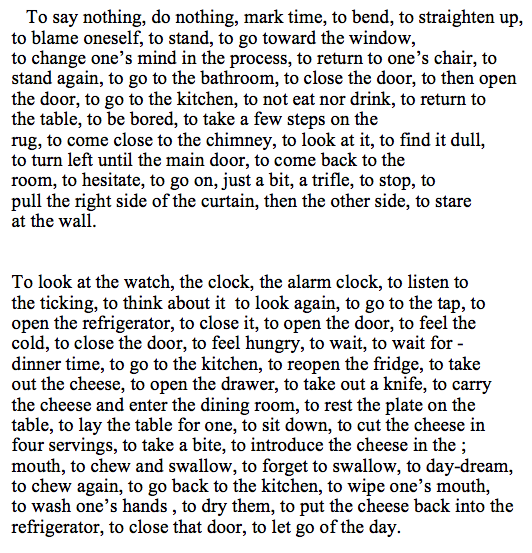
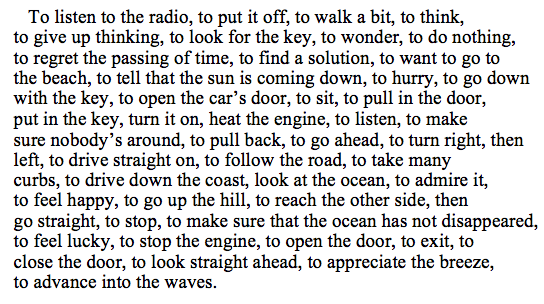
Etel Adnan, To be in a Time of War (San Francisco: City Lights Books, 2005). Excerpt from page 1.
RIP Etel Adnan, 1925–2021.
image not preserved in backup
RECONSTRUCTING HISTORIES examines
the role of the documentary in representing the Lebanese Civil War
(1975–1990) through the experimental works of three important Lebanese
post-war artists/filmmakers: Walid Raad, Jayce Salloum, and Mohamad
Soueid.
The Lebanese Civil War
officially ended after the 1989 Taif Accord, granting amnesty to those
who committed war crimes, allowing these same figures to freely exchange
their guns for a seat in the government, many of whom are still in
power to this day. This raises the question: How can a country move
forward when its past is unresolved and prone to repetition?
This
policy of forgetting, and the failure of the government’s handling of
the nation’s historical narrative, prompted a number of post-war artists
- who were born during the 1960s and 1970s and grew up during times of
war - to tackle the challenges of representing their recent past. These
post-war artists used the documentary as a terrain to critically examine
their history and how it was being represented.
In the experimental documentary Hostage: The Bashar Tapes,
Walid Raad challenges notions of truth and historiography, bringing to
the foreground the mediation of images in the construction of historical
knowledge, questioning who has the right to shape historical
narratives. In This is Not Beirut, Jayce Salloum highlights the
crisis of representation - from reductionism to misrepresentation -
conveying the impossibility of representing the overwhelming and complex
narrative of the Lebanese Civil War. While the works of Salloum and
Raad are crucial to addressing the issues and limitations of the
documentary form, their role has been to point out, rather than fix
these problems, reflecting the postmodern approach and its tendency
towards aversion to “truth” in representation. In comparison, Mohamad
Soueid’s Nightfall takes a subjective rather than conceptual approach, excavating fragments of Lebanon’s past from the ruins of memory.
Hostage: The Bachar Tapes, Walid Raad, 16 min | United States, Lebanon | 2001
This is Not Beirut (There was and there was not), Jayce Salloum, 49 min | United States, Lebanon | 1992-1993
RECONSTRUCTING
HISTORIES is curated by ArteEast’s film curator Ginou Choueiri and
presented as part of the ArteEast legacy program Unpacking the
ArteArchive, preserving and presenting over 17 years of film and video
programming by ArteEast.
The
Beirut Urban Lab is a collaborative and interdisciplinary research
space. The Lab produces scholarship on urbanization by documenting and
analyzing ongoing transformation processes in Lebanon and its region’s
natural and built environments. It intervenes as an interlocutor and
contributor to academic debates about historical and contemporary
urbanization from its position in the Global South. We work towards
materializing our vision of an ecosystem of change empowered by critical
inquiry and engaged research and driven by committed urban citizens and collectives aspiring to just, inclusive, and viable cities.
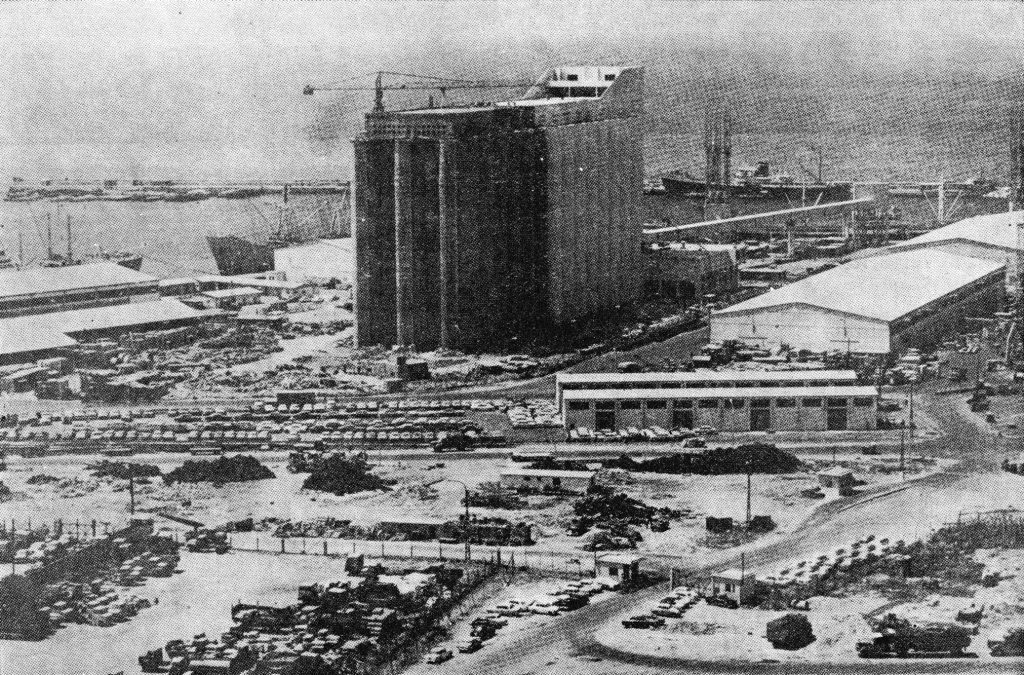
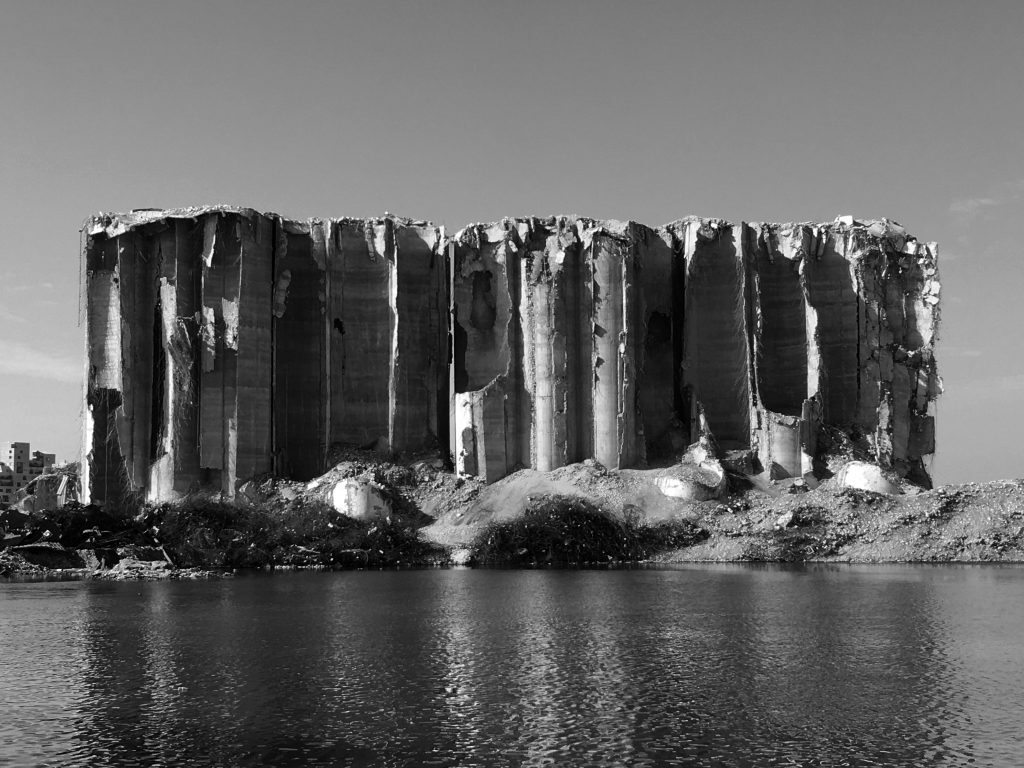
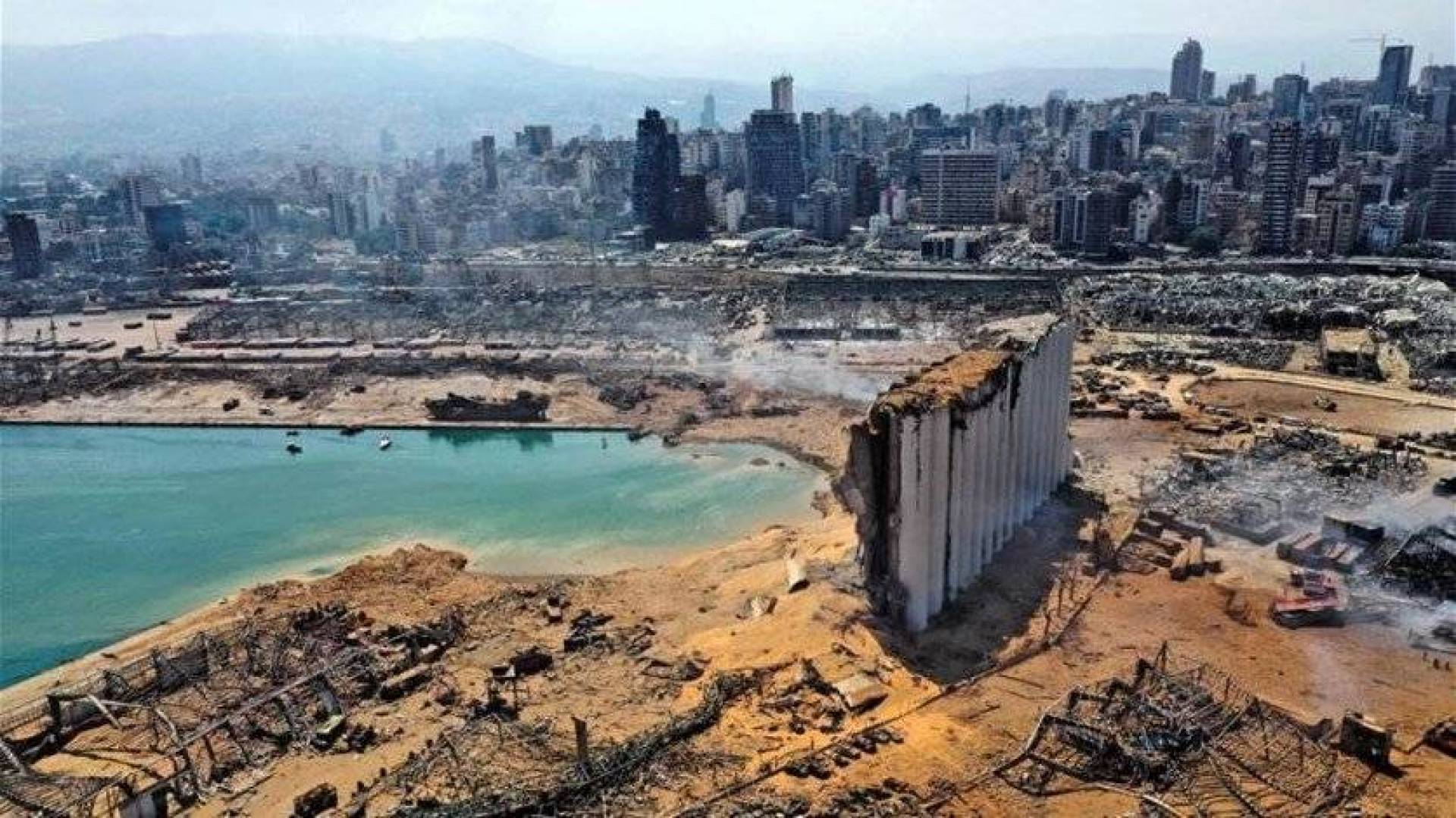
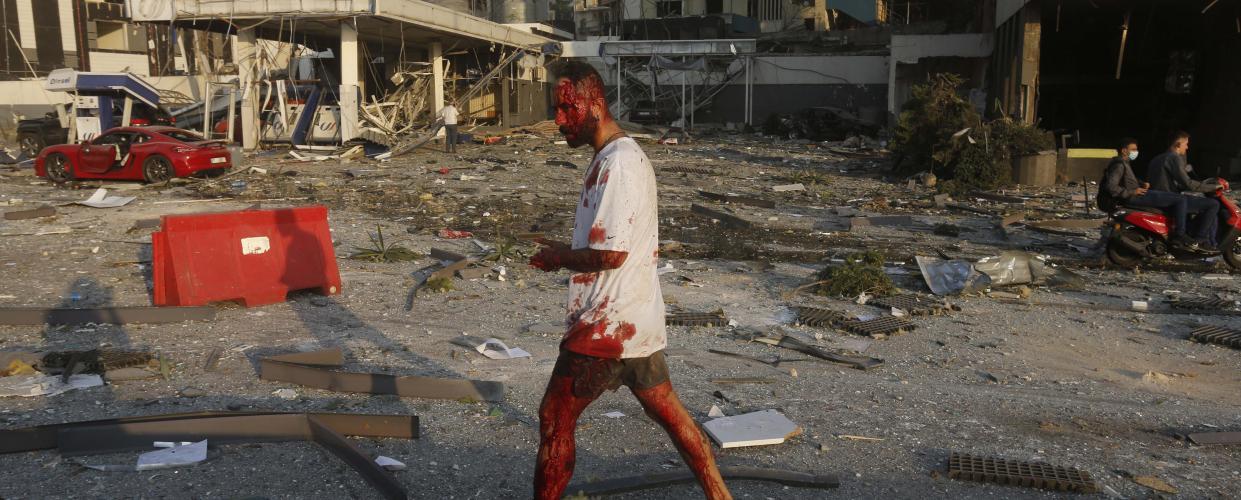
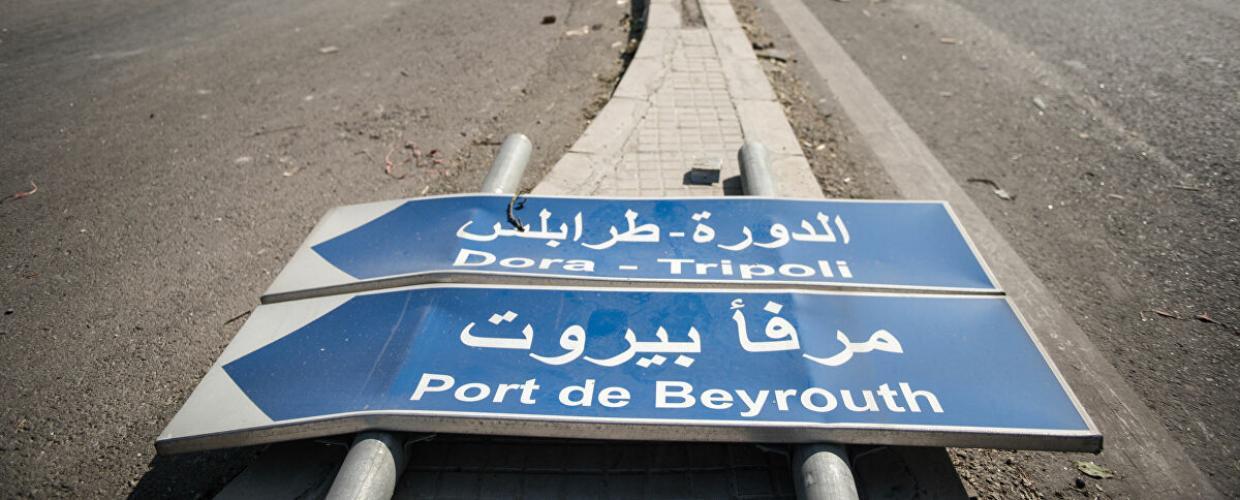
Today, August 4, 2021 marks one year after the catastrophe of the Beirut Port Explosion that killed more than 200 people and left thousands wounded. Massive moral and material losses were experienced by the Lebanese people, Arab people, and all friends and loves of Lebanon around the world. A year after the explosion, the investigation committee did not arrive to a conclusion, the economy in Lebanon has severely collapsed and Lebanon is currently experiencing a suffocating political vacuum. On this sad day, we will not mourn Beirut, that is stronger than death and destruction, and that has gathered its wounds and risen to continue to play its role in raising the torch of freedom, creativity, art, and culture. On this sad occasion we stand to salut Beirut, the capital of Arab culture, presenting friends with testimonies of that dreadful day.
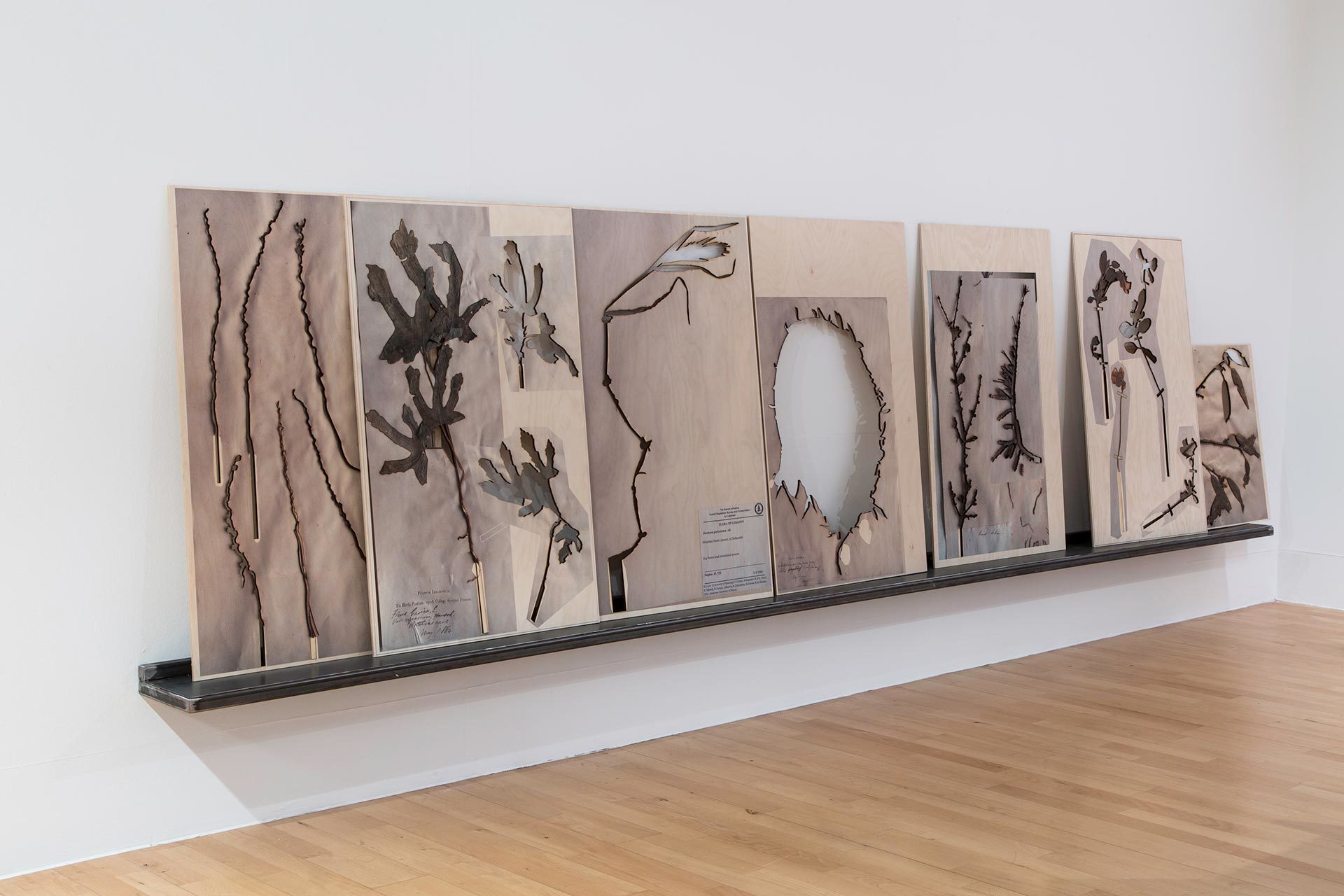
In the US state of Louisiana, along the Mississippi River between Baton Rouge and New Orleans, a heavily industrialised ‘Petrochemical Corridor’ overlays a territory formerly known as ‘Plantation Country’.
When slavery was abolished in 1865, more than five hundred sugarcane plantations lined both sides of the lower Mississippi River; today, more than two hundred of those sites are occupied by some of the United States’ most polluting petrochemical facilities.
Residents of the majority-Black ‘fenceline’ communities that border those facilities breathe some of the most toxic air in the country and suffer some of the highest rates of cancer, along with a wide variety of other serious health ailments. They call their homeland ‘Death Alley’. Here, environmental degradation and cancer risk manifest as the by-products of colonialism and slavery.
Sugarcane was historically the most dangerous crop to cultivate. To accommodate a negative demographic growth rate among the enslaved population, each plantation established at least one, and sometimes as many as three cemeteries for its enslaved population. The majority of these burial grounds were omitted from historical maps. Over the decades, all outward traces of many of these cemeteries have been erased. On rare occasions, cemeteries resurface – when petrochemical corporations break ground on new construction sites.
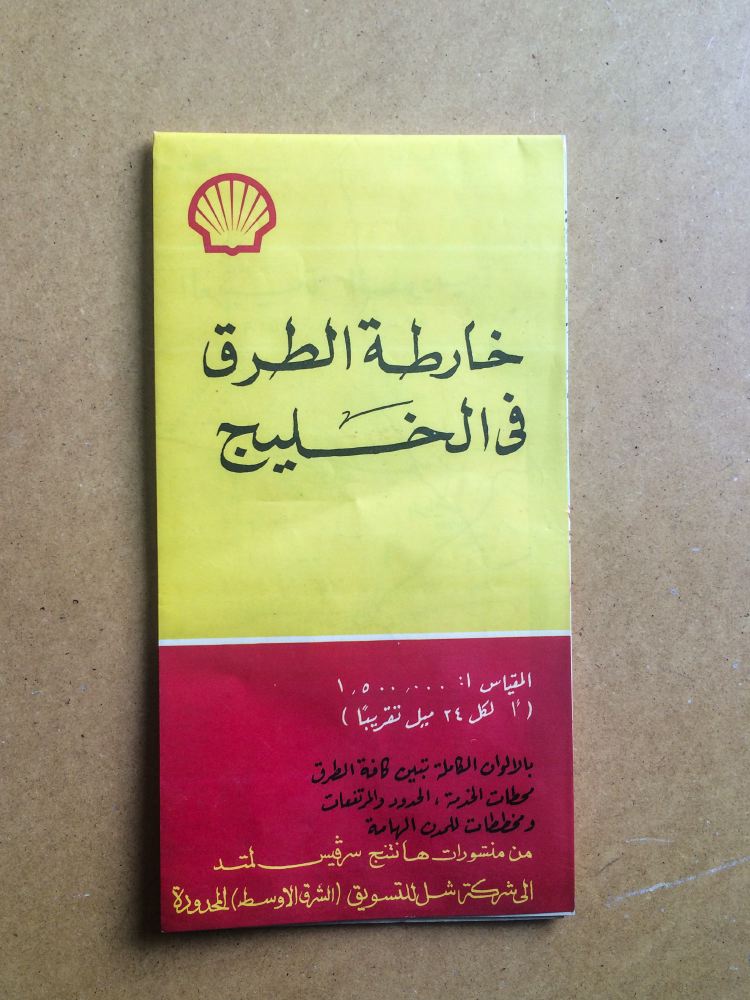
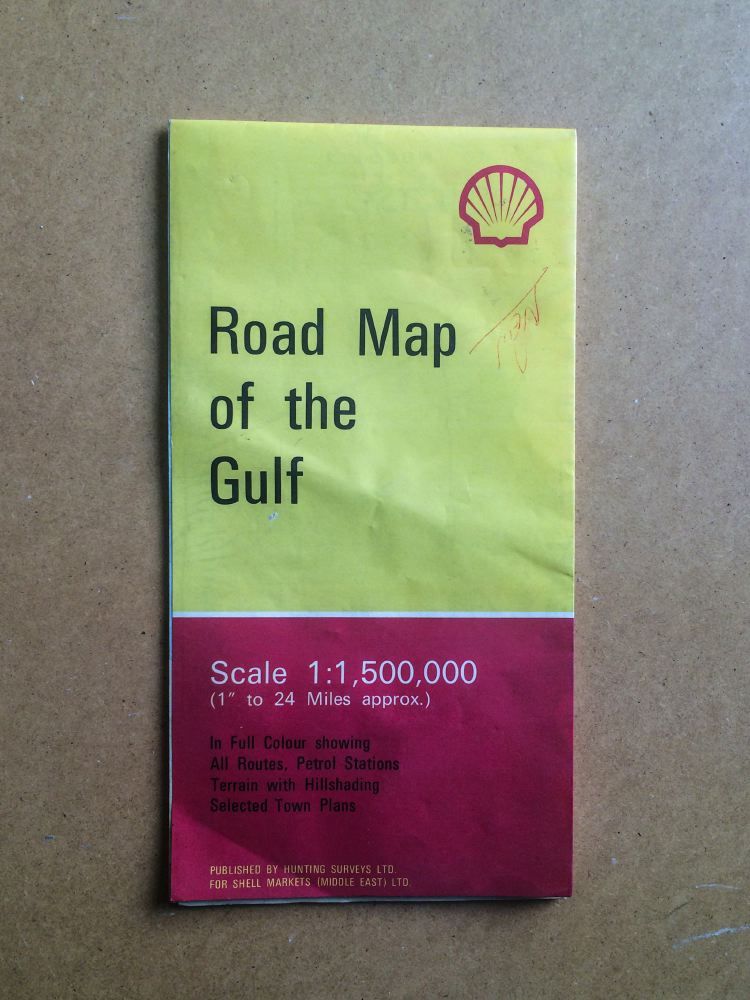
In 2015, two cemeteries were uncovered during a survey for a proposed expansion of a refinery owned by Shell Oil Company. Four years later, four more cemeteries were located during the early stages of the construction of a new facility by the company Formosa Plastics. How might we recover the memory of the hundreds, if not thousands, of missing cemeteries at risk of desecration?
Measuring Life: Notes Toward an Impossible Exchange PROJECT LAUNCH
WEDNESDAY 14 OCTOBER 2020
7 PM AMMAN TIME
Conceived in the aftermath of the pandemic, Measuring Life: Notes Toward
an Impossible Exchange features a series of invocations (performances,
screenings, interventions, etc.) that interrogate systems of value
embedded in hegemonic representations of life and the economy. We look
at the ‘anthropomorphisation’ of the economy in public discourse-the
construction of the economy as organic matter- versus the constitution
of life itself as a computable object, its reduction to a financial
problem, or alas Mbembe, the ways in which life and matter are
incorporated into “systems of abstraction and machinic reasoning.”
Addressing the question of what value stands for, the project unravels
the violent workings of dominant systems of representation, seeking to
imagine new modes of measuring that bring into being a different
aesthetics and a radical praxis affirming the powers of life.
The launch features a lecture-performance by the curatorial team.
“The uncertainty ranges represent the full range of our estimates. Changes are relative to annual mean daily emissions from those sectors in 2019 (Methods). Daily emissions are smoothed with a 7-d box filter to account for the transition between confinement levels. Note the different ranges on the y axes in the upper and lower panels.”
Le Quéré, C., Jackson, R.B., Jones, M.W. et al. Temporary reduction in daily global CO2 emissions during the COVID-19 forced confinement. Nature Climate Change (2020). https://doi.org/10.1038/s41558-020-0797-x
Government policies during the COVID-19 pandemic have drastically altered patterns of energy demand around the world. Many international borders were closed and populations were confined to their homes, which reduced transport and changed consumption patterns. Here we compile government policies and activity data to estimate the decrease in CO2 emissions during forced confinements. Daily global CO2 emissions decreased by –17% (–11 to –25% for ±1σ) by early April 2020 compared with the mean 2019 levels, just under half from changes in surface transport. At their peak, emissions in individual countries decreased by –26% on average. The impact on 2020 annual emissions depends on the duration of the confinement, with a low estimate of –4% (–2 to –7%) if prepandemic conditions return by mid-June, and a high estimate of –7% (–3 to –13%) if some restrictions remain worldwide until the end of 2020. Government actions and economic incentives postcrisis will likely influence the global CO2 emissions path for decades.
“The virus is rewriting our imaginations. What felt impossible has become thinkable. We’re getting a different sense of our place in history. We know we’re entering a new world, a new era. We seem to be learning our way into a new structure of feeling.”
Maya Shurbaji, At Last, a Tragedy (2017). Video still.
Recovered media. The original text, tags and date were not preserved in the backup.
After twenty years of civil war and enduring numerous conflicts since, the archival situation in Lebanon is, understandably, best described as decentralized. Though it is only rarely used by historians working in Lebanon, there is a National Archives (also known as the Centre des Archives Nationales) in Beirut in the neighborhood of Hamra. The National Archives is the repository for Lebanon’s various government ministries. However, because there is no declassification law in Lebanon, it is difficult to ascertain exactly what files the National Archives possesses. There is a website for the Archives, but as of the writing of this article, the website has not been updated since 2015 and the most recent catalog of its holdings was published in the 1980s.
If you are intent on making a visit to the National Archives, it is open to the public Monday through Friday during normal business hours. Researchers must present a passport and complete an application, in Arabic, listing their topic of study, affiliation, and basic personal information. The application then must receive approval from the General Director of the Archives. Once you have received approval, you will need to speak to the archivists, who will retrieve documents relating to your stated project. The archivists are knowledgeable but are reported to have essentially absolute power within the building, and reserve the right to refuse any request. If a request is not refused outright, it may often be met with the claim that the files you are looking for were destroyed during the civil war. This may or may not be true, but what is certain is the archivists are the gatekeepers, and a positive relationship with them is necessary for any productive work to be done there.
Title and Rights, State Action, and Media representation of Land Defenders
During a time of separation and social distancing, join us for an opportunity to gather together for a virtual teach-in on the legal foundations of Wet’suwet’en Title and Rights and the treatment of the Wet’suwet’en land defenders and supporters in the media as a result of recent state actions taken against them.
Moderated by Coll Thrush, Professor of History and Associate Faculty in Critical Indigenous Studies, this is your opportunity to hear from leading UBC scholars and learn more about the various human rights issues faced by Indigenous and First Nations people.
Presenters, Paige Raibmon (Department of History), Gordon Christie (Allard School of Law), and Candis Callison (Graduate School of Journalism) will speak to their various fields of expertise and respond to questions from participants in this virtual space.
Zarina Hashmi, …these Cities Blotted into the Wilderness, Beirut (2003).
Zarina passed away yesterday, April 25, 2020.
“Memory is the only lasting possession we have. I have made my life the subject of my work, using the images of home, the places I have visited, and the stars I have looked up to. I just want a reminder that I did not imagine my experiences.”
If, indeed, Covid-19 is the spectacular expression of the planetary impasse in which humanity finds itself today, then it is a matter of no less than reconstructing a habitable Earth to give all of us the breath of life. We must reclaim the lungs of our world with a view to forging new ground. Humankind and biosphere are one. Alone, humanity has no future. Are we capable of rediscovering that each of us belongs to the same species, that we have an indivisible bond with all life? Perhaps that is the question – the very last – before we draw our last dying breath.
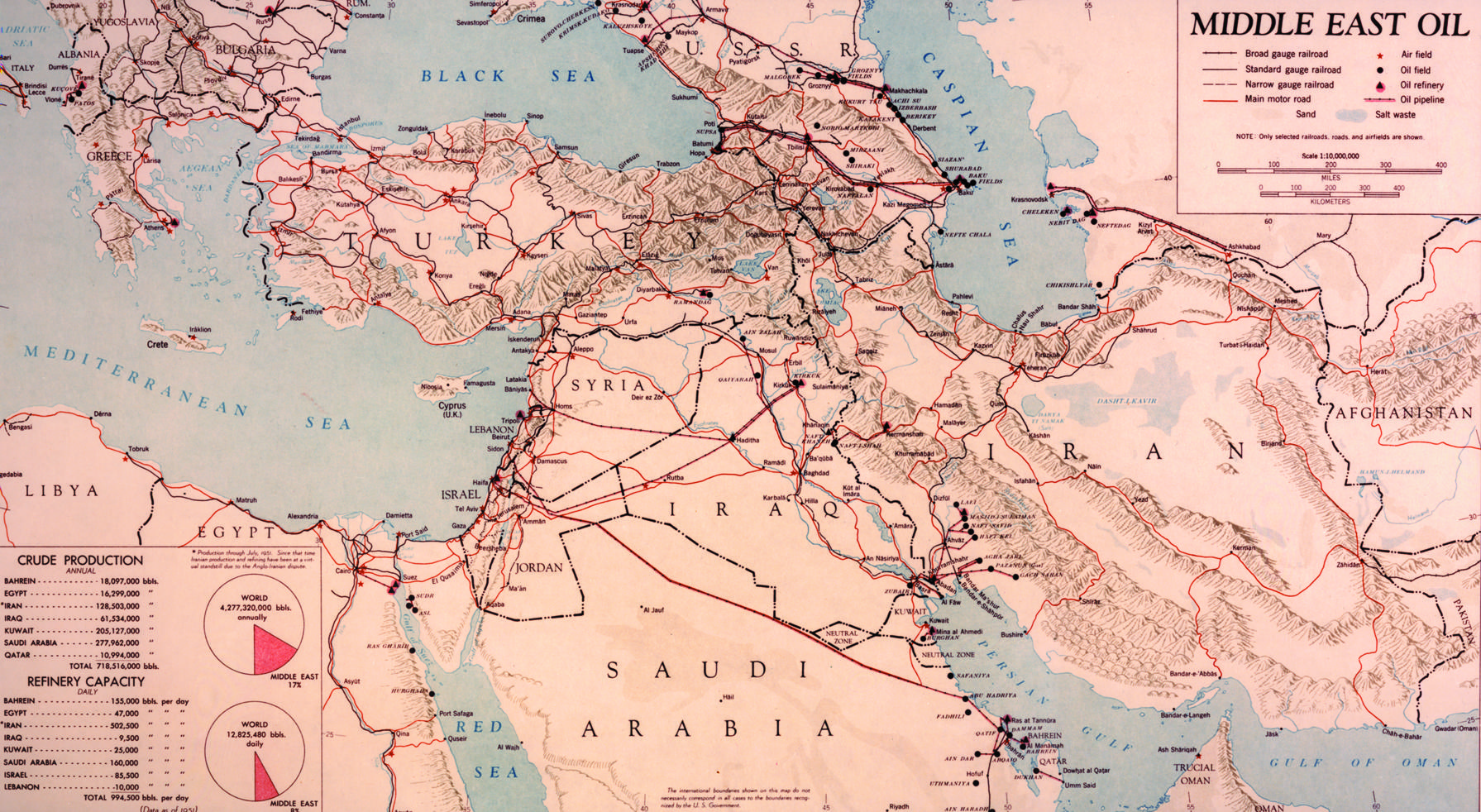
Excellent recent research on the politics of containerisation and the logic of logistics (Levinson; Cowen; Sekula) has shown how these new modalities of trade have transformed not only the form and extent of circulation of goods but also the processes of production. The argument about logistical forms of capital accumulation trace its begging to the 1950s when containers were invented, and especially to the period after the 1960s, when their usage was normalised during the Vietnam war. However, many of the practices we now associate with containerisation – foremost among them the automation of processes of maritime circulation, and the transformation of urban landscapes around the ports – go back at least two decades before the 1950s, to the legal, engineering, and financial innovations around petroleum tankers. By focusing on the tanker terminals of the Arabian Peninsula since the 1930s and the subsequent burgeoning of tanker-ships plying the trade between the Peninsula and the rest of the world, I will illuminate the radical changes in political economy, labour, law and production the specificities of tanker trade has wrought. This includes early instances of automated workplaces; terminals far enough from port-city centres to isolate them from public scrutiny; and disciplining of workers aboard tanker-ships. Further, the shift in ownership structures and financing of tanker trades over the last one-hundred years either foreshadows or dramatically illuminates the transformations in financial capital itself. Finally, much of lex petrolea, the legal and arbitral corpus that sets the parameter of extraction and circulation of oil, itself provides the ground on which late capitalist legal property regimes are founded.
Laleh Khalili is a Professor of International Politics at Queen Mary University of London, and the author of Heroes and Martyrs of Palestine (Cambridge 2007) and Time in the Shadows: Confinement in Counterinsurgencies(Stanford 2013). Her Sinews of War and Trade, on the politics of maritime infrastructures, is published by Verso.
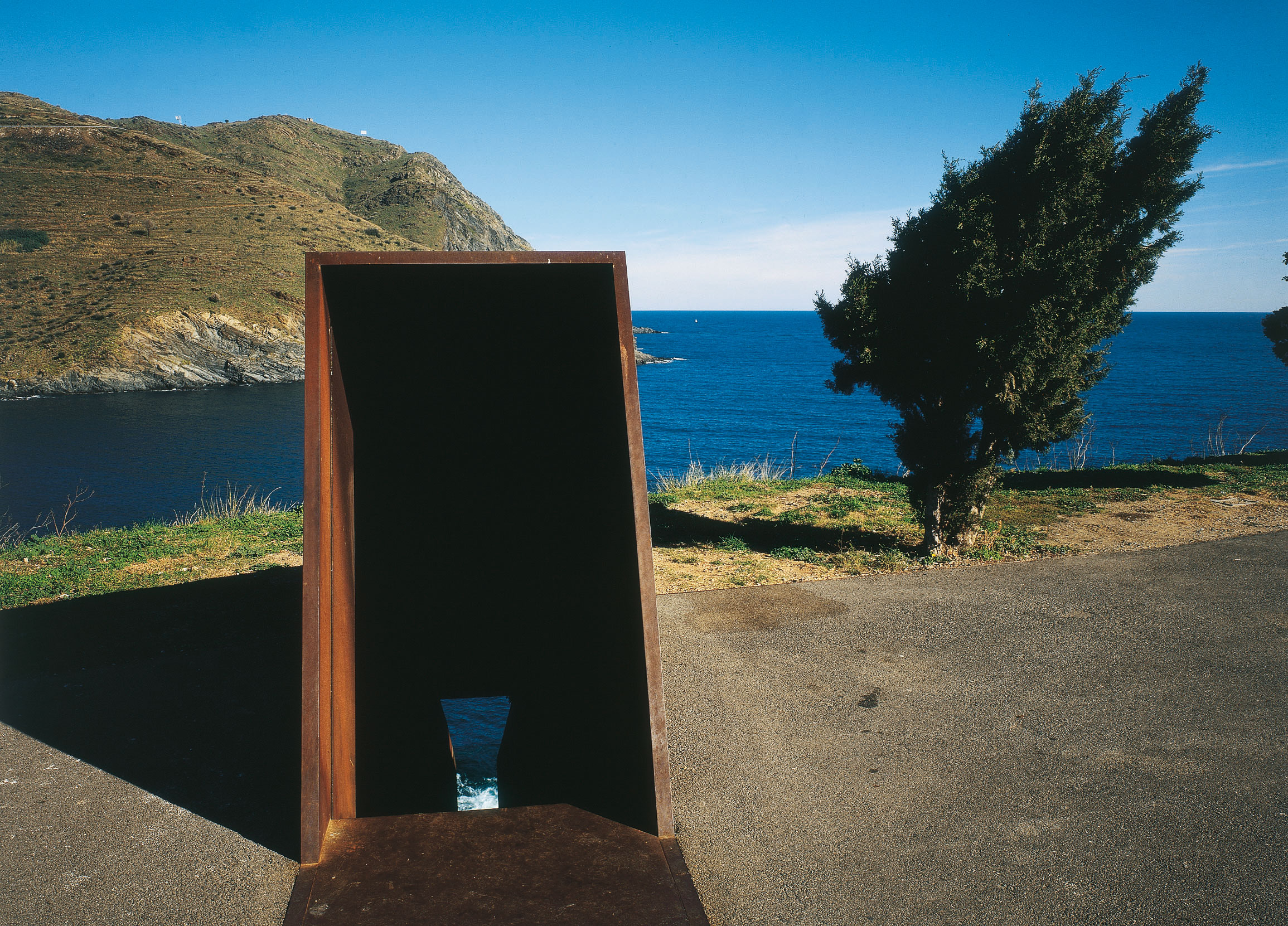
One thing pretty much leads to another. For the past few weeks, I’ve been thinking of Freud’s essay on the Uncanny, a useful rubric with which to think through my photography. The uncanny leads me to revisit surrealism, hence Breton. Then from Breton to Benjamin, though one never really leaves Benjamin anyway. But not so much Benjamin the scholar of surrealism as Benjamin the despairing refugee. The Benjamin who fled, like millions of others, for fear of his life.
June 1940. Europe, again. The Wehrmacht closes in on Paris. Benjamin leaves Paris for Lourdes. Then follows all the complicated moving from one place to another that is the refugee’s fate. He has a US visa. He crosses the Spanish border. The plan: to cross Catalonia, to cross fascist Spain, and on to Portugal, and on to America. He is still in Catalonia, at a hotel in Portbou. He is with a group of Jewish refugees now. Will they be let through? Will they be sent back?
The order comes that they are to be deported to France, into Nazi hands. And so, Walter Benjamin, our friend and helper, kills himself with an overdose of morphine. He is 48. What a waste. Worse than a waste: the order is evaded, and the rest of the party successfully moves on to Portugal.
Michael Taussig writes: “The receipt made out to the dead man, the difunto Benjamin Walter, by the Hotel de Francia, for the four-day stay…includes five sodas with lemon, four telephone calls, dressing of the corpse, plus disinfection of his room and the washing and whitening of the mattress.”
The itemization reminds me of two things. Less, of the usual little list of what I drank or ate (mineral water, Toblerone), what I spent, when I check out of these frequent hotels of my life. More, of the little plastic bags I saw at the public morgue in Tucson, containing the last few personal effects of unknown travelers recovered from the Sonora desert in Arizona. A few dollars, a few pesos, photograph of a family, a mother’s passport to remember her by.
How many Benjamins died today? (It would sting if this were the news: Walter Benjamin died today! But this, indeed, is the news.) How many will die tomorrow? Remember all those who turned away the Jews, the Roma, the homosexuals, and the communists in the 1940s, and consigned them to horrible death. We are certain that we, with our contemporary wisdom, are not so monstrous as to turn away those at death’s door, the inconvenience to us be damned. Of course we aren’t. Of course. But let’s say we were. What would that look like?
Five sodas, four telephone calls. “I can’t talk for long, but I’m sure we’ll meet again.” The trains are moving across Europe. The trains are being stopped. Men in uniform come on and begin searching. The passenger looks straight ahead, but her heart pounds like a bass drum.
Every refugee is alike, but each generation fails refugees in its own special way.
Only one person dies at a time.
Recovered media. The original text, tags and date were not preserved in the backup.
Recovered media. The original text, tags and date were not preserved in the backup.
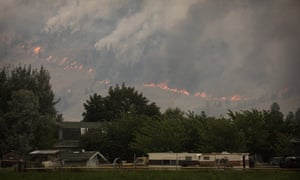
Canada is warming twice as fast as the rest of the world, a landmark government report has found, warning that drastic action is the only way to avoid catastrophic outcomes.
“The science is clear – Canada’s climate is warming more rapidly than the global average, and this level of warming effectively cannot be changed,” Nancy Hamzawi, assistant deputy minister for science and technology at Environment and Climate Change Canada, told reporters on Monday.
The report, released late on Monday by Environment and Climate Change Canada, paints a grim picture of Canada’s future, in which deadly heatwaves and heavy rainstorms become a common occurrence. Forty-three government scientists and academics authored the peer-reviewed report.
While global temperatures have increased 0.8C since 1948, Canada has seen an increase of 1.7C – more than double the global average.
Recovered media. The original text, tags and date were not preserved in the backup.
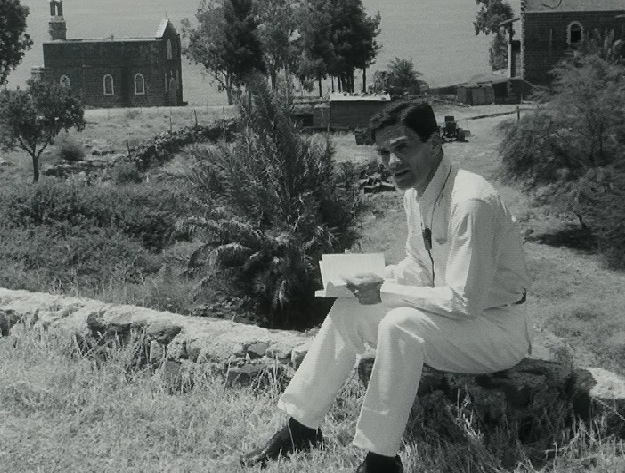
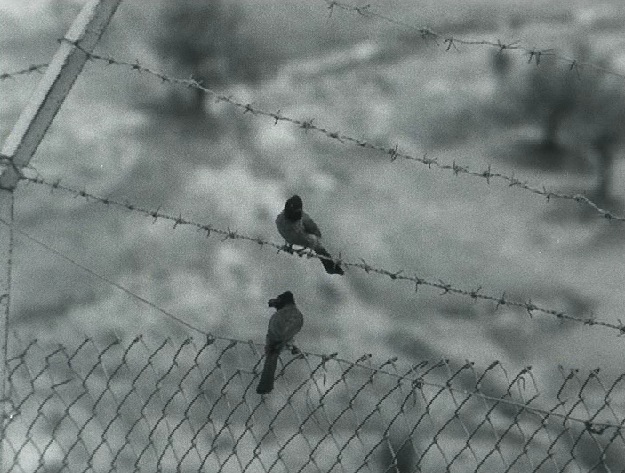
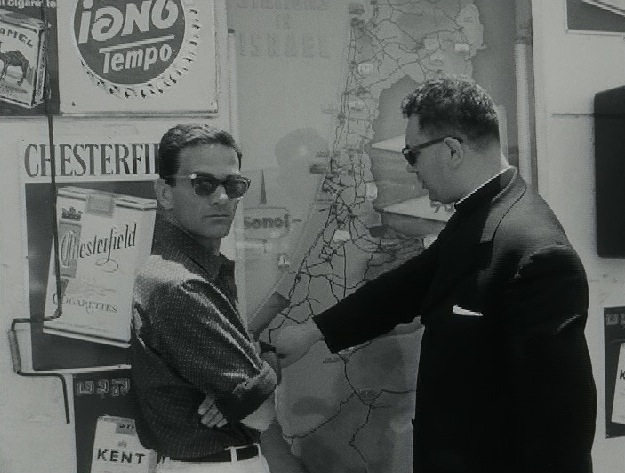
Filmmaker Pier Paolo Pasolini location scouting for his subsequent 1964 film Sopralluoghi in Palestina (A Visit to Palestine, or, Scouting for Locations in Palestine).
Pier Paolo Pasolini, Seeking Locations in Palestine for the Film “The Gospel According to Matthew” (Sopralluoghi in Palestina per il film “Il Vangelo secondo Matteo”) (1965). 52 min.
“I wonder sometimes why many concepts and terms such as ‘reality’ and ‘authenticity’ have always been behind the fluid creativity expressed in the highlighted artistic works emerging from our region since art in general has always been the best response to all kinds of rupture imposed by oblivion.
In that sense, image could be nothing but a free, rather metaphoric, zone where memory can find its way to survival… In every film I’ve made, I was hopefully looking for the moment that revealed how much people were eager to reconstruct their own stories with their own language(s), as well as mine.” —Mohamed Soueid
Recovered media. The original text, tags and date were not preserved in the backup.
Recovered media. The original text, tags and date were not preserved in the backup.
Recovered media. The original text, tags and date were not preserved in the backup.
Recovered media. The original text, tags and date were not preserved in the backup.
image not preserved in backup
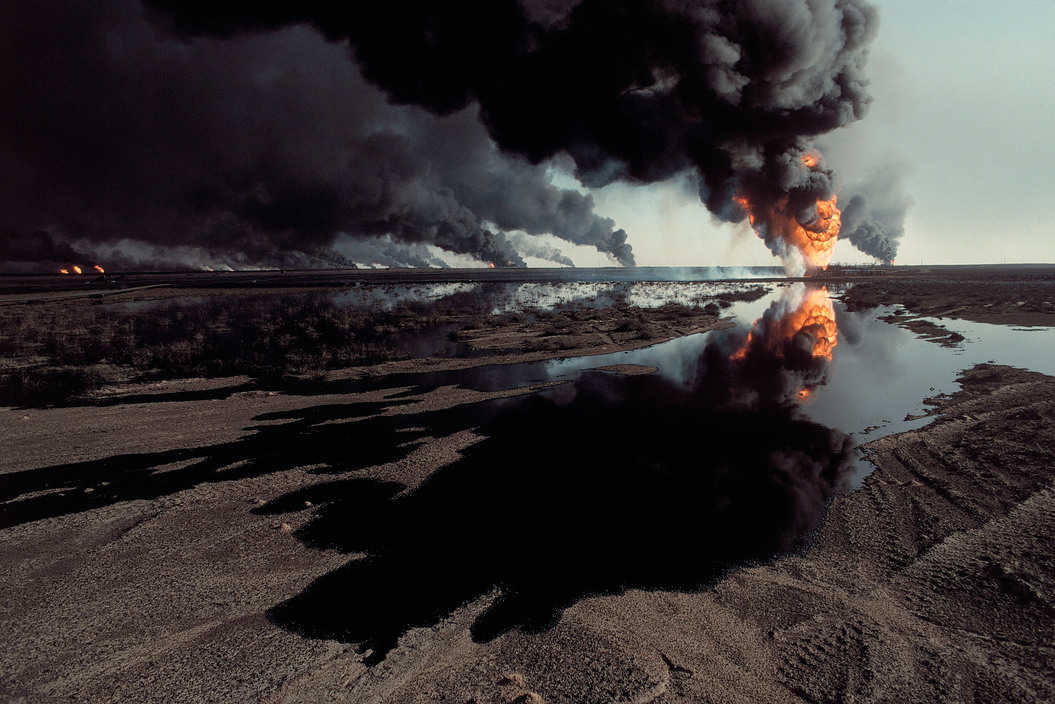
“Already now, after an average global warming of a mere 1C, the Persian Gulf is brushing the threshold. In July 2015, an unprecedented heatwave conspired with the humid air from the sea to push wet-bulb temperatures to a peak of 34.6C, leaving a margin of 0.4C to the limit of liveability. But that heatwave appears to have been surpassed by the one of July 2016, summed up worldwide as the hottest month on record on Earth. The global trend was spearheaded by the Gulf: in late July, the mercury – heat only – soared to 54C (129F) in Kuwait and Basra, probably the highest temperature ever recorded in the Eastern Hemisphere and possibly in the world as a whole.
Zainab Guman, a 26-year-old university student in Basra, told the reporter from the Washington Post that she rarely left home during daylight throughout the summer, for stepping outside is like ‘walking into a fire’: ‘It’s like everything on your body – your skin, your eyes, your nose – starts to burn.’ A spokesperson for Iraq’s meteorological department attested to a fundamental shift in the country’s weather patterns towards longer, more intense, more frequent heat- waves.
A refugee living in a tin hut outside Baghdad said: ‘Iraqis are strong people. But this heat is like fire. Can people live in fire?’”
Andreas Malm, “‘This Is the Hell That I Have Heard Of’: Some Dialectical Images in Fossil Fuel Fiction,” Forum for Modern Language Studies 53 no. 2 (April 1, 2017): 121–41.
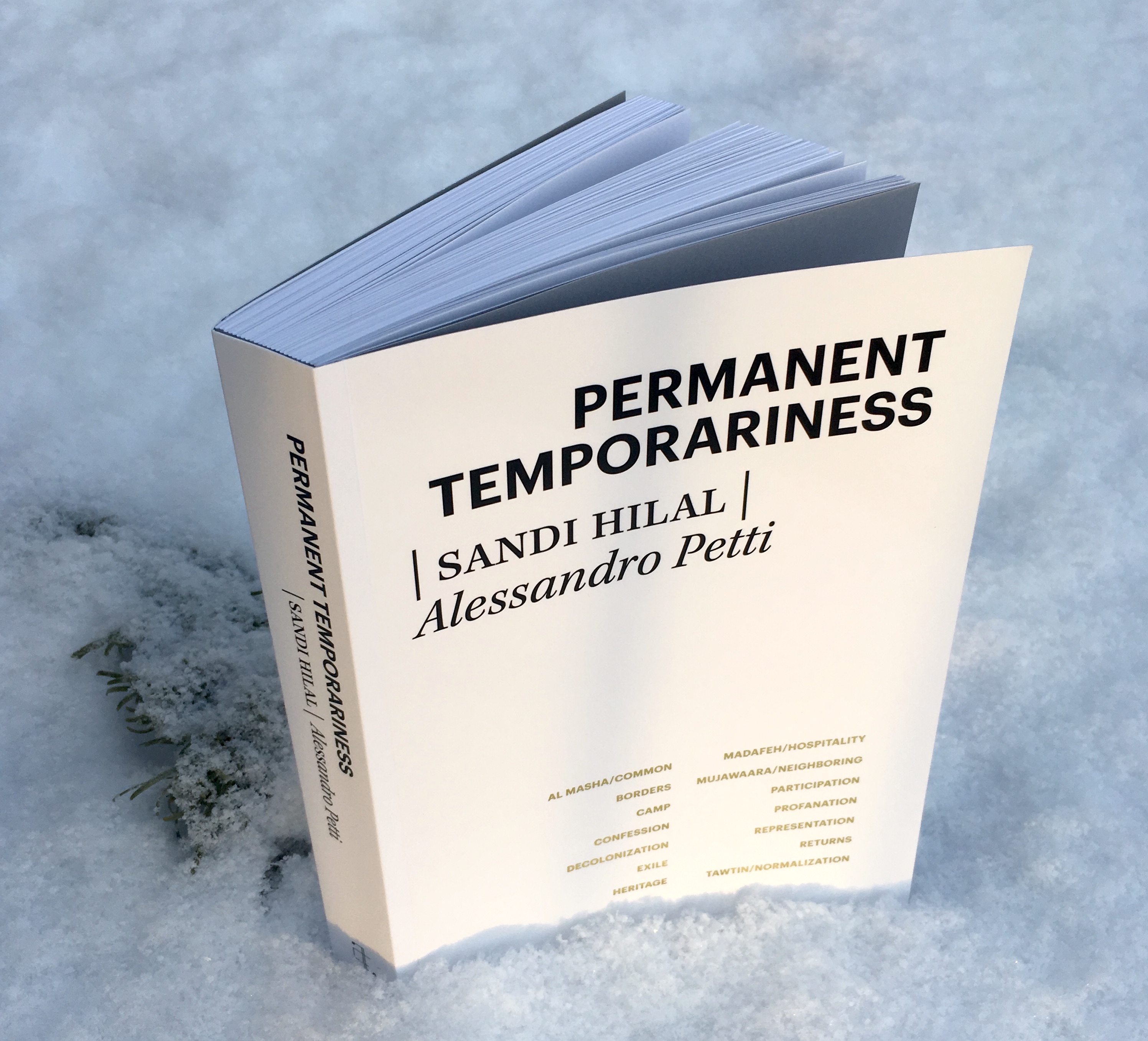
Permanent Temporariness is a book, a catalogue, and an archive that accounts for fifteen years of research, experimentation, and creation that are marked by an inner tension and a visionary drive that re-thinks itself through collective engagement. It is the result of the profound desire of its authors, Sandi Hilal and Alessandro Petti, to look back in connection with the eponymous retrospective exhibition that was inaugurated at the New York University Abu Dhabi Art Gallery on February 24, 2018, and at the Van Abbemuseum in Eindhoven on December 1, 2018.
Since their first work, Stateless Nation at the Venice Biennial in 2003, and throughout their more recent architectural interventions in refugee camps, the artistic practice of Sandi Hilal and Alessandro Petti has explored and acted within and against the condition of permanent temporariness that permeates contemporary forms of life. In their ambitious research and project-based practice, art exhibitions are both sites of display and sites of action that spill over into other contexts: built architectural structures, the shaping of critical learning environments, interventions that challenge dominant collective narratives, the production of new political imaginations, the re-definition of words, and the formation of civic spaces.
This book is organized around fourteen concepts that activate seventeen different projects. Each project is the result of a larger process of collaboration and is accompanied by individual and collective texts and interviews that contextualize and expand the reach of every intervention.
Contributors to projects and texts include Maria Nadotti, Charles Esche, Robert Latham, Salwa Mikdadi, Eyal Weizman, Okwui Enwezor, Munir Fasheh, Grupo Contrafilé, Murad Odeh, and Rana Abughannam. Edited by Maria Nadotti and Nick Axel. The publication of this book has been made possible with the generous support of the Royal Institute of Art, Stockholm; New York University Abu Dhabi Art Gallery; Van Abbemuseum; and the Foundation for Arts Initiatives.
image not preserved in backup
George Souvlis: Your first study, Heroes and Martyrs of Palestine, deals with the ways which dispossessed Palestinians have commemorated their past. Could you tell us how about how this has informed the Palestinian nationalist movement? Why it was so crucial? In which ways it influenced the political struggles of the Palestinian people?
Laleh Khalili: I started off by wanting to do some sort of banal doctoral research project on “coping mechanism” of Palestinian refugees in Lebanon or some other such anaemic liberal claptrap. After arriving in the refugee camp that so generously hosted me, it became clear to me that history and memory were resources that were not only instrumentally used by the camp (and local and national) leadership but one which structured the way ordinary refugees told the story of themselves as political subjects. And it seemed to me that these narratives fit within particular narrative genres that were influenced by broader political attachments and structures of the time. When I was conducting my fieldwork, in the early 2000s, Palestinians were in a liminal moment. Oslo’s spectacular failure (so lucidly foretold by Edward Said) was somewhat irrelevant to the refugees in Lebanon who saw the whole process as a kind of betrayal of their right of return. The narrative structure of commemoration was tragic. The prevalent mood of the stories they told, they way my interlocutors framed stories of the past, was of defeat, even if people still celebrated the efficacy of self-sacrifice and the resilience of sumud (or steadfastness). By contrast, in the heady days of the 1960s and 1970s when Palestinian armed struggle had been ascendant, the genre of the commemoration was heroic, and both official and popular narratives celebrated resistance and struggle on and off the battlefield. For me the stark difference had to do not only with the crushing devastation of Palestinian political organizations in the Lebanese civil war but also with a global shift from the era of Third Worldist struggle and solidarity to one in which NGOisation had become the prevalent mode of advancing claims. This global shift from political to a decidedly depoliticizing ethos echoes also in the transformation of the genres of memory from epic to tragic.
“Masking Tape Intervention: Lebanon 1989 is a short film by London based artist and curator Helene Kazan. The film is entirely generated from a single archive photograph taken of the kitchen in the flat her family lived in, in Lebanon during the Lebanese Civil War.”
Recovered media. The original text, tags and date were not preserved in the backup.
A writer takes earnest measures to secure his solitude and then finds endless ways to squander it.
Akram Zaatari, Letter to a Refusing Pilot (2013). 34 min film. Still.
“The chronicler who narrates events without distinguishing between major and minor ones acts in accord with the following truth: nothing that has ever happened should be regarded as lost to history.” Walter Benjamin, “On the Concept of History,” in Walter Benjamin: Selected Writings: Volume 4, 1938-1940, ed. Michael W Jennings (Cambridge, MA, and London: The Belknap Press of Harvard University Press, 2003).
We have become impoverished. We have given up one portion of the human heritage after another, and have often left it at the pawnbroker’s for a hundredth of its true value, in exchange for the small change of ‘the con temporary.’ The economic crisis is at the door, and behind it is the shadow of the approaching war. Holding on to things has become the monopoly of a few powerful people, who, God knows, are no more human than the many; for the most part, they are more barbaric, but not in the good way. Everyone else has to adapt-beginning anew and with few resources. They rely on the men who have adopted the cause of the absolutely new and have founded it on insight and renunciation. In its buildings, pictures, and stories, mankind is preparing to outlive culture, if need be. And the main thing is that it does so with a laugh. This laughter may occasionally sound barbaric. Well and good. Let us hope that from time to time the individual will give a little humanity to the masses, who one day will repay him with compound interest.
— Walter Benjamin, “Experience and Poverty” in Walter Benjamin: Selected Writings Volume 2: Part 1, 1927-1930, ed. Michael W Jennings, Howard Eiland, and Gary Smith (Cambridge, MA, and London: The Belknap Press of Harvard University Press, 1999), 735.
image not preserved in backup
image not preserved in backup
image not preserved in backup
Lamia Joreige, Here and Perhaps Elsewhere (2003). 54 min film. Still.
“There is infinite hope—but not for us.” Franz Kafka
image not preserved in backup
Lamia Joreige, Here and Perhaps Elsewhere (2003). 54 min film. Still.
“Language has unmistakably made plain that memory is not an instrument for exploring the past, but rather a medium. It is the medium of that which is experienced, just as the earth is the medium in which ancient cities lie buried. He who seeks to approach his own buried past must conduct himself like a man digging. Above all, he must not be afraid to return again and again to the same matter; to scatter it as one scatters earth, to turn it over as one turns over soil. For the “matter itself” is no more than the strata which yield their long-sought secrets only to the most meticulous investiga tion. That is to say, they yield those images that, severed from all earlier associations, reside as treasures in the sober rooms of our later insights-like torsos in a collector’s gallery. It is undoubtedly useful to plan excavations methodically. Yet no less indispensable is the cautious probing of the spade in the dark loam. And the man who merely makes an inventory of his findings, while failing to establish the exact location of where in today’s ground the ancient treasures have been stored up, cheats himself of his richest prize. In this sense, for authentic memories, it is far less important that the investigator report on them than that he mark, quite precisely, the site where he gained possession of them. Epic and rhapsodic in the strictest sense, genuine memory must therefore yield an image of the person who remembers, in the same way a good archaeological report not only informs us about the strata from which its findings originate, but also gives an account of the strata which first had to be broken through.”
Written ca. 1932; unpublished in Benjamin’s lifetime. Gesammelte Schriften, IV, 400-401. Translated by Rodney Livingstone, on the basis of a prior version by Edmund Jephcott.
Walter Benjamin, “Excavation and Memory” in Selected Writings Volume 2: Part 2, 1931-1934, ed. Michael W Jennings, Howard Eiland, and Gary Smith (Cambridge, MA, and London: The Belknap Press of Harvard University Press, 1999).
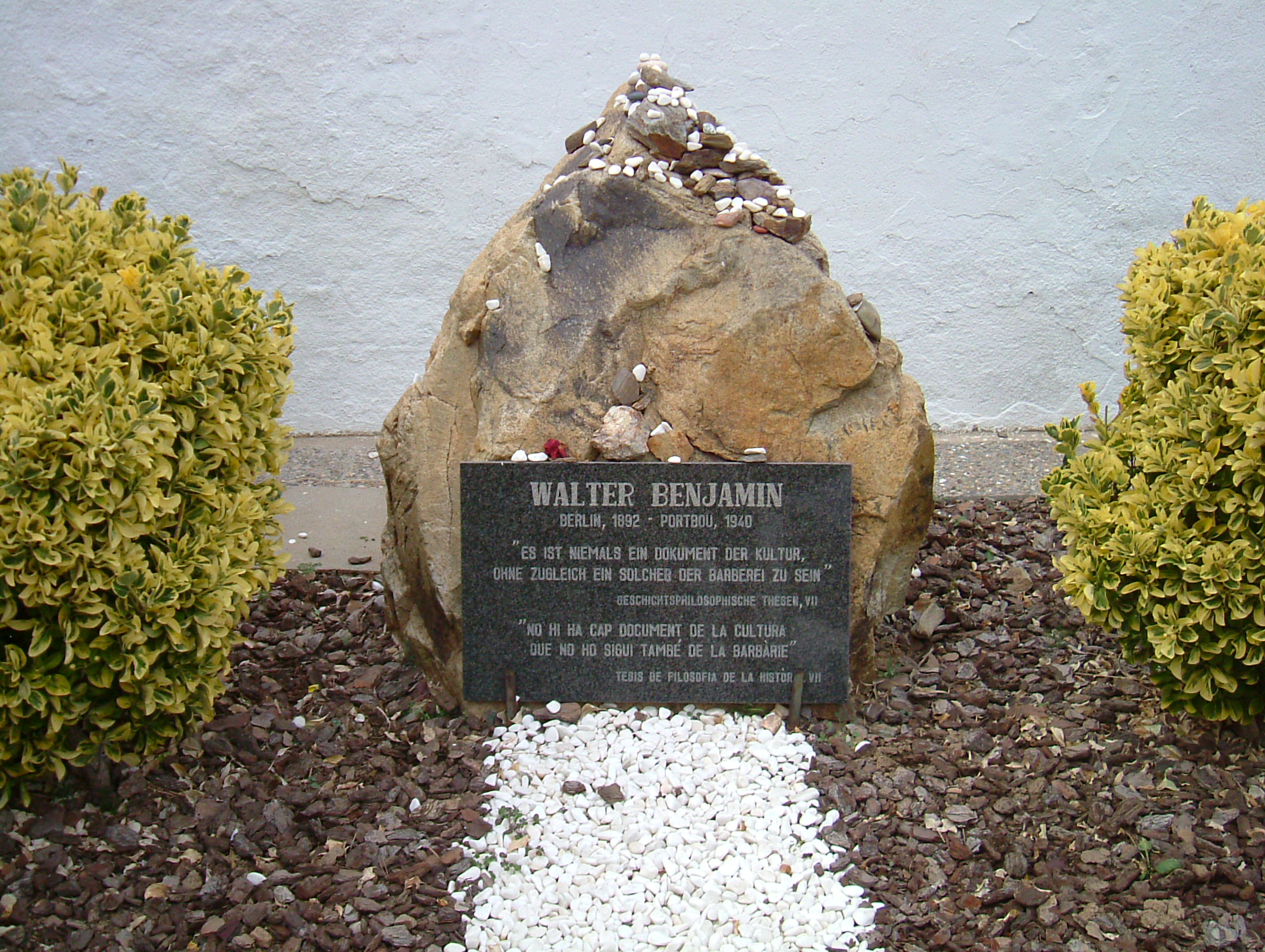
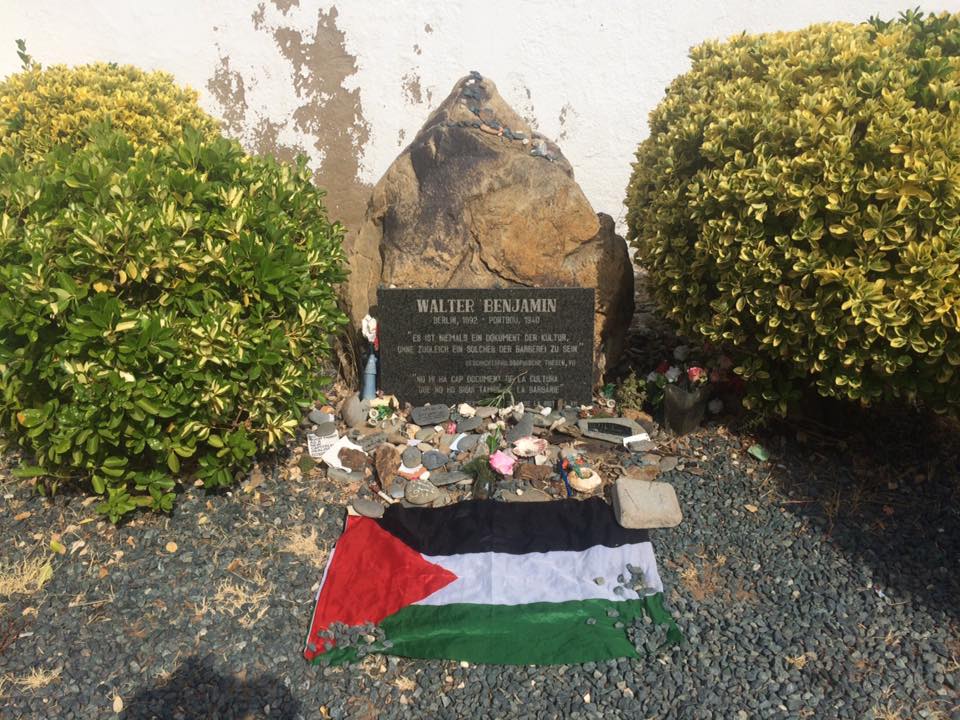
“When we turned around to make our way back up the steps of the monument I was again taken aback. At the head of the stairs we saw what appeared to be the same rectangle of light as we had seen when we had first entered and looked down at the sea, only now, gazing up to that entrance from the inside it was of course not the sea but the clear blue sky. Inside our fosa común, this monument to the nameless, we were walking back from the sea into the sky. Later in the actual cemetery we searched for some sign of Benjamin and found a rock about waist high set on the ground. It was untouched by the mason’s chisel except for a plaque with yet another quotation from Benjamin’s writings. His texts seem to be full of pithy statements apt for gravestones and monuments, and there is no shortage of writers who, desirous of some spectral profundity, paste in a slice or two. Poor Benjamin. To have his pearls thus cast. This one read: ‘There is no document of civilization that is not a document of barbarism.’” Michael Taussig, Walter Benjamin’s Grave (Chicago: The University of Chicago Press, 2006), 33.
image not preserved in backup
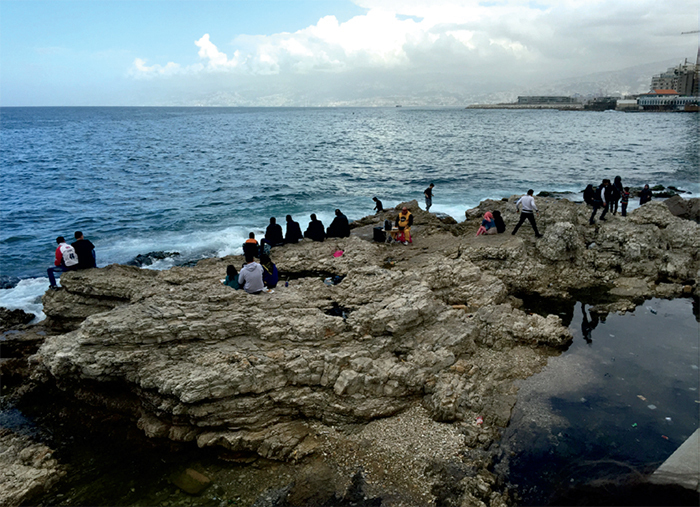
Beirut, January 2017. My photo.
“Articulating the past historically does not mean recognizing it ‘the way it really was.’ It means appropriating a memory as it flashes up in a moment of danger. … The only historian capable of fanning the spark of hope in the past is the one who is firmly convinced that even the dead will not be safe from the enemy if he is victorious. And this enemy has never ceased to be victorious.” Walter Benjamin, “On the Concept of History,” in Walter Benjamin: Selected Writings: Volume 4, 1938-1940, ed. Michael W Jennings (Cambridge, MA, and London: The Belknap Press of Harvard University Press, 2003), 391.
“With whom does historicism actually sympathize? The answer is inevitable: with the victor. And all rulers are the heirs of prior conquerors. Hence, empathizing with the victor invariably benefits the current rulers. The historical materialist knows what this means. Whoever has emerged victorious participates to this day in the triumphal procession in which current rulers step over those who are lying prostrate. According to traditional practice, the spoils are carried in the procession. They are called ‘cultural treasures,’ and a historical materialist views them with cautious detachment.… There is no document of culture which is not at the same time a document of barbarism. And just as such a document is never free of barbarism, so barbarism taints the manner in which it was transmitted from one hand to another. The historical materialist therefore dissociates himself from this process of transmission as far as possible. He regards it as his task to brush history against the grain.” Walter Benjamin, “On the Concept of History,” in Walter Benjamin: Selected Writings: Volume 4, 1938-1940, ed. Michael W Jennings (Cambridge, MA, and London: The Belknap Press of Harvard University Press, 2003), 391-392.
“In short, cultural history only seems to represent an advance in insight; actually, it does not entail even the semblance of an advance in the realm of dialectics. For cultural history lacks the destructive element which authenticates both dialectical thought and the experience of the dialectical thinker.” Walter Benjamin, “Edward Fuchs, Collector and Historian,” in Walter Benjamin: Selected Writings, Volume 3: 1935-1938, eds. Michael W Jennings and Howard Eiland (Cambridge, MA, and London: The Belknap Press of Harvard University Press, 2002), 268.
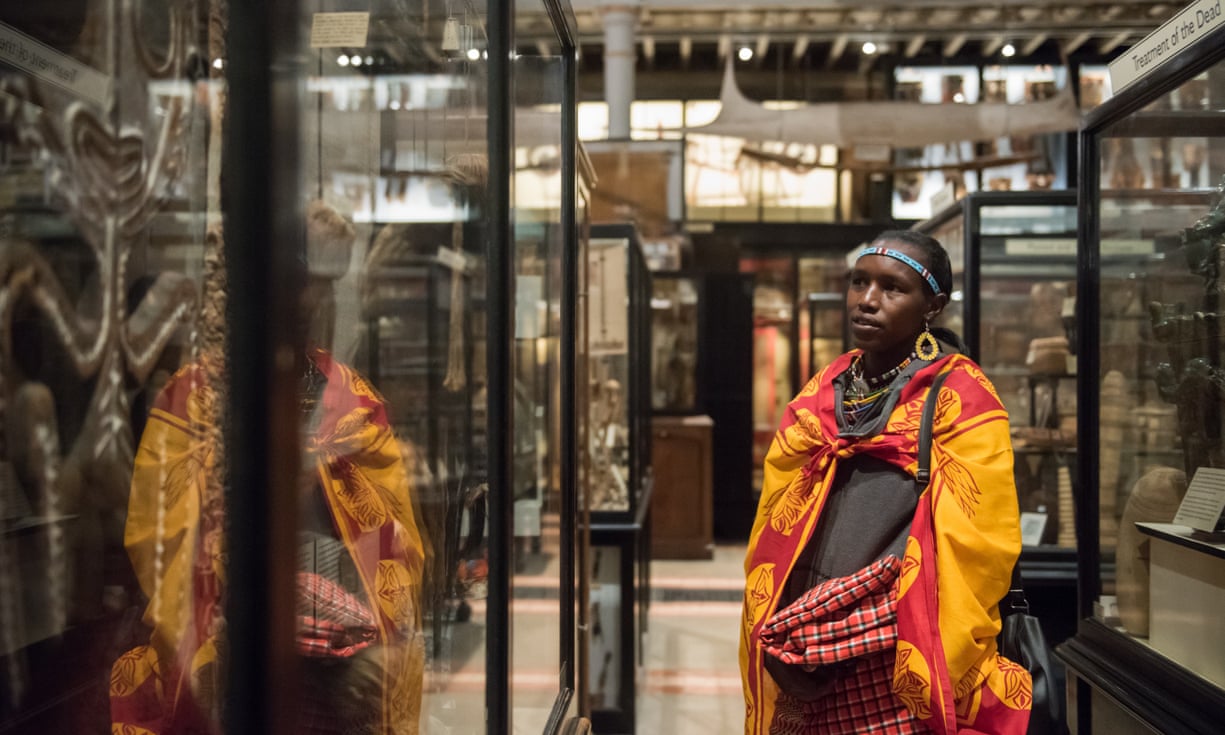
Image: Maasai tribeswoman Scholastica Ene Kukutia visits Oxford University’s Pitt Rivers Museum. From The Guardian(4 December 2018)
Recovered media. The original text, tags and date were not preserved in the backup.
Published in the Frankfurter Zeitung, November 1931. Gesammelte Schriften, IV, 396- 398. Translated by Edmund Jephcott.
It could happen to someone looking back over his life that he realized that almost all the deeper obligations he had endured in its course originated in people who everyone agreed had the traits of a “destructive character. ” He would stumble on this fact one day, perhaps by chance, and the heavier the shock dealt to him, the better his chances of representing the destructive character.
The destructive character knows only one watchword: make room. And only one activity: clearing away. His need for fresh air and open space is stronger than any hatred.
The destructive character is young and cheerful. For destroying rejuvenates, because it clears away the traces of our own age; it cheers, because everything cleared away means to the destroyer a complete reduction, indeed a rooting out, of his own condition. Really, only the insight into how radically the world is simplified when tested for its worthiness for destruction leads to such an Apollonian image of the destroyer. This is the great bond embracing and unifying all that exists. It is a sight that affords the destructive character a spectacle of deepest harmony.
The destructive character is always blithely at work. It is Nature that dictates his tempo, indirectly at least, for he must forestall her. Otherwise she will take over the destruction herself.
The destructive character sees no image hovering before him. He has few needs, and the least of them is to know what will replace what has been destroyed. First of all, for a moment at least, empty space-the place where the thing stood or the victim lived. Someone is sure to be found who needs this space without occupying it.
The destructive character does his work; the only work he avoids is creative. Just as the creator seeks solitude, the destroyer must be constantly surrounded by people, witnesses to his efficacy.
The destructive character is a signal. Just as a trigonometric sign is exposed on all sides to the wind, so he is exposed to idle talk. To protect him from it is pointless. The destructive character has no interest in being understood. Attempts in this direction he regards as superficial. Being misunderstood cannot harm him. On the contrary, he provokes it, just as oracles, those destructive institutions of the state, provoked it. The most petty bourgeois of all phenomena, gossip, comes about only because people do not wish to be misunderstood. The destructive character tolerates misunderstanding; he does not promote gossip.
The destructive character is the enemy of the etui-man. The etui-man looks for comfort, and the case is its quintessence. The inside of the case is the velvet-lined trace that he has imprinted on the world. The destructive character obliterates even the traces of destruction.
The destructive character stands in the front line of traditionalists. Some people pass things down to posterity, by making them untouchable and thus conserving them; others pass on situations, by making them practicable and thus liquidating them. The latter are called the destructive.
The destructive character has the consciousness of historical man, whose deepest emotion is an insuperable mistrust of the course of things and a readiness at all times to recognize that everything can go wrong. Therefore, the destructive character is reliability itself.
The destructive character sees nothing permanent. But for this very reason he sees ways everywhere. Where others encounter walls or mountains, there, too, he sees a way. But because he sees a way everywhere, he has to clear things from it everywhere. Not always by brute force; sometimes by the most refined. Because he sees ways everywhere, he always stands at a crossroads. No moment can know what the next will bring. What exists he reduces to rubble-not for the sake of the rubble, but for that of the way leading through it.
The destructive character lives from the feeling not that life is worth living, but that suicide is not worth the trouble.
Recovered media. The original text, tags and date were not preserved in the backup.
With his post-human artworks, Villar Rojas posits the question: What happens after the end of art?
When and where does a project actually begin?
What if an invisible series of housekeeping-like tasks, part of a wide range of circumstances that have been dismissed since the very beginning of art as secondary, is, on the contrary, key to producing that optical illusion we call a “work of art”?
What if we made a radical inversion and took the work of art as an excuse to do the housekeeping?
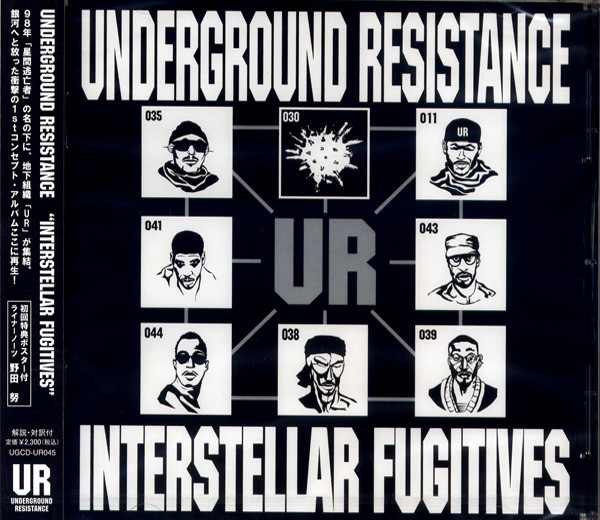
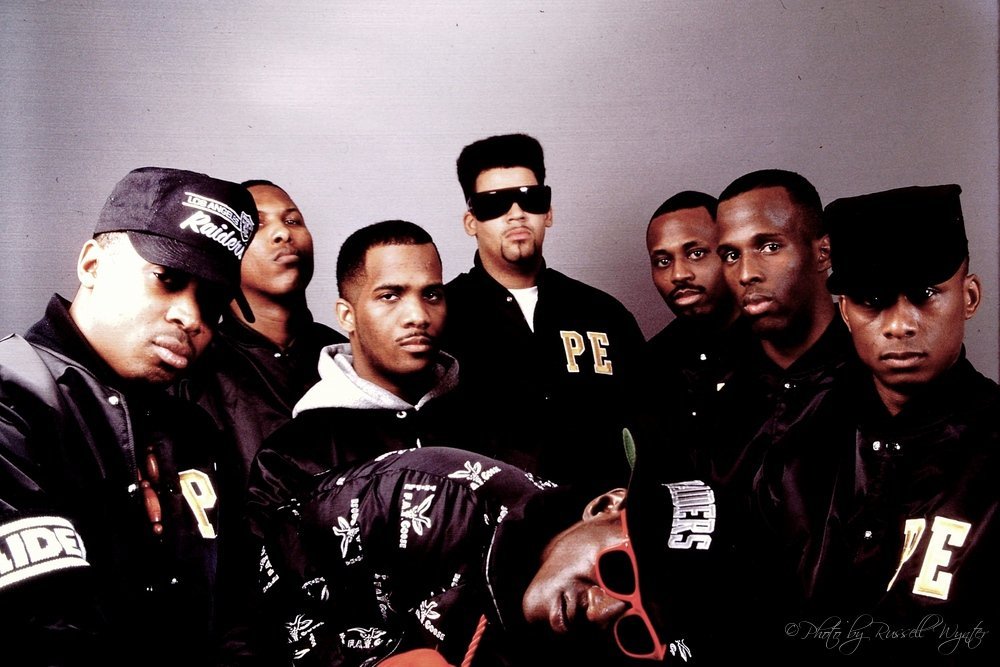
Mark Fisher, in the just released, posthumous anthology k-punk: The Collected and Unpublished Writings of Mark Fisher (2004-2016) (London: Repeater Books, 2018), writes, “What Public Enemy and Underground Resistance had in common was a rejection of the idea of music as entertainment. Instead of minstrelsy, they conceived of music in the militaristic terms explored in Steve Goodman’s recent book, Sonic Warfare: Sound, Affect and the Ecology of Fear . In this model, the use of music to subdue populations — the “psychoacoustic correction” directed by the US army against the Panamanian dictator Manuel Noriega; “sound bombs” deployed over the Gaza Strip — is by no means unusual. All music functions either to embed or to disrupt habituated behaviour patterns. Thus, a political music could not be only about communicating a textual message; it would have to be a struggle over the means of perception, fought out in the nervous system.”
Recovered from the Internet Archive (Wayback Machine).
“The quest to discover the true subject of an insurrection always misses the variegations within the crowd. City dwellers and banlieusards have been present from the outset. Moreover, it is not the case that the French peripheries comprise a uniform populism with no commitments other than consumer shortfalls; this is simply what brings together actors with disparate concerns. People arrive at the movement without a direction, or with a hesitant intuition, and the events function as a sort of school for them. The inciting occasion of a riot, a movement, an uprising, is never identical with its meaning. Since the outset there has been a struggle within the struggle, a contest over its direction; it is always in this encounter that revolutionary possibility lives. While we are familiar with street movements drifting right — Brazil provides a disastrous example — the Gilets Jaunes have seemed to reverse this course at moments over the duration of disturbances, particularly as the weekly calls for Saturday convergences have meant a certain urbanization and have moved toward a broader proletarian base, including actors such at the Adama Committee. “The Truth and Justice for Adama Traoré committee” formed after Traoré’s 2016 death in police custody north of Paris — an event which sparked riots identical in kind if not scale to the three weeks of rioting that, in 2005, leapt from Clichy-sous-Bois to encircle Paris, landing in suburbs across France and beyond.
[…]
It is perhaps useful to think of the Gilets Jaunes events as an early climate riot, just as we understand much contemporary immigration to be driven by climate collapse. These two problematics — global circulation of populations and ecological crisis — will not simply serve as occasions to consolidate state power but are certain to converge, over the next decade, into something like “green nationalism” through a discourse of resource preservation and purportedly humanitarian provisions against climate refugees. There is no universalism that will not oppose this development through struggles for both open borders and for communal power in matters ecological.”
image not preserved in backup
“Nestled among half-ruined buildings were the headquarters of institutions previously unknown to Saraqib: a poetry forum, a comedy troupe, a theatre company. Inspired by Bertolt Brecht, an ensemble of actors staged plays that broke the fourth wall, drawing the audience into tales that offered pointed critiques of war profiteering and other injustices. An activist collective painted over bullet-scarred walls around town, daubing the crumbling concrete in luminous greens and blues, and inscribing them with philosophical musings and fragments of verse. Before long, the town’s walls were covered in messages to lost loved ones, and locals began to call the initiative Lovers’ Notebooks. A wall near Hossein’s home was painted with a verse from the Palestinian poet Mahmoud Darwish: ‘We’re alive, we’re here, and the dream continues.’”
“Benjamin’s ‘paper graveyard’—what I have wanted to call a photograph—tells us, if it tells us anything, that we must regard death. And it is there, in death, that Benjamin experienced what he had already experienced in life—death. The shock of his death—breaking in upon his own history and giving it, in this way, an end and a future—corresponds to the terrifying lucidity of his corpus. Death, corpse, decay, ruin, history, mourning, memory, photography—these are the words Benjamin has left for us to learn to read. These are the words that prevent his other words from being organized into a system, that prevents his writings and readings from being crystallized and frozen into a merely negative method. Words of light, they correspond to the cremation of his work, a cremation in which the form of the work—its suicidal character—reaches its most brilliant illumination, immolated in the flame of his own criticism.” Eduardo Cadava, Words of Light: Theses on the Photography of History (Princeton: Princeton University Press, 1997), 130.
Recovered media. The original text, tags and date were not preserved in the backup.
Recovered media. The original text, tags and date were not preserved in the backup.
Lebanese and Palestinian families held a sit-in near to the notorious Khiam prison, which human rights groups say is the scene of torture, to call for the release of their loved ones from Israeli jails.
They carried pictures of their relatives who they say are imprisoned inside Israel.
Hezbollah guerrillas and their supporters also staged a drama enacting methods which Israel soldiers allegedly carry out.
The notorious Khiam Prison was the scene for a sit-in by relatives of prisoners held by Israel.
The event was organised by a government-backed committee that tracks Lebanese detainees in Israel.
The jail was a symbol of the Israeli-allied Southern Lebanon Army’s efforts over 14 years to punish guerrillas.
Khiam’s last 145 inmates walked free on May 23rd as villagers knocked down doors and broke locks after the chaotic flight of guards and interrogators.
But these people say they want Israel to release Lebanese prisoners held in Israeli prisons.
SOUNDBITE: (English) “We’ve worked for years for those held in Israel, the hostages, and we will still continue our work especially for Mustafa Dirani and Sheikh Obeid that they will be released because we consider them hostages and to keep them is totally contradictory with all international law” SUPERCAPTION: Elizabeth Hopkins, Amnesty International representative
Former prisoners re-enacted a dramatic presentation of life inside the Khiam Prison that human rights groups denounced as the scene of torture.
An actor called on the government to lock up every collaborator for a minimum of 10 years.
Some 1,500 former militiamen surrendered to authorities last week and await trials on charges of collaboration, which carry prison terms.
The brother of a prisoner jailed in Israel said they would continue to fight for the release of prisoners.
SOUNDBITE: (Arabic) “We considered those held in Israeli jails as hostages and not prisoners. We urge the Resistance to continue the fight until all detainees are released” SUPERCAPTION: Brother of Mustafa Dirani who is held in Israel
In the meantime, and along the border point of El Dhaira, Palestinian families continue to flock to the fence separating the two countries to meet up with relatives they have not seen for decades.
This woman wept as she met her brother for the first time.
He was born in a Palestinian camp in Lebanon.
She’s been separated from the rest of her family for 52 years.
Video and photo installation Photographic timeline, lambda print, Dibond finish (300 x 15cm) Super 8 film, dating from 1985 and filmed in 2007, converted to DVD
During the Israeli occupation of South Lebanon, several camps were opened to incarcerate thousands of Lebanese and Palestinians.
One of them, Ansar, opened in 1982 and closed in 1985. The Khiam camp that inspired our installation and film titled “Khiam 2000-2007” opened shortly after. In the second half of our film, “Khiam 2000-2007,” a number of ex-prisoners evoke the Ansar camp. When we asked them how to maintain a trace of the Khiam camp after its destruction, they allude to the absence of traces and outright oblivion.
Now, in place of the camp stand a restaurant, a theme park, a football field, a women’s pool, and even a zoo. Nothing to the right, nor to the left of these confines, as if these sites had been firmly implanted by Lebanese in lieu of the camp.
Beyond this façade is a scout camp, with tents set up among the remains of the Israeli army. We went on site to film the surviving traces, the physical ones linked to this history, all the while using material dating back to the camp’s existence… These super 8 images are odd, blurring documentary and timeframe notions, so as to create strange intervals. The result is a video and photography installation titled “Ansar recto/verso,” that questions the making of history when traces have vanished. What is a monument? What is an archive, a document, an image, an imagination?
Following the Israeli withdrawal from Ain el Mir in 1985, the village became the frontline. The Dagher family was displaced from their home, which was occupied by a radical resistance group for seven years. When the war ended in 1991, Ali Hashisho, a member of the Lebanese resistance stationed in the Dagher family house, wrote a letter to them justifying his occupation there, and welcoming them back home. He placed the letter inside the empty case of a B-10, 82mm mortar, and buried it in the garden. In November 2002, Akram Zaatari headed to Ain el Mir to excavate Ali’s letter.
“The story-teller has a peculiarly directive influence over us; by means of the states of mind into which he can put us and the expectations he can rouse in us, he is able to guide the current of our emotions, dam it up in one direction and make it flow in another, and he often obtains a great variety of effects from the same material.” Sigmund Freud, “The Uncanny” (1919)
We’ve been residents of this area for a while, since the 1300s when our ancestors used to live here. In 1975, the civil war started. Up until 1975 and the beginning of the war, we did not know who was Muslim and who was Christian. Honestly, I swear to God. When the Christian holidays came around, we used to celebrate with them. We were young and we used to join the other kids and eat sweets and they used to celebrate our holidays with us.
A lot of people died from our end and a lot of people also died from the other side. They retreated to their areas and so did we and for what? On that day, a lot of people died. They dug a big hole and they buried them all at once. Their bodies were never returned to their families; neither my brother’s body nor my aunt’s body nor my grandmother’s body were ever returned or even found. No one ever returned. If they dug up holes in the area for construction purposes and found bones, I’m certain that they reburied them again. There is a lot of desecration here.
In 1981, George Azar, a Lebanese-American, crossed the Syrian border into Lebanon. He carried a cheap camera and less than $100 and a desire to change the way the Arab world was portrayed by the US media. He began taking photographs. But within a few months Israel attacked Lebanon and war broke out.
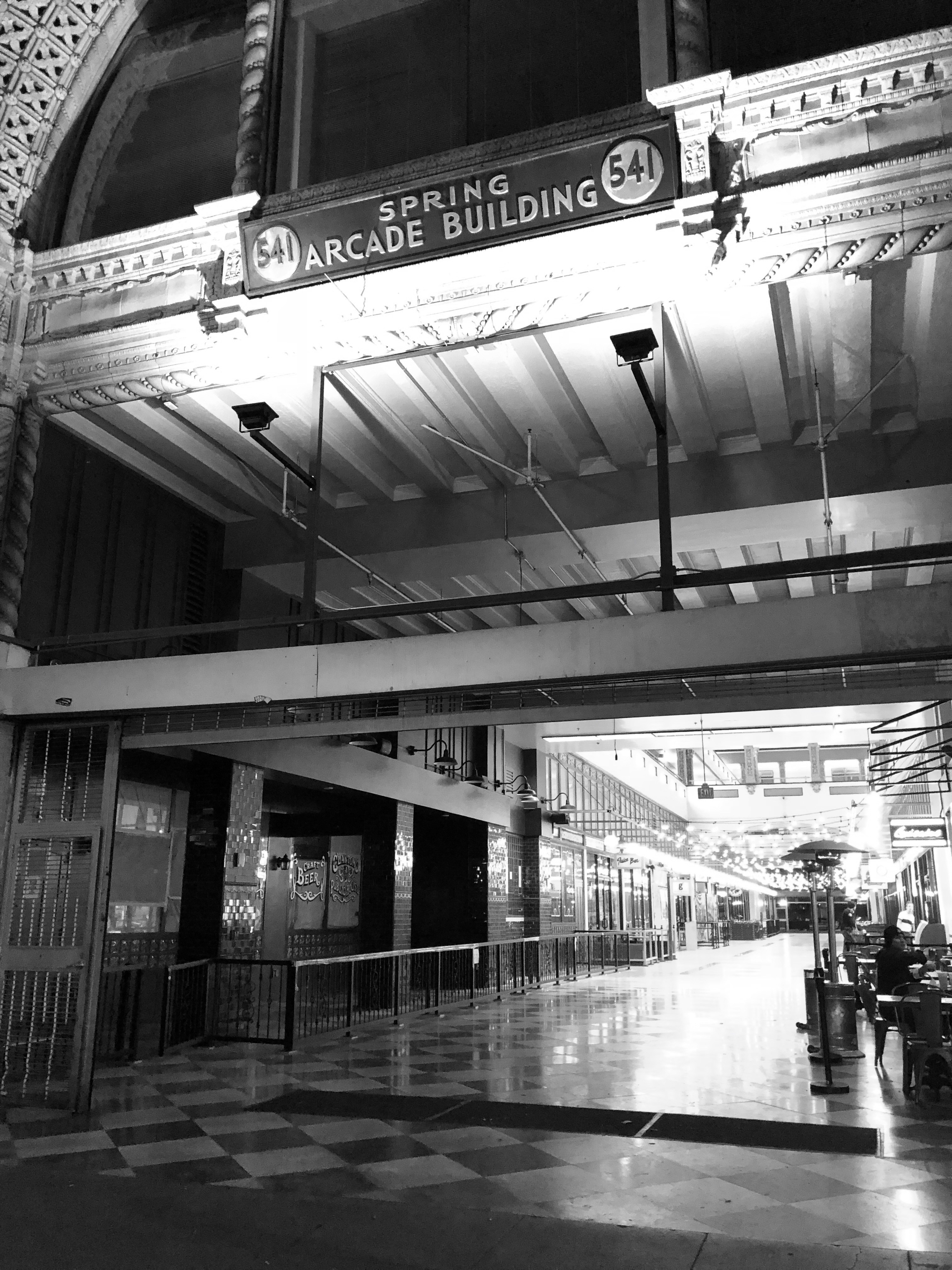
augmented[archive] is a digital art project, an iOS and Android app; a growing, expanding archive, a topography of the possible, a map of fragments from a city’s manifold presents. The project takes the form of a spatial narrative, functioning like a speculative archaeological tool, leading you through real and virtual ruins of past, present and future of the city and its imaginary expansions. Its framework is a media architecture, a GPS-based archive that can be read and rewritten, open for your thoughts and interaction. A guide that speaks of the various contestations of the city and your personal encounters with and within them.
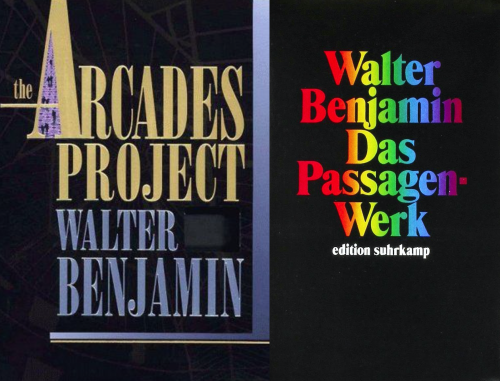
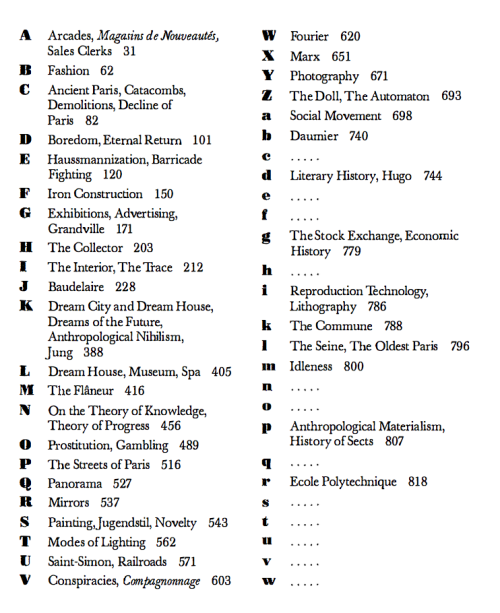
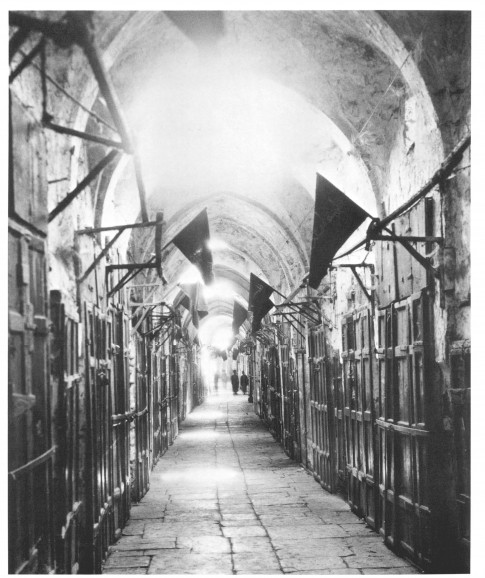
You will have to use a device to enter this virtual palimpsest, a smartphone, or a tablet and your imagination. Think of Walter Benjamin’s Arcade Project in the digital age of transmission and real-time; a fragmentary poem guiding you through actual and potential disasters and desires; spaces and times of here and now. While walking with this device you will experience video documents—recorded at the same place at other times; performances—absent yet present; associative story-telling—dreamlike yet hyper-real; suggestive instructions—asking for your own contribution and continuation of a story that is as conflicted, disjointed and elusive, as yourself and the city around you.
Thousands of people have gone missing during the armed conflict that plagued Lebanon from 1975-1990 and thousands are still missing them. Their families have the right to know their fate. The Lebanese authorities should pass a law for the missing persons in Lebanon.
Recovered media. The original text, tags and date were not preserved in the backup.
Lamia Joreige, Museum Crossing (2013). Silkscreen photograph based on a 1976 photo by Ibrahim Tawil.
Recovered media. The original text, tags and date were not preserved in the backup.
“When excavating specific instances or locations, whether from the past, present, or projected future, intertemporal continuities and ruptures surface via what persists, what has vanished, and the promise of knowing and imagining inherent in both.”
But the fact is that writing is the only way in which I am able to cope with the memories which overwhelm me so frequently and so unexpectedly. If they remained locked away, they would become heavier and heavier as time went on, so that in the end I would succumb under their mounting weight. Memories lie slumbering within us for months and years, quietly proliferating, until they are woken by some trifle and in some strange way blind us to life. How often this has caused me to feel that my memories, and the labours expended in writing them down are all part of the same humiliating and, at bottom, contemptible business! And yet, what would we be without memory? We would not be capable of ordering even the simplest thoughts, the most sensitive heart would lose the ability to show affection, our existence would be a mere neverending chain of meaningless moments, and there would not be the faintest trace of a past. How wretched this life of ours is!–so full of false conceits, so futile, that it is little more than the shadow of the chimeras loosed by memory. My sense of estrangement is becoming more and more dreadful.
— W.G. Sebald, The Rings of Saturn (London: New Directions Books, 1998).
“Printed out” image on a 35mm B&W film, overexposed by approximately 24 stops (about two days of exposure at f/2), without any chemical processing, showing that the silver clusters can grow up to visible sizes without developing.
Mahmoud Hojeij, Memories of Ras Beirut: wish you were here (2006). 51 minute video.
image not preserved in backup
Thomas Nail writes, “This will be the century of the migrant not just because of the sheer magnitude of the phenomenon, but because the asymmetry between citizens and migrants has finally reached its historical breaking point. The prospects for any structural improvements in this situation are hard to imagine, but alternatives are not without historical precedent. Before any specific solutions can be considered, the first step toward any change must be to open up the political decision-making process to everyone affected by the proposed changes, regardless of status. The only way forward in the long march for migrant justice and social equality is status for all.”
“In 1996, Syrian security forces in Lebanon detained Lebanese citizens and Palestinian refugees, who then disappeared. Some of these abductions began with short-term detention, interrogation and torture at Syrian intelligence headquarters at the Beau Rivage Hotel in Beirut, followed by transfer to Syria and imprisonment there without charge or due process. In one 1996 case, after a high-ranking Syrian officer called at the home of a Lebanese citizen and took him away, family members made inquiries at the local office of Syrian security. First they said that they didn=t have him, then they said that he was being questioned for a few days and would be released. After some days, they said that he was moved to Anjar [a Syrian detention facility inside Lebanon, near the Lebanese-Syrian border] and probably was in Damascus, a relative said. The family later was able to confirm this.”
Roy Samaha, Please Rewind Me Later (2007). 30 min film.
“This work wants a tool of research into its own past. It’s about linking places from childhood, dreams and VHS recordings. How can one make an auto-portrait without resorting to historical, archival shots? “You must understand: the memory of objects records and keeps human actions… so that future generations can inherit them… But you have also been asked to go, to leave everything behind you as if you had never come. Things, places possess a sort of memory. When you enter in an enclosed space, a part of you remains tied, you lose something. You must learn to leave without abandoning a piece of yourself… Learn to move around without leaving any trace.”
“[Doris] Salcedo makes no claim that mourning will change the world,
or even that art in itself suffices to enable mourning. The obsessive
repetition that marks her work suggests rather the melancholia of
an endless Penelopean persistence. There’s an infinity of repeated
microscopic gestures that slowly reveal themselves at the textural
surface of the work. Sometimes this materialises itself as a literal tracery
of stitches, as if the mourning process—Freud describes this process
in explicitly textile terms as a step by step unpicking or unravelling of
the libidinal ties that bind us (knüpfen) to the lost object—is being
interminably thwarted or protracted. And there’s an endless stream of
objects, as if the warehouse of abandoned furniture is constantly being
replenished. This is not only because the supply of corpses is seemingly
limitless.”
Benjamin writes: Computers Watching Movies shows what a computational system sees when it watches the same films that we do. The work illustrates this vision as a series of temporal sketches, where the sketching process is presented in synchronized time with the audio from the original clip. Viewers are provoked to ask how computer vision differs from their own human vision, and what that difference reveals about our culturally-developed ways of looking. Why do we watch what we watch when we watch it? Will a system without our sense of narrative or historical patterns of vision watch the same things?
Computers Watching Movies was computationally produced using software written by the artist. This software uses computer vision algorithms and artificial intelligence routines to give the system some degree of agency, allowing it to decide what it watches and what it does not. Six well-known clips from popular films are used in the work, enabling many viewers to draw upon their own visual memory of a scene when they watch it. The scenes are from the following movies: 2001: A Space Odyssey, American Beauty, Inception, Taxi Driver, The Matrix, and Annie Hall.
Recovered media. The original text, tags and date were not preserved in the backup.
On the one hand, this invitation to meet the corpse should not be mistaken for a call to embrace materiality, a return to hard facts and familiar corporeality. For a corpse is precisely that which sheds its own name, becomes unfamiliar. Unnamable, the corpse is unrecognizable and yet tangibly available. On the other hand, it would be equally mistaken to consider the work an invitation to side with a subversive historical narrative written from the point of view of the defeated. Rather, a corpse is governed by a downward-spiraling dialectic coursing endlessly toward ruination; it is incapable of safeguarding a memory.
— Walid Sadek, “Place at Last”in Art Journal 66 no. 2 (Summer, 2007).
After Darwish
In the presence of absence, consider the chiasmus: the absence of presence.
The absence is the Nakba. What does it mean to perform absence? What does absence look like? How might an interred presence, an awareness of an absent here—an elsewhere—be both imaged and imagined?
“The lacuna-image is a trace-image and a disappearance-image at the same time. Something remains that is not the thing, but a scrap of its resemblance. Something—very little, a film—remains of a process of annihilation: that something, therefore, bears witness to a disappearance while simultaneously resisting it, since it becomes the opportunity of its possible remembrance. It is neither full presence, nor absolute absence. It is neither resurrection, nor death without remains. It is death insofar as it makes remains. It is a world proliferating with lacunae, with singular images which, placed together in a montage, will encourage readability, an effect of knowledge, the kind Warburg called Mnemosyne, Benjamin called Arcades, Bataille called Documents, and Godard today calls Histoire(s).” Georges Didi-Huberman, Images in Spite of All: Four Photographs from Auschwitz (Chicago and London: The University of Chicago Press, 2008), 167.
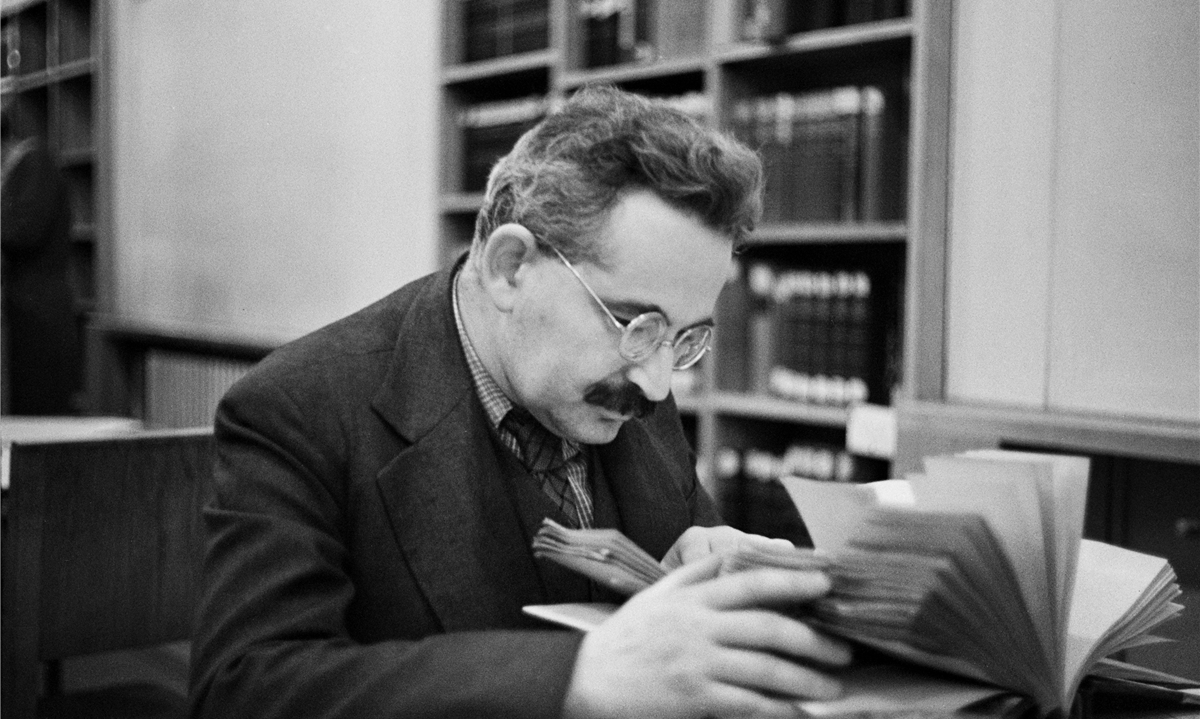
Giséle Freund photograph of Walter Benjamin in les Bibliothèque nationale de France (1937).
“We have to distinguish between on one side quotation, remake, ‘repetition’ of oneself, and, on the other side of the surpassing disaster, resurrection. […] Past a surpassing disaster, and taking into account the withdrawal of tradition, as a historian and archivist of myself, I can imitate myself, ‘repeat’ myself, but as a filmmaker I cannot do so even if I wished since my previous work is no longer available—I have to resurrect it before being able to ‘repeat’ myself.”
Jalal Toufic, The Withdrawal of Tradition Past a Surpassing Disaster.
Recovered media. The original text, tags and date were not preserved in the backup.
A sense of the eerie seldom clings to enclosed and inhabited domestic spaces; we find the eerie more readily in landscapes partially emptied of the human. What happened to produce these ruins, this disappearance? What kind of entity was involved? What kind of thing was it that emitted such an eerie cry? As we can see from these examples, the eerie is fundamentally tied up with questions of agency. What kind of agent is acting here? Is there an agent at all? These questions can be posed in a psychoanalytic register — if we are not who we think we are, what are we? — but they also apply to the forces governing capitalist society. Capital is at every level an eerie entity: conjured out of nothing, capital nevertheless exerts more influence than any allegedly substantial entity.
— Mark Fisher, The Weird and the Eerie (London: Repeater Books, 2017).
Published in the Frankfurter Zeitung, November 1931. Gesammelte Schriften, IV, 396- 398. Translated by Edmund Jephcott.
It could happen to someone looking back over his life that he realized that almost all the deeper obligations he had endured in its course originated in people who everyone agreed had the traits of a “destructive character. ” He would stumble on this fact one day, perhaps by chance, and the heavier the shock dealt to him, the better his chances of representing the destructive character.
The destructive character knows only one watchword: make room. And only one activity: clearing away. His need for fresh air and open space is stronger than any hatred.
The destructive character is young and cheerful. For destroying rejuvenates, because it clears away the traces of our own age; it cheers, because everything cleared away means to the destroyer a complete reduction, indeed a rooting out, of his own condition. Really, only the insight into how radically the world is simplified when tested for its worthiness for destruction leads to such an Apollonian image of the destroyer. This is the great bond embracing and unifying all that exists. It is a sight that affords the destructive character a spectacle of deepest harmony.
The destructive character is always blithely at work. It is Nature that dictates his tempo, indirectly at least, for he must forestall her. Otherwise she will take over the destruction herself.
The destructive character sees no image hovering before him. He has few needs, and the least of them is to know what will replace what has been destroyed. First of all, for a moment at least, empty space-the place where the thing stood or the victim lived. Someone is sure to be found who needs this space without occupying it.
The destructive character does his work; the only work he avoids is creative. Just as the creator seeks solitude, the destroyer must be constantly surrounded by people, witnesses to his efficacy.
The destructive character is a signal. Just as a trigonometric sign is exposed on all sides to the wind, so he is exposed to idle talk. To protect him from it is pointless. The destructive character has no interest in being understood. Attempts in this direction he regards as superficial. Being misunderstood cannot harm him. On the contrary, he provokes it, just as oracles, those destructive institutions of the state, provoked it. The most petty bourgeois of all phenomena, gossip, comes about only because people do not wish to be misunderstood. The destructive character tolerates misunderstanding; he does not promote gossip.
The destructive character is the enemy of the etui-man. The etui-man looks for comfort, and the case is its quintessence. The inside of the case is the velvet-lined trace that he has imprinted on the world. The destructive character obliterates even the traces of destruction.
The destructive character stands in the front line of traditionalists. Some people pass things down to posterity, by making them untouchable and thus conserving them; others pass on situations, by making them practicable and thus liquidating them. The latter are called the destructive.
The destructive character has the consciousness of historical man, whose deepest emotion is an insuperable mistrust of the course of things and a readiness at all times to recognize that everything can go wrong. Therefore, the destructive character is reliability itself.
The destructive character sees nothing permanent. But for this very reason he sees ways everywhere. Where others encounter walls or mountains, there, too, he sees a way. But because he sees a way everywhere, he has to clear things from it everywhere. Not always by brute force; sometimes by the most refined. Because he sees ways everywhere, he always stands at a crossroads. No moment can know what the next will bring. What exists he reduces to rubble-not for the sake of the rubble, but for that of the way leading through it.
The destructive character lives from the feeling not that life is worth living, but that suicide is not worth the trouble.
Radical Philosophy Redux
The timely, highly-anticipated return of what has been a very important journal on the left. The editorial collective writes:
One of many self-published left-wing journals that were founded in Britain in the early 1970s, Radical Philosophy is today, however, more or less alone in its continuing independence from corporate publishing and in its political commitment to a collective editorial project. The reasons for this are not hard to see. The material, intellectual and political contexts within which a publication such as ours operates have clearly changed beyond all recognition. We began as a magazine produced on typewriters and photocopiers, with images literally cut and pasted into the text, mailed out by the collective to our readers. The changing shapes and fortunes of independent spaces of the left, and the general penetration of the computer and the internet into everyday practices of writing and reading, have since then dramatically transformed what it means to autonomously produce and distribute a publication like RP. In particular, it became apparent that, for a radical journal committed to the construction of as wide a community of readers and contributors as possible – including those outside the West European and North American academy – it was getting harder and harder to justify the access restrictions under which the magazine had come to operate. Given the new possibilities made available via the internet and ‘print-on-demand’, making a commitment to an equally radical form of openness – in a context where, too often, ‘open access’ has simply meant the revivification of the zombie forms of commercial academic publishing – became an increasingly pressing priority. By the end of 2016, as we approached both our forty-fifth birthday and our 200th issue, it thus became evident that we required a renewed confrontation with the altered demands of the philosophical and political present. As such, when five members of the previous editorial group stepped down in early 2017, we took the opportunity not only to open up and diversify membership of the collective, but also to commit ourselves to rethinking our own means and relations of production – editorial as well as technical – in order to bring new life to the project.
[…]
In the Founding Statement of the Collective published in our first issue, the journal’s aim was articulated as one of challenging a situation in which philosophy had been made ‘into a narrow and specialised academic subject of little relevance or interest to anyone outside the small circle of Professional Philosophers’. Yet such a challenge was never about just a simple widening of the discipline. Instead, Radical Philosophy has always been about a breaking down of those fundamental institutional divisions that have so impoverished philosophy itself by separating it off both from other knowledges and from a wider political and intellectual culture of the left. The need to elaborate what Adorno once called a philosophising beyond philosophy, whether or not it originates in actual departments of academic philosophy, remains as relevant a task today as it did in 1972.
There are many reasons for this. In an editorial published on the occasion of our 100th issue, it was remarked that for all the changes it has seen, institutionally, ‘philosophy remains the most traditional and least reformed discipline in the humanities; not least with regard to race and gender’. Sadly, little has changed in this respect over the subsequent years. Amidst the current groundswell of demand for the decolonisation of knowledge, philosophy remains a central battleground, stubbornly resistant to the change that those storming its bastions wish to see. The analysis of how philosophical texts are entangled in the sordidness of the world and the evaluation of what, if anything, might be salvaged from their disentanglement, can be destabilising for a whiteness and a patriarchy that regard such texts as foundational to their very self-conception. We hope that, among other things, the pages of Radical Philosophy will become a venue for reflection upon the question of what it might mean to decolonise philosophy today. Alongside the translation and introduction of new authors, such an enterprise entails a profound questioning of the very notion of canonicity and the essence of the method of reason that calls itself philosophical. It is in keeping forever open the question of what it might mean to do philosophy that the project of a radical philosophy can remain truly radical.
The past presents itself as a time-lapse document—unveiled posthumously, unsigned and undated, but for this reason all the more binding in the exorbitance of its demand.
— Rebecca Comay, “Testament of the Revolution (Walter Benjamin)”
(2017)
Over and against this realm of law, in both its founding and preserving instances, Benjamin posits a ‘divine violence,’ one that takes aim at the very framework thatestablishes legal accountability. Divine violence is unleashed against the coercive force of that legal framework, against the accountability that binds a subject to a specific legal system and stops that very subject from developing a critical if not revolutionary point of view on that legal system. When a legal system must be undone, or when its coerciveness leads to a revolt by those who suffer under its coercion, it is important that those bonds of accountability be broken. Indeed, doing the right thing according to established law is precisely what must be suspended in order to dissolve a body of established law that is unjust.
— Judith Butler, Parting Ways: Jewishness and the Critique of Zionism (New York: Columbia University Press, 2012), 72-73.
Recovered media. The original text, tags and date were not preserved in the backup.
The disaster is related to forgetfulness—the forgetfulness without memory, the motionless retreat of what has not been treated—the immemorial, perhaps. To remember forgetfully: again, the outside.
— Maurice Blanchot, The Writing of the Disaster (1995)
image not preserved in backup
Beirut, 2017
image not preserved in backup
Beirut, 2017
The history-writing subject is, properly, that part of humanity whose solidarity embraces all the oppressed. It is the part which can take the greatest theoretical risks because, in practical terms, it has the least to lose.
— Walter Benjamin, “Paralipomena to Theses on the Concept of
History” (1939)
Fragments
“Past things have futurity.” Walter Benjamin, “The Metaphysics of Youth” (1914)
“It became obvious to me that the relationship of Palestinians to
the visible and the visual was deeply problematic. In fact, the whole history
of Palestinian struggle has to do with the desire to be visible.”
Edward Said, After the Last Sky (1986)
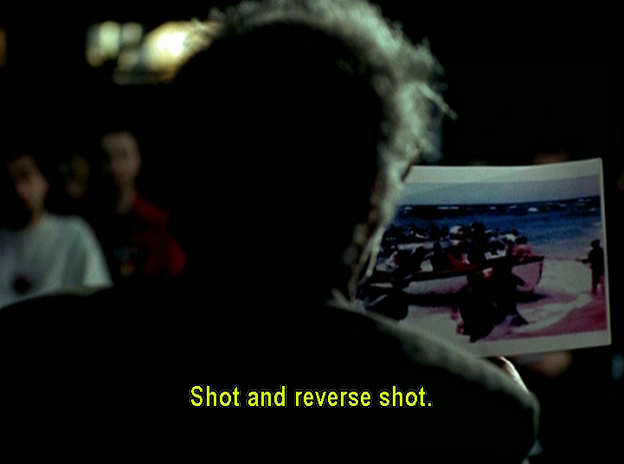
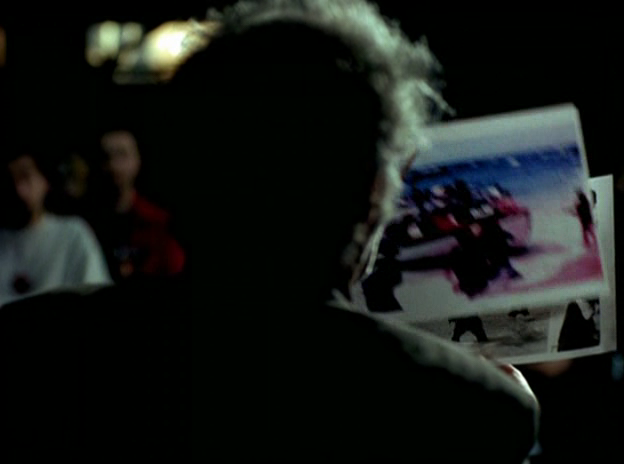
“In 1948, the
Israelites walked in the water towards the Promised Land. The Palestinians
walked in the water to drown. Shot and reverse shot. The Jewish people join
fiction. The Palestinian people, the documentary.” Jean-Luc Godard,
Notre Musique (2004)
“The history-writing subject is, properly, that part of humanity
whose solidarity embraces all the oppressed. It is the part which can take the
greatest theoretical risks because, in practical terms, it has the least to
lose.” Walter Benjamin, “Paralipomena to Theses on the Concept of
History” (1939)
“The disaster is related to forgetfulness—the forgetfulness
without memory, the motionless retreat of what has not been treated—the
immemorial, perhaps. To remember forgetfully: again, the outside.” Maurice Blanchot, The Writing of the Disaster (1995)
“History therefore begins where memory is endangered, during the
flash that marks its emergence and disappearance. It begins where the domain of
the historical cannot be defined by the concept of historicality—where
representation ends. As Nancy puts it: ‘The historian’s work—which is never a
work of memory—is a work of representation in many senses, but it is
representation with respect to something that is not representable, and that is
history itself. History is unrepresentable, not in the sense that it would be
some presence hidden behind the representations, but because it is the coming
into presence, as event.’” Eduardo Cadava, Words of Light: Theses on the Philosophy of
History (1997)
“To defend the disappeared in their non-irruptive absence-hood
one must learn to converse with silence rather than in silence. Such a
conversation is not a soliloquy. Silence is the presence of another who has yet
not answered; one tangibly unavailable because at last exceedingly physical,
namely interred.” Walid Sadek, “Collecting the Uncanny and the Labour of the
Missing” (2012)
“The past presents itself as a time-lapse document—unveiled
posthumously, unsigned and undated, but for this reason all the more binding in
the exorbitance of its demand.” Rebecca Comay, “Testament of the Revolution (Walter Benjamin)”
(2017)
Beirut, 2017
Beirut, 2017
Beirut, 2017
What relationship is there between human struggle and a work of art? The closest and for me the most mysterious relationship of all. Exactly what Paul Klee meant when he said: ‘You know, the people are missing.’ The people are missing and at the same time, they are not missing. The people are missing means that the fundamental affinity between a work of art and a people that does not yet exist is not, will never be clear. There is no work of art that does not call on a people who does not yet exist.
— Gilles Deleuze, “What is the Creative Act?” in Two Regimes of Madness: Texts and Interviews 1975-1995 (Cambridge, MA: The MIT Press), 324.
Beirut, 2017
The historical power of the trauma is not just that the experience is repeated after its forgetting, but that it is only in and through its inherent forgetting that it is first experienced at all.… If return is displaced by trauma, then, this is significant insofar as its leaving—the space of unconsciousness—is, paradoxically, precisely what preserves the event in its literality. For history to be a history of trauma means that it is referential precisely to the extent that it is not fully perceived as it occurs; or to put it somewhat differently, that a history can be grasped only in the very inaccessibility of its occurrence.
— Cathy Caruth, Unclaimed Experience: Trauma, Narrative, and History (Baltimore: Johns Hopkins University Press, 2016).
11. Right to work
11.1 LG is creating obstacles that prevent PR from accessing labour market Lebanese labour law distinguishes between Lebanese and non-Lebanese. The law does not sensitize the status of PRL, thus they are still subjected to the provisions of the laws that govern the work of foreigners even though they are refugees in Lebanon since 67 years. The amendment of the Labour Law 129/2010, specifically Article 59, exempted them from reciprocity and work permit fees, while the requirement of permits to access work keeps them under the weight of instability, especially as it needs to be renewed annually, even if they pay no fees. Worth note in the ninth session of UPR 2010 the recommendation 84(10) urged LG to take better procedures improving working conditions and situations for PR and Lebanon didn’t respond.
11.2 Depriving PR of working in “Liberal professions” PR are deprived form working in so-called “Liberal professions", which require syndicate affiliation, due to laws regulation. Some of these professions require Lebanese nationality. For example, bar association law no. 8/70 mentions that anyone who wants to work as a lawyer in Lebanon must be Lebanese for more than ten years. In other Syndicates and unions laws impose reciprocity and the right to practice the profession in one’s own country, such as Doctors’ Syndicate that applies (COM Decree No. 1659 of 1979). Same goes for Syndicates of Pharmacy and Engineering. In-spite of labour law amendment 129/2010 however it did not reflect itself on syndicates by laws, thus PR are being deprived from syndicates affiliation to practice these professions.
11.3 Depriving the PR workers of benefiting from social security services Article 9 of the social security law 128/2010 was amended and canceled the condition of reciprocity. However, the current law still deprives PR workers from social security services and familial benefits in particular maternity benefits, what affects working PRW. Despite stated in the social security service that every worker is subject to the payment of all fees (23.5% of the value of salary)4, they do not benefit except from the end of service indemnity (equivalent to only 8.5% of the paid value)5. This enforces private health insurance, what causes an additional financial burden on the PR workers and employers, thus reducing the willingness to hire them. Therefore a lot of workers are forced to accept harsh working conditions, low wages and no legal protection.
11.4 In 2010, the LG approved, the ninth session on the recommendation of 80(25-32), but the laws still discriminate against refugee women and PR in terms of labor law and social security law.
11.5 Recommendation 14: Amend 129/2010 law in terms of terminating the working permits and grant the PR the right to practice so-called “Liberal professions”. Along with this, issue COM decrees to insure implementation of the law. 11.6 Recommendation 15: Amend laws and change by laws that regulate syndicate professions to be in harmony with labor law and in terms of completing abolition of reciprocity as well as abolish conditions of practicing the profession in country of origin. 11.7 Recommendation 16: Amend the law 128/2010 allowing PR workers to enjoy their full rights in social security, and guaranteeing maternity benefits to the PRW workers and issue COM decrees to insure implementation of the law.
From the Universal Periodic Review of Lebanon, 23rd session of the Working Group on the UPR (November 2015). “Human Rights violations for Palestinian refugees in Lebanon”. Jointly submitted by: Palestinian Human Rights Organization (PHRO), Human Development Center, Association Najdeh, Norwegian People’s Aid Lebanon Office (NPA), Developmental Action Without Borders (NABAA), Committee for the Employment of Palestinian Refugees in Lebanon (CEP), Resource Center for Employment Promotion and Social Protection (R-CEP), Palestinian Association for Human Rights (Witness), Women’s Humantarian Organization (PWHO), Centre for Refugee Rights / Aidoun (CRR), Women Program Association (WPA), Mousawat Association, Joint Christian committee for Social service (JCC).
Remembering Memory: Literary Sabras and Shatilas – Arabic Literature (in English)
M Lynx Qualey writes: The massacre happened in 1982, between September 16 and 18, and is a moment that continues to stand out among the horrors we humans have enacted on one another. It is represented not just as a lived experience, but as a moment that changes individual and collective memory.
Jean Genet’s “Quatre heures à Chatila” (“Four Hours in Shatila”). Genet was among the first outsiders to witness the immediate aftermath of the massacres, and he wrote about this experience. 1983.
Jean Said Makdisi’s Beirut Fragments: A War Memoir. The events refracted through Makdisi’s personal memories. 1991.
Bahaa Taher’s Love in Exile. A novel about living in exile, including how one processes news while in exile. 1995.
I ran to turn on the television. The soap opera Dallas was on. I left the television on and turned on the radio. I turned the dial to the different stations, but there were no newscasts. There were music and songs everywhere. But while I was turning the dial quickly and incessantly, the soap opera on television was interrupted. A female announcer with an expressionless face came on: “We’ve just received a special report from Beirut. We advise sensitive and seriously ill people not to watch this report.” (Trans. Farouk Abdel Wahab.)
Elias Khoury’s Gate of the Sun. Khoury, here as elsewhere, is obsessed with the intersection of memory and violence. Dunya, a mutilated girl who survived the Sabra and Shatila quicklime pits, recites her memory of the events to “serve” the Palestinian cause as a “fund-raising tool.” Her memory is stripped of any real meaning, either for her or for others, as she moves from meetings to TV shows to repeat what she saw — or now remembers that she saw — during those two days. 1998.
Radwa Ashour’s Spectres. This is also a memory of the memory — Ashour’s co-protagonist, herself, remembers how she was not following the news about Sabra and Shatila as events unfolded, as she was in transit between Budapest and Cairo. In one of the narrative’s more emotional moments, she tells of her frustration at not having been attentive to the news, despite her acknowledgement that this attention would not have changed the outcome. 1998.
Yet attention means that you are involved in the event, that the person who has been killed is yours and that you belong to him. Then again, no—not altogether. … Perhaps it is similar to what my mother-in-law felt every time she thought of her son Mounif… She tries to remember what it was she was doing at 11 o’clock on Monday night. Was she asleep? How could she have been asleep? The idea nearly drives her mad, sleep becomes a guilty act, and the fact that she doesn’t know doesn’t mitigate, but rather intensifies the guilt. (Trans. Barbara Romaine.)
Mai Masri’s Children of Shatila. Masri gives a camera to two children in Shatila to ask questions and explore lives. As noted below, the film is available on YouTube. 1998.
Adania Shibli’s Touch. In this disorienting novella, told through the lens of an eight-year-old girl, the narrator must come to grips with these strange words: “Sabra” and “Shatila.” Shibli herself was eight when the massacres happened. 2003.
The girl tried to understand the meaning of the words Sabra and Shatila. Maybe they were one word. The word Palestine was unclear, expect that it was forbidden. The color of the green board resembled that color of cactus.(Trans. Paula Haydar)
Mahmoud Darwish’s In the Presence of Absence. The massacres still haunted Darwish’s writing, as he remembered them through the lens of Genet’s writing. 2006.
You will know from radio stations that the night of Sabra and Shatila was all lit up so that the killers could peer into the eyes of their victims and not miss a moment of ecstasy on the slaughtering table. You will read what Jean Genet wrote:
What partying, what feasting went on there as death seemed to take part in the pranks of soldiers drunk on wine, on hatred, and probably drunk on the joy of entertaining the Israeli army, which was listening, looking, giving encouragement, egging them on. I did not see the Israeli army listening and watching. I saw what it did. Killers had carried out the operation, but numerous torture squads were probably the ones who split skulls, slashed thighs, cut off arms, hands and fingers, and dragged the dying and disabled by ropes, men and women who were still alive. A barbaric party had taken place there: rage, drunkenness, dancing, singing, curses, laments, moans, in honor of the voyeurs who were laughing as they sat on the top floor of the Akka hospital.
You cannot cross the threshold of pain nor reach the source of the nightmare to bear witness to your body being chopped up nor peer into the eyes of your killer, whom you know very well. You cannot speak to anyone, because the world is empty of the living and filled with the dead who bid farewell yesterday to their brothers and protectors who sailed on Greek-built ships of Trojan symbolism. The victims did not finish any of their tasks: they did not finish their dinner, prayers, or nightmares. (Trans. Sinan Antoon)
“…it was all like a movie. All like a movie. Dead people everywhere. Do you still want to hear? Do you want to hear more? More? He shouted at me, here, drink! He cranked his gun and put it in my face.”
Ari Folman’s Waltz with Bashir. A Hebrew-language engagement with Sabra and Shatila that Palestinian-British author Mischa Hiller, who wrote a novel about the massacre, says “left too much unsaid.” 2008.
Mischa Hiller’s Sabra Zoo(read an extract). Palestinian-British novelist Mischa Hiller told an interviewer that he was living in Beirut when the massacre happened and he carried it with him until he wrote the book. 2010.
I slept in my parents’ house and I was dreaming about her house. When I awoke I saw my brothers Hung From the roof of the Church of the Resurrection Out of compassion, the Lord said: this is my own suffering. I mustered up the hanged men’s pride and said: in my opinion, it’s ours.
Pain illuminates everything and I love it more than my nightmares.
Recovered media. The original text, tags and date were not preserved in the backup.
Josephine Grace Gay was born in 2005 and shot dead seven years and three days later. She is one of the 20 six- and seven-year-old victims of the Sandy Hook massacre who should be tweens by now. They’d be canoeing across Candlewood Lake, competing at soccer tournaments, and wandering around the imagined kingdoms accessible to their parents by metaphor only. I know this because that’s what I did when I was a middle-schooler in a sluggish, boring, dumb suburb of Danbury, Connecticut, 15 minutes west of Newtown.
Recovered media. The original text, tags and date were not preserved in the backup.
Recovered media. The original text, tags and date were not preserved in the backup.
We live in a block universe of spacetime, where nothing physically passes and vanishes, but where occasionally things withdraw due to surpassing disasters. Palestinians, Kurds, and Bosnians have to deal with not only the concerted erasure by their enemies of much of their tradition: the erasure by the Israelis of hundreds of Palestinian villages in 1948 and their renaming with Jewish names, and the erasure of hundreds of Kurdish villages during the Anfāl operation in Iraq, etc.; but also the additional, more insidious withdrawal of what survived the physical destruction.
— Jalal Toufic, The Withdrawal of Tradition Past a Surpassing Disaster.
After the surpassing disaster, while the documentation of the referent is for the future, the presentation of the withdrawal is an urgent task for the present.
— Jalal Toufic, The Withdrawal of Tradition Past a Surpassing Disaster.
On the 100th anniversary of the 1917 Balfour Declaration.
Balfour Day, the Old City of Jerusalem, 2 November 1929. Palestinians and many Arabs commemorated the anniversary of the Balfour Declaration (2 November 1917) with mourning, as indicated by the black flags.
Recovered media. The original text, tags and date were not preserved in the backup.
Recovered media. The original text, tags and date were not preserved in the backup.
The disaster is related to forgetfulness—forgetfulness without memory, the motionless retreat of what has not been treated—the immemorial, perhaps. To remember forgetfully: again, the outside.
— Maurice Blanchot, The Writing of the Disaster (University of Nebraska Press, 1995).
September 2017, Cuddell Commons Butterfly Garden, in memoriam, Tamir Rice (2002-2014)
Recovered media. The original text, tags and date were not preserved in the backup.
Recovered media. The original text, tags and date were not preserved in the backup.
The Lebanese’s overall obliviousness and indifference to documenting the carnage through photographs, films, and videos cannot be fully explained by the circumstance that toward the end of the civil war they must have grown habituated to the destruction around them, as well as by the fact that many of these ruined areas were declared military zones, offlimits to cameras. Can photographs of these withdrawn buildings become available without resurrecting their withdrawn referents?
— Jalal Toufic, The Withdrawal of Tradition Past a Surpassing Disaster.
Recovered media. The original text, tags and date were not preserved in the backup.
Nagasaki Medical College, Nagasaki, August 1945.
“If the atomic bombings of Hiroshima and Nagasaki on August 6 and 9, 1945, respectively, are a surpassing disaster then beyond not only the immediate death toll and the manifest destruction of buildings, including museums, libraries and temples, and of various other sorts of physical records, but also the long-term hidden material effects, in cells that have been affected with radioactivity in the “depth” of the body, and the latent traumatic effects that may manifest themselves après coup, there would be an additional immaterial withdrawal of literary, philosophical and thoughtful texts as well as of certain films, videos, and musical works, notwithstanding that copies of these continue to be physically available; of paintings and buildings that were not physically destroyed; of spiritual guides; and of the holiness/specialness of certain spaces.”
Jalal Toufic, The Withdrawal of Tradition Past a Surpassing Disaster.
How to preserve the radical negativity of the revolutionary event? How to transmit the amnesiac rupture within history—to initiate a tradition of the impossibility of tradition? Our contemporary obsession with anti-monuments, by now a slightly weary topic in the memory industry, begins right here. Failing to keep pace with the events, revolutionary artifacts became instantly obsolete, thus needing to be destroyed, and the destruction in turn to be commemorated, sacralized, and eternalized, the ruins carefully preserved in their desecrated condition. Images would proliferate representing the violent destruction of images—scenes of passion involving smashing, burning, pillaging images, but also trampling, tearing, biting, chewing, swallowing images, or collecting the fragments, piling up the debris into monumental pyramids to form the foundation stones of a new order.
— Rebecca Comay, Mourning Sickness: Hegel and the French Revolution (Stanford University Press, 2011), 62.
Recovered media. The original text, tags and date were not preserved in the backup.
Recovered media. The original text, tags and date were not preserved in the backup.
Rayyane Tabet, Colosse aux pieds d’argile(Colossus with Feet of Clay), 2015, sixteen marble and sandstone columns, nineteen marble and sandstone bases, 292 concrete core samples. Installation view, Sfeir-Semler Gallery, Hamburg, 2015.
Tabet writes: A year ago a friend and I went looking for old tiles to use for the renovation of her apartment. We were told of a parking lot on the outskirts of the city where a wholesaler sold findings scavenged from demolished historical buildings. Among the doors and the window frames, the stained glass and the piles of terrazzo tiles, lay broken marble and sandstone columns and bases. When I inquired about their origin, the wholesaler whispered: “Those are from the job we did a month ago.”
The story goes like this: A nineteenth-century single-family house sat in the middle of the city, on a piece of prime real estate coveted by a developer, but a legal dispute among the house’s eighty inheritors rendered its sale impossible. It sat abandoned for years. The developer, finally tired of waiting, hired a group of workers to clandestinely access the property and break apart the columns that supported the roof. This act accelerated the sale, as building laws in Beirut dictate that a house with no roof has to be either fully renovated or sold.
At the time the house was constructed, investors from Beirut had found a market for “goods from the East” among wealthy Italian families. The returning boats needed weight for stability, so they were loaded with marble columns, stairs, tiles, and balconies from a quarry in Carrara. Slowly, houses with stone from this quarry began to populate Beirut, adopted by a new social class that differentiated itself with a style borrowed from Europe. A century later, a glass skyscraper has arisen on the same spot.
Partial installation view of Lamia Joreige’s Objects of War, 1999– , multimedia installation, dimensions variable, from the artist’s solo exhibition “Ici et peut-être ailleurs” at Nicéphore Niépce Museum, France, 2003.
In “Revisiting Hell,” a short piece on the exhibition Melancholia. A Sebald Variation currently on display at King’s College London, Houman Barekat writes:
The late-20th-century German author W.G. Sebald was in the habit of befuddling his readers by interspersing his prose with photographs – invariably sans explanatory captions, and all the more absorbing for it – so there is something rather apt about a Sebald-themed exhibition in which visual art is foregrounded, and the written word relegated to a tersely informative minimum. ‘Melancholia: A Sebald Variation’ presented at King’s College London’s exhibition space in Somerset House, the Inigo Rooms, marks two decades since Sebald gave the Zurich lectures that would appear in book form as Luftkrieg und Literatur (1999) and later, courtesy of Anthea Bell’s translation, as the posthumous On the Natural History of Destruction (2003). These lectures looked back at the Allied fire-bombing of German towns and cities during the Second World War, and explored the reluctance of postwar German society – due to a mixture of shame, trauma and ingrained cultural diffidence – to speak openly about it. Sebald’s sensitive probing of the German collective psyche was jarringly juxtaposed with harrowing accounts of the carnage, such as this description of the bombing of Hamburg during Operation Gomorrah in 1943:
‘only a quarter of an hour after the first bombs had dropped the whole airspace was a sea of flames as far as the eye could see … At its height the storm lifted gables and roofs from buildings, flung rafters and entire advertising hoardings through the air, tore trees from the ground and drove human beings before it like living torches. Behind collapsing facades the flames shot up as high as houses, rolled like a tidal wave through the streets at a speed of over 150 kilometres an hour, spun across open squares in strange rhythms like rolling cylinders of fire. The water in some of the canals was ablaze.’
Sebald’s subject was not war per se, but memory. It is therefore fitting that the artworks in ‘Melancholia: A Sebald Variation’ do not, for the most part, bear documentary witness in the way we might expect of, say, a show at the Imperial War Museum. With the notable exceptions of Wilhelm Rudolph’s ink drawings from the ruins of Dresden made in the final months of the war, and photographs taken by Hermann Claasen, Erich Andres and Richard Peter of the wreckage of Cologne, Hamburg and Dresden respectively – Claasen’s 1946 Fronleichnamsprozession, which captures a long line of nuns filing past a backdrop of Cologne’s utter devastation, is breathtakingly arresting – the majority of the exhibits are not contemporaneous testimonies but engage with the subject allusively, at a considerable remove in time and space.
[…]
The German electorate has this week returned Chancellor Merkel to power for a fourth term, but the rise of the far-right AfD (Alternative for Germany) party, which has just won its first parliamentary seats with some 12.6% of the vote, has raised the spectre of German nationalism for the first time in generations. Germany, it seems, is far from immune to the toxic populism that has swept across much of the Western world in the past couple of years. There is an old adage that those who forget their history are doomed to repeat it. It took the German nation – with the help of Sebald and the other German writers of his generation – decades to truly confront the suffering and trauma that resulted the last time Europe gave free rein to its basest impulses. Let’s hope their efforts have not been in vain.
Walter Benjamin’s grave at Portbou, Spain, with a newly added Palestinian flag. August 27, 2017.
Recovered media. The original text, tags and date were not preserved in the backup.
Vision is always a question of the power to see-and perhaps of the violence implicit in our visualizing practices. With whose blood were my eyes crafted?
— Donna Haraway, “Situated Knowledges: The Science Question in Feminism and the Privilege of Partial Perspective,” Feminist Studies 14, no. 3 (1988), 585. Also the opening quote in Gil Hocberg’s Visual Occupations: Violence and Visibility in a Conflict Zone (Durham and London: Duke University Press, 2015).
Recovered media. The original text, tags and date were not preserved in the backup.
Recovered media. The original text, tags and date were not preserved in the backup.
image not preserved in backup
image not preserved in backup
image not preserved in backup
image not preserved in backup
Alain Badiou, “Anabasis” in The Century (Cambridge, UK, and Malden, MA: Polity Press, 2007).
Captive octopuses appear to be aware of their captivity; they adapt to it but also resist it. When they try to escape, which is often, they tend to wait for a moment they aren’t being watched. Octopuses have flooded laboratories by deliberately plugging valves in their tanks with their arms. At the University of Otago, an octopus short-circuited the electricity supply – by shooting jets of water at the aquarium lightbulbs – so often that it had to be released back into the wild. Jean Boal, a cephalopod researcher at Millersville University in Pennsylvania, reported feeding octopuses in a row of tanks with thawed squid, not an octopus’s favourite food. Returning to the first tank, Boal found that the octopus in it hadn’t eaten the squid, but was instead holding it out in its arm; watching Boal, it slowly made its way across the tank and shoved the squid down the drain. (The third-century Roman rhetorician Claudius Aelianus, a more sympathetic observer than Aristotle, identified the octopus’s main characteristic as ‘mischief and craft’.)
Recovered media. The original text, tags and date were not preserved in the backup.
Recovered media. The original text, tags and date were not preserved in the backup.
The enforced or involuntary disappearance of a number of persons on Lebanese soil could not be ascribed to the Lebanese State
292. During the period under review, the Working Group received information
from the Government of Lebanon, in which it stated inter alia, that
      "... from 1975 to 1990, Lebanon’s situation was such that the State was
      not able to exercise full control over national territory.  In these
      circumstances, numerous transgressions and breaches of human rights
      occurred, not least the disappearance of several persons on Lebanese
      territory.  The successive investigations carried out by the competent
      authorities have, unfortunately, been fruitless.
           "Thanks to the Taif Agreement of 1989 and to the ensuing national
      recovery, the State had regained legal and military jurisdiction over its
      territory, with the exception of the Israeli-occupied region of South
      Lebanon.  The Israeli occupation of South Lebanon made it physically
      impossible for the Lebanese State to conduct investigations in this
      region, where there was a strong possibility that some of the persons in
      question might be found.  Similarly, the liberation of Lebanese nationals
      abducted and detained in Israeli prisons and in the Israeli-controlled
      Khiam detention camp could shed light on the fate of numerous persons
      currently presumed missing.
           "It followed that, for the above-mentioned reasons, the enforced or
      involuntary disappearance of a number of persons on Lebanese soil could
      not be ascribed to the Lebanese State."
United Nations Commission on Human Rights, QUESTION OF THE HUMAN RIGHTS OF ALL PERSONS SUBJECTED TO ANY FORM OF DETENTION OR IMPRISONMENT: QUESTION OF ENFORCED OR INVOLUNTARY DISAPPEARANCES, E/CN.4/1996/38 (15 January 1996).
When, with the Trauerspiel, history wanders onto the scene, it does so as script. ‘History’ stands written on nature’s countenance in the sign-script of transience. The allegorical physiognomy of natural history, which is brought onstage in the Trauerspiel, is actually present as ruin. In the ruin, history has merged sensuously with the setting. And so configured, history finds expression not as a process of eternal life, but rather as one of unstoppable decline. Allegory thereby proclaims itself beyond beauty. Allegories are, in the realm of thought, what ruins are in the realm of things.
— Walter Benjamin, “The Ruin” (excerpted from the Trauerspiel), in The Work of Art in the Age of Its Technological Reproducibility, and Other Writings on Media, eds. Michael W Jennings, Brigid Doherty, and Thomas Y Levin (Cambridge, MA, and London: The Belknap Press of Harvard University Press, 2008), 180.
image not preserved in backup
image not preserved in backup
image not preserved in backup
image not preserved in backup
image not preserved in backup
Walter Benjamin, “The Antinomies of Allegorical Exegesis” (excerpted from the Trauerspiel), in The Work of Art in the Age of Its Technological Reproducibility, and Other Writings on Media, eds. Michael W Jennings, Brigid Doherty, and Thomas Y Levin (Cambridge, MA, and London: The Belknap Press of Harvard University Press, 2008), 175-179.
or, a twelve-week seminar on a four page text, to be slowly developed here, writing-after-the-disaster.
Any person, any thing, any relationship can mean absolutely anything else. With this possibility, an annihilating but just verdict is pronounced on the profane world: it is characterized as a world in which the detail is of no great importance. Yet it will be unmistakingly apparent, especially to anyone familiar with the exegesis of allegorical texts, that all those signifying stage props, precisely by virtue of their pointing to something else, acquire a powerfulness that makes them appear incommensurable with profane things and which can raise them to a higher plane, indeed sanctify them. Through allegorical observation, then, the profane world is both elevated in rank and devalued. This religious dialectic of content has its formal correlative in the dialectic of convention and expression. For allegory is both of these—convention and expression—and they are inherently in conflict with each other.
— Walter Benjamin, “The Antinomies of Allegorical Exegesis” (excerpted from the Trauerspiel), in The Work of Art in the Age of Its Technological Reproducibility, and Other Writings on Media, eds. Michael W Jennings, Brigid Doherty, and Thomas Y Levin (Cambridge, MA, and London: The Belknap Press of Harvard University Press, 2008), 175.
Essay on the work of José Carlos Texiera on the occasion of its installation in MAAT, Lisbon.
Jeremy David Bendik-Keymer
I
What is the meaning of darkness?
Water is a fluid, it is liquid. It moves when subject to force. Separating, it will not bond, it is shapeless. As Zygmunt Baumann wrote in Liquid Modernity, for fluids, “the flow of time … counts, more than the space they happen to occupy.” When are we fluid?
The most enigmatic element of On Exile is the presence of Lake Erie as a liquid, consentient being. Erie is held in shape by multiple territories and belongs wholly to none of them: Canada, the United States of America, Ohio, New York State, Pennsylvania, Michigan, Ontario – they border this liquid being which reflects the passage of exile with indifference.
What is this lake to the refugees and to the viewer? The lake appears as a ground to the figure of voices, which then become ground to the figure of the lake. The lake opens up emotions and focuses recollection. It marks time by dissolving it. How does it do that? With a spiritualism of almost abstract elements rendering the video surface almost material as a visual hypnotic, Texeira’s momentary capture of the waterserves not to bring back the dead as a ghostly haunting, but to allow the shock of trauma to dissolve temporarily into horizons. What do these horizons mean?
Watching On Exile, we move through the day along the lake’s horizon as we move through Cirtautas’ 1957 book The Refugee –“The Cause of Homelessness,” the lake in morning; “The World of the Future,” the lake in the day, … and so on until “Time and Experience” with the lake at still point of sundown, fading to black like Rothko’s late canvasses:
image not preserved in backup
What is the meaning of darkness?
II
Moral blindness
The lake, in a day’s time, makes the book into a journal, from diurnalis, “daily.” Screened across the day, the video we are watching becomes a novel form of journalism. There are facts here larger than facts in reporting. The flow of time exceeds the date-log. There are no names at the bottom of the screen during the interviews.
In Fragments in Search of Meaning, facts move from water to sound, from waves to waves. Survivors of chronic depression from the Cleveland, Ohio metro-region share a song by which they carried themselves through bouts of depression. Music, too, is time’s medium. As we listen, we view a black screen –then our fellows in depression, soundless to us, listening to the song we just heard. Am I consentient?
What is the meaning of my soundlessness?
image not preserved in backup
The only way I can truly see people is through moral love. The problem is not that love’s vision distorts, it is that we often do not have a sound grasp of love. The difficult question is not whether or why moral love is the only way to truly see people, it is to understand how we can love when we are caught up in ourselves.
On Exile was conceived somewhat after Fragments in Search of Meaning. Both join The Book, where being in exile becomes a psychological as well as a political condition. Teixeira lays out experiences in a given society where the condition of being thrown from home –atopos, without a place- oscillates in seclusion, trauma, and sometimes shame along intertwining political and psychological interpretations. Within this political and psychological chiasmus, through an ascetics of seeing that insists on the dignity of the person by subtracting interference from our vision, Texeira proposes the moral relation that secures the safety of home. Thus we are better able to see how we have been caught up in our own world. How often have I been morally blind?
Attention to hands, to eyes, to silence, to gesture, to the structure of experience in exile shows us what it means for us to engage others fluidly beyond the constraints of territory and of stigma. I may know of the platitude, but I have to study the actions – and Texeira’s attention -its focus, editing, and juxtaposition- helps.
The use of the refugee as the figure on which to project one’s fears -as politicians have done now across Europe and in the United States of America- is an attack on ourselves, on the childhood memory of love that knows that we are brothers and sisters and deserve to be treated with dignity and care. To attack the refugee through a monstrous figure is to attack the possibility of love in oneself. Art, through its intense, studied, and elaborate making, can be part of an ascetics of seeing that helps me glimpse love’s vision of each other.
In this way, Texeira’s work, while being argument, is also therapy and protection. He is trying to climb out of the knot of himself.
III
The sound of water
What is the meaning of water? From the first interview of Fragments in Search of Meaning, I feel water streaming down the human face. Meanwhile, in On Exile, bottles of water shimmer on the table in a refugee’s apartment as we watch a video of a home destroyed by political violence. The lake rises and falls –is quiet in the rain, serene in light and atmosphere, fades into blackness.
What is it to cross the water?
The refugees have come as far as the survivors of depression, entering the ocean of a language they do not know, stuck dependently on the gratitude of others and the withering support of the state; thrown to their own improvisation, to their resources unseen to the wider world, and to each other; sucked down by the whirlpools in an economy that will find no easy use for them. They are wracked by the memory of war and of loss, visited at night and in the small corners of the day by their ghost-like homes back home and by the figures of the dead. What is it to live in death?
The most difficult and interesting part of Texeira’s work has to do with this question through the piece on depression. Certainly, the refugee has struggled with depression. But what are we to learn from those of us who are, for prolonged periods of time, refugees from hope? What can we learn from the lives of the chronically depressed? How do you live when your world is dead?
The easy thing would be to avoid such hopelessness by calling on sanity. Our agency is our sanity –the belief that we are powerful beings who can guide our own lives. But this sanity is in no small part a delusion. We are powerless beings against collective will, historical luck, state violence, ecological drift, the climate itself, weather patterns, our chemistry, the throws of abuse and deprived upbringing, the unknown in our brains, the flow of time. We have every reason to be depressed. Sanity is insane, and insanity is sane. Depression flows with every force of being, fluid and true to our shapeless reality. To be depressed is to be in the heart of a fact.
Which fact?
IV
Outside
On Exile begins with the embarrassed comment, “I’m gonna look ugly.” The person we meet is self-conscious, out of place, feeling that she cannot appear well in a video. But this is surface, like the ripples that move across Lake Erie from wind, whereas the depths are unaffected. The person we meet slowly comes into view as very strong. How can you be strong when you are powerless?
When the survivors of Fragments in Search of Meaning listen to their songs, they hear the sound of the outside, not necessarily in the song but as the song meeting their minds, stirring it. Beyond their minds is the fluidity of a sound world.
By comparison, On Exile often focuses our listening to the sound of water. This sounds takes us outside ourselves to what is beyond us. It, too, is true, like depression’s awful suffering, its soleil noir.
Water’s truth as a sound is the presence of the outside. Outside hopelessness is the Earth. It is indifferent. This indifference gives us space on ourselves, throws the wars that have shorn us from our lands into a distance, however slight, a sliver of reality that exceeds the human prison. And so too with the locked cell of our minds. Beyond it, the sound of a fluid world.
The close angles of On Exile, the cuts of Fragments in Search of Meaning are indications of a perspective we easily miss. Sanity as a form of normalcy will project the delusion that everything must be visible, perfect, and whole. Europe was always one. The white man is a unified category. Christianity is the one true religion. Reason guides the soul. But time breaks through these fantasies like water through a shell-fractured foundation. Far more interesting, and human, is the presence of fragmented perspectives that reconsolidate who we are while leaving, always, part of ourselves fluid and incomplete.
Can I move when subject to force?
~
Jeremy David Bendik-Keymer
* The author would like to thank Misty Morrison for discussing Texeira’s work, Rana Khoury for a clarification, SPACES Gallery -esp. Christina Vassallo and Karl Anderson- and José Carlos Texeira.
image not preserved in backup
“Our heritage was left to us without a testament.’ Hannah Arendt repeatedly borrows this formula (from René
Char) to capture the predicament of revolutionary modernity. Without a testament, without any symbolic means
of transmitting the event, there is no way to bequeath the treasure to future generations—to harvest its energy
or even to bear witness to what happened. Here’s the thought experiment: what if Char’s formula needs to be
reversed? What if the problem is not intestacy but rather a kind of hyper-testamentarity—not a deficit but a
surfeit of testamentary protocol? The past confronts us as a thicket of injunctions, promises, exhortations,
incitements—obscure messages from the dead, unsigned and undated but time-stamped and addressed to us
uniquely. What if the testament itself were the heritage—or rather, if there were no heritage, only the pressure
of a demand as enigmatic as it is insistent?”
Rebecca Comay, “Testament of the Revolution (Walter Benjamin),” Mosaic 50, no. 2 (June 2017), 1.
A recommended essay that I’ve had the privilege of seeing Rebecca present in both Birzeit, Palestine, and Beirut.
Anna Gritz: The core structure of Also Known As Jihadi is based on the combination of two types of material. First, footage of land and terrain in the tradition of Masao Adachi’s so-called landscape theory or fukeiron, a strategy that Adachi implemented in his 1969 film AKA Serial Killer, which suggests the possibility of creating a portrait of someone through capturing the physical landscape that shaped him or her during their lifetime. And second, shots of judicial documents that follow the movements and actions of the lead character and his associates. This is not the first time that you have worked with the foil of Adachi’s landscape theory. It featured prominently in your film The Anabasis of May and Fusako Shigenobu, Masao Adachi and 27 Years without Images (2011). What made you return to it for this project, and how do you see it working in relation to the legal material?
Eric Baudelaire: The important word in your question is “foil.” I am not interested in a dogmatic way in the so-called landscape theory. Not as a disciple. I am interested in its potential to raise questions about the social and political context of a place, and the relationship between this context and the kind of alienation that leads certain individuals toward trajectories of violence. It seemed like an interesting starting point to explore the journey undertaken by the young man who is the subject of Also Known As Jihadi. But the title is also important: it implies that the true nature of this person remains hors champs, outside of the frame. The film is about what he is “also known as.” I use the landscape theory as a foil because I accept the notion that it fails, that it is inexact, that it raises questions instead of giving answers, and this is the only position I feel capable of adopting for a film like this. The same ambiguity is true about the surveillance and judicial documents that form the narrative track of the film. They tell a story. But it’s the story told by the state surveillance and judicial apparatus in the face of a phenomenon it doesn’t really know how to process. A thousand French men and women have gone to Syria. Once there, it becomes very complicated to know who traveled in solidarity with the Syrian people fighting Bashar al Assad; who has followed the path because they felt they didn’t have a place in France; who traveled with hopes for martyrdom; who will return dejected and disappointed; and who will return intent on shooting up a crowd at a death metal concert. I combed through piles of court cases concerning returnees who were judged, often with a very heavy hand, in the aftermath of the November Paris attacks. I decided to look for trajectories that contained a certain ambiguity.
The work featured both on the cover and here in the note is from the Wonder Beirut series (1997-2006) by Joana Hadjithomas and Khalil Joreige.
There must be many, many things still unknown to humanity in this world: the abyss of the cosmos which a man had to look into, strange visitors in the satellite base, time running in reverse, from death to life, strangely moving sense of levitation, his home which is in the mind of the main character in the satellite station is wet and soaked with water. It seems to me to be sweat and tears that in his heartbreaking agony he sqeezed out of his whole being. And what makes us shudder is the shot of the location of Akasakamitsuke, Tokyo, Japan. By a skillful use of mirrors, he turned flows of head lights and tail lamps of cars, multiplied and amplified, into a vintage image of the future city. Every shot of Solaris bears witness to the almost dazzling talents inherent in Tarkovsky.
Keywords: videotaped in Beirut’s central district circa 2000; Toufican ruins; labyrinth; drive (also in the sense of Trieb); taxi driver in Beirut dying to figure out why his customer would specify the year of his destination, “the Central Business District, 2000”; potential lipograms; timely and untimely collaboration.
How to see: in the shadows, a total solar eclipse.
Ghassan Kanafani, the famous Palestinian journalist, novelist, and short story writer, whose writings were deeply rooted in Arab Palestinian culture, inspired a whole generation during and after his lifetime, both in word and deed.
He was born in Acre in the North of Palestine on 9th April 1936 and lived in Jaffa until May 1948, when he was forced to leave with family first to Lebanon and later to Syria. He lived and worked in Damascus, then Kuwait and later in Beirut from 1960 onwards. In July 1972, he and his young niece Lamis were killed by Israeli agents in a car bomb explosion in Beirut.
By the time of his untimely death, Ghassan had published eighteen books and written hundreds of articles on culture, politics, and the Palestinian people’s struggle.
Although Ghassan’s novels, short stories and most of his other literary work were an expression of the Palestinian people and their cause, yet his great literary talents gave his works a universal appeal.
غسان كنفاني أحد أشهر الكُتاب والصحافيين العرب. فقد كانت أعمالهُ الأدبية من روايات وقصص قصيرة متجذرةَ في عمق الثقافة العربية والفلسطينية.
ولُد في عكا، شمال فلسطين، في التاسع من نيسان عام 1936، وعاش في يافا حتى أيار 1948 حين أُجبر على اللجوء مع عائلته في بادئ الأمر إلى لبنان ثم الى سوريا. عاش وعمل في دمشق ثم في الكويت وبعد ذلك في بيروت منذ 1960، وفي تموز 1972، استشهد في بيروت مع ابنة أخته لميس في انفجار سيارة مفخخة على أيدي عملاء إسرائيليين.
أصدر غسان كنفاني حتى تاريخ وفاته المبكّر ثمانية عشر كتاباً. وكتب مئات المقالات في الثقافة والسياسة وكفاح الشعب الفلسطيني.
على الرغم من أن روايات غسان وقصصه القصيرة ومعظم أعماله الأدبية الأخرى قد كتبت في إطار قضية فلسطين وشعبها فإن مواهبه الأدبية الفريدة أعطتها جاذبية عالمية شاملة.
image not preserved in backup
“The Incidental Insurgents: The Part about the Bandits consists of an intricate network of histories, geographies and portrayals. Rather than narrating a story, however, the materials serve as props from which Abbas and Abou-Rahme set out to elucidate how – like the bandits before them – they find themselves ‘inhabiting a moment of full radical potential and disillusionment, in continual search for a language for the moment’. In many ways, the project responds to the sense of geo-political urgency around them. However, it also deliberately chooses playfulness as a form of creative freedom and as a tool to discover a language and an aesthetic for the political in their practice. A vector which is not locked into the bleak nobility of fatalism or the burden of national representation but which believes, in the artists’ own words, in the political’s need to ‘produce daily life’. With its heady mix of adventure and detective flair, the work of Abbas and Abou-Rahme liquidates the easy categorization of engaged artistic practice related to the Middle East. Their footsteps carry the distant echo of Michel Foucault’s words: ‘Do not think you have to be sad in order to be militant.’”
If, to use a simile, one views the growing work as a burning funeral pyre, then the commentator stands before it like a chemist, the critic like an alchemist. Whereas, for the former, wood and ash remain the sole objects of his analysis, for the latter only the flame itself preserves an enigma: that of what is alive. Thus, the critic inquires into the truth, whose living flame continues to burn over the heavy logs of what is past and the light ashes of what has been experienced.
— Walter Benjamin, “Goethe’s Elective Affinities,” in Michael W Jennings and Marcus Bullock, Walter Benjamin: Selected Writings: Volume 1, 1913-1926 (Cambridge, MA: The Belknap Press of Harvard University Press, 1996), 298.
image not preserved in backup
image not preserved in backup
image not preserved in backup
Did Lebanese people know that the Ain El Remmaneh bus still existed somewhere in Lebanon?
Monika Borgmann: Not really. I know that there were exhibitions held in the past which involved the bus, but they always used replicas. Houssam wanted to do a show where he would work on the theme of the school bus. In the end this became the exhibition concept: when the school bus, symbol of a happy childhood, is interrupted by the collective symbol of the ‘war bus’. The Lebanese are extremely divided on the subject of the Civil War, but the bus is the only symbol that everyone can agree on. Past that point, they stop agreeing. Were the Palestinians sitting in the bus armed or not? Things like that. The bus is the official symbol of the beginning of the Civil War. We could easily have chosen another date — there was violence before April 13, 1975 — but it is the attack on the Ain El Remmaneh bus which became the official date.
You then transported it from Nabatieh to UMAM for the exhibition?
Monika Borgmann: Yes. It was an amazing experience to bring it from the south to Beirut. It was already dark when we hit the road. We drove with the bus in tow and the whole time we were asking ourselves what the people passing us could possibly think or imagine about our cargo. It was really a very special moment. And when we got here, we had a crane take it over the wall of the Hangar. The whole neighbourhood immediately crowded around — they were in a state of shock. They were asking “is this the bus from Ain El Remmaneh?” They wanted to touch it to be sure. One woman even told us, “my son died on that bus”. I am sure it was not true but she must have said it in an effort to appropriate the bus. It was physically palpable.
When were you sure it was indeed the bus from Ain El Remmaneh?
Houssam Bokeili: It was simple: when we saw the confrontation, the conflict between the current owner of the bus and the driver’s son, there was no further doubt. The son of the driver, visibly upset not to have inherited the bus, said to the current owner: “But why are you talking about my father? You do not know my father, it is our history.” The son very much regretted that the bus did not pass to him.
What kind of reactions have you observed among visitors?
Houssam Bokeili: Some people cannot believe that it is the real bus. A young woman said to me: “I was told that the bus was here, and it did not affect me at all until I saw it.” That is the real issue. It begins to really hit you that it has been 36 years. And, its presence forces you to wonder about the present and future: is the war over or not? Are we moving towards a better future, a stronger society? We also had visits from many schools, and all the teachers we met were very engaged in these questions. Sometimes when children see the bus, they are afraid because they did not expect to see it in this state after all these years, rusted to the marrow.
Recovered media. The original text, tags and date were not preserved in the backup.
Thinking back, I believe that the game got its name based on an analogy between the ping-pong balls flying across the table and landing on the opponent’s side and an idea that the US should bomb Beirut as a result of the casualties in the area […] The name of the game reflects respect for the Marines and US losses in the region. — Duane Kosten ‘86 , President of Theta Delta Chi3, Lehigh University, 19854
Beirut, October 23, 1983 The first distant, soft tremor wakes me up. It is a bright morning and the sea outside my balcony is splashing in a friendly way against the promenade. Bomb explosions, shell-bursts, are heartbeats in Beirut now. I decide to sleep in. It is Sunday morning. A few seconds later, another gentle quake, a very slight, intimate change in the air pressure in the house. A second bomb. I lie in bed for another four minutes.5
Location: 33º 49’ 45” N 35º 29’ 41” E USMC Barracks of 1st Battalion 8th Marine6, Beirut Airport
In 2009, over 850 canisters of film were discovered in Amman, Jordan. We are asking for help translating the labels of each canister so we can determine the contents of the collection.
Fusing cutting-edge preservation techniques with Do-It-Yourself inspired crowd-sourcing, this project aims to create a collaborative community of experts, enthusiasts and general public who believe this collection of films is of significant value to Jordan, the region, and the international community.
Thus far, we have only been able to digitize 10 of these reels. In this small sample, significant discoveries were made, including:
A documentary confirmed to be part of the PLO film archive, lost in 1985.
Footage of HM King Hussein in 1968 addressing the United Nations in the aftermath of the Six Day War.
Documentary footage of Jerusalem in 1968 and its aftermath.
Unidentified propaganda films from Vietnam made to highlight relations between Vietnam, Russia, and political struggles in the Middle East in the 1960s and 70s.
Russian feature films sent as part of a cultural exchange between Russian and Arab partners, ranging from the 1920s to the 1980s.
In Beirut, we often feel we live in a strange state, surrounded by latent or hidden images. Maybe certain conditions caused these images to withdraw, as the artist and writer Jalal Toufic would say. The pictures we explored for a long time in our own work are non-images, or the absence of an image that is evoked yet never shown, the latent photograph taken but not developed, that of an imaginary world without images. Much of our work refers to latency and evocation. To restore some power to photographs, to face the spectacular images that surround us, to withdraw our images from a flux, to fight the division of the world that has occurred since September 2001, to counter simplification and cliché, to make images of our present … these were also the reasons for the scarcity of the images we have produced over the years, based on the very definition of latency: ‘I am here even if you don’t see me.’
This postcard triggered our work. We did not study art or cinema; we began our artistic practice in the early 1990s in response to the violence generated by the Lebanese civil war, and the way it officially ended. It seemed to us that the war had been put between brackets, considered as an accident, and that things were not really resolved. The fact that these postcards reappeared on the stands of stationery shops as if nothing had happened, although the buildings they represented had been defaced or destroyed by the bombing, prompted us to reject the dominant and nostalgic image that annihilated our actual experience. That was the beginning of our Wonder Beirut project (1997–2006) and our production of postcards of war. Burning those images to make them correspond to our present life may be considered an iconoclastic gesture, or rather, as Bruno Latour described it, an ‘iconoclash’, but it’s more about exploring the way history is being written and searching for images and representations we can believe in.
It is difficult to overstate the legacy of Mahmoud Darwish, Palestine’s iconic poet, whose passing on 9 August 2008 has left behind a literary treasure. His was a voice that touched every Palestinian, and with it, Darwish delivered the Palestinian experience to a global audience. His poems have been translated into more than 20 languages, and continue to ring true for many Palestinians who long to return home. Indeed, exile was the central thread of Darwish’s poetic journey. And, while exile is often regarded as a political reality, Darwish’s experience reveals a far broader concept. As he said in a 1996 landmark interview featured in this month’s Special Focus below, “Exile is a very broad concept and very relative. There is exile in society, exile in family, exile in love, exile within yourself.” It began with an exile from his natal village in the Galilee, where Darwish lived under military rule along with 150,000 other Palestinians after Israel’s establishment in 1948. Then, came Moscow, Paris, Cairo, Tunis, Beirut, Amman, and finally Ramallah, where he was buried. This fragmented living resonated with a broader Palestinian experience of displacement and dispersion.
Yet, for all his collective significance, Darwish was often reserved and his poetry was born from very personal experiences. For instance, he grew up convinced he was unloved by his family, especially his mother. But, when he was jailed in Israeli prison in 1956, he wrote “I Long For My Mother’s Bread,” which has become a Palestinian classic in the voice of Marcel Khalife. “I wanted to atone for my feelings of guilt toward my mother for thinking she hated me—as a poem of national longing. I didn’t expect that millions would sing it,” Darwish said. Indeed, for countless Palestinians estranged from place and family, this particular poem was embraced as a national resistance poem, where the mother symbolizes Palestine.
It was for his poetic mastery, which often inspired transforming the personal into the collective, that Darwish earned his title as Palestine’s national poet, though not without a cost. For him, this distinction was a burden that required an intimate understanding of the Palestinian cause, “to see how to develop its humanitarian meaning.” Indeed, like many of the great thinkers of his generation, Darwish never lost sight of his humanity and those around him—even those who inflicted the pain of exile on him and his people. And, while Palestine greatly influenced his poetry, as was the case with “Identity Card,” Darwish’s wide resonance is grounded not only in his humanist perspective, but also internationalist ideas that challenged borders and nationalism—certainly so in the post-Oslo period.
Exile, longing, identity, and humanity are the themes that are discussed at length in eight Journal of Palestine Studies articles* as part of this month’s Special Focus, including three translations of commentary by Darwish himself, as well as his statement on the 11 September tragedy. In one of them, dated May 24, 1974, Darwish recounts an experience at Brussels airport that is eerily familiar to the situation many Palestinians and their supporters face today at Tel Aviv airport when they seek to visit the holy land.
*The articles will be available at no charge for the duration of this month, August 2017. You can purchase a subscription for the Journal of Palestine Studies here.
Anti-Arab Prejudice in Europe Mahmoud Darwish Journal of Palestine Studies, Vol. 3 No. 4 (Summer 1974), pp. 166-167.
Art criticism is currently at the forefront of a global revolution —
the demise of art history as the central epistemological optic on
art, combined with the critical fragmentation brought by visual
culture, has enabled speculative realism to reshape art criticism as a new, politically charged tool. At present, posthumanist
subjectivities appear indissolubly intertwined with capitalist forces
and biosystems that are perceived from non-anthropocentric
perspectives. Therefore, the reconfiguration of methodologies,
approaches, and optics demanded by this new ontological turn
situates art criticism as a productive, multidisciplinary forum by
which to address challenges posed by the Anthropocene. This
panel seeks to gather a number of original submissions from
scholars and artists whose professional engagement revolves
around the sociopolitical dimensions defining art in the current
stage of the Anthropocene. This pivotal concept is leading artists,
as well as art historians and art critics, to reconsider the roles
played by capitalism and ecosystems in the reconfiguration of non-
anthropocentric positions. More specifically, this panel will gather
global perspectives on art criticism’s new political implications,
showing how experimentation and multidisciplinarity map out
new aesthetic territories; how new anthropogenic perspectives
can help reconfigure concepts in art as a non-anthropocentric
means to explore human/non-human relations; examining the
effort and trajectory of criticism as an interface that can flex
beyond its traditionally linguistic focus, thereby surpassing the
acknowledged strategies of Western aesthetics; and exposing the
ethical implications of cultural production by unpacking networks
of material and socio-economic accountability as the imperative
dimension which art criticism must attend.
Art and Fiction since the 1960s
Fiction has been and continues to be prevalent in contemporary
art. Most evidently this has taken the form of a number of novels
written as art by figures including Bernadette Corporation,
Mai-Thu Perret, David Musgrave, and Seth Price. In a different
register, however, the strategy of producing “real fictions” (Hal
Foster) has been adopted by both Hito Steyerl and Trevor Paglen
to rehabilitate the documentary mode after postmodernism.
Reciprocally, Walid Raad has transfigured documentary material
into art by fictional means and this has been understood to
reveal the “fiction of the contemporary” itself as a critical category
(Peter Osborne). This session sets out from the position that
contemporary art engages with fiction in historically distinctive
and formative ways, yet it acknowledges that we do not currently
have a critical history of the role of fiction in art since the 1960s
and that this is needed in order to understand the genealogy of our artistic present. Consequently, the session will begin to
construct just such a history, starting from the destabilisation of
the traditional system of the arts that was consequent upon the
collapse of medium-specific modernism. Papers are invited on
salient, theoretically-informed aspects of the relationship between
art and fiction since the 1960s.
Art History as Anti-Oppression Work
What would an anti-racist, anti-oppression art history curriculum
in higher education look like and how might it be taught and
implemented? Working from Iris Young’s five categories of
oppression — exploitation, powerlessness, marginalization,
cultural imperialism, and violence — how might art history be used as a liberatory methodology for dismantling these
categories? More specifically, how can we use art history’s
methodologies to address those “structural phenomena that
immobilize or diminish a group”? This panel seeks papers from
practitioners of art history who have used innovative approaches
in the discipline as tools for addressing and dismantling structural
oppression. Particularly of interest are examples of: successful
introductory survey courses in this regard; department-wide
commitments to anti-oppression work that have driven curricular
decisions; student activism through art history; and effective
community collaborations.
Art in Middle Eastern Diplomacy
Artistic expression in the Middle East has undergone a
revolutionary renaissance in the last two decades. This increasingly
dynamic movement of the contemporary art of the Middle East is often produced in contexts fraught with political, social,
and military conflict, or at the crossroads of tradition and
modernity. In this time of particular discord and disconnect with the Islamic world, this panel examines the contemporary art of Iran and the Middle East as the “soft power” that can build
creative links between the past, the present, and the future while
communicating knowledge and promoting cultural diplomacy
through a variety of platforms. Forging relationships where politics
cannot, the arts increasingly engage governments through artistic
dialogue and exchange. Highlighting the diversity of expression,
this panel seeks to examine the multi-faceted and complex
development of the contemporary art of Iran and the Middle East
through its artists, influences, and politics.
JB: There’s a small hill called Al Rabweh on the western outskirts of Ramallah, it’s at the end of Tokyo street. Near the top of this hill the poet Mahmoud Darwish is buried. It’s not a cemetery.
The street is named Tokyo because it leads to the city’s Cultural Centre, which is at the foot of the hill, and was built thanks to Japanese funding.
It was in this Centre that Darwish read some of his poems for the last time—though no one then supposed it would be the last. What does the word last mean in moments of desolation?
We went to visit the grave. There’s a headstone. The dug earth is still bare, and mourners have left on it little sheaves of green wheat—as he suggested in one of his poems. There are also red anemones, scraps of paper, photos.
He wanted to be buried in Galilee where he was born and where his mother still lives, but the Israelis forbade it.
*
JB: At the funeral tens of thousands of people assembled here, at Al Rabweh. His mother, 96 years old, addressed them. “He is the son of you all,” she said.
In exactly what arena do we speak when we speak of loved ones who have just died or been killed? Our words seem to us to resonate in a present moment more present than those we normally live. Comparable with moments of making love, of facing imminent danger, of taking an irrevocable decision, of dancing a tango. It’s not in the arena of the eternal that our words of mourning resonate, but it could be that they are in some small gallery of that arena.
I recently visited the grave of Darwish in April, 2017, when the first photo above was made; my third visit to the site in just under sixteen months.
Like the term eco-poetics, eco-mapping draws its discursive power from the oikos, whose etymological traces are manifest in both the ecological and the economic. We use it to signify a bio- rather than an anthro-pocentric approach to the complex relationships between cartography and planetary ecosystems. We agree with Donna Haraway that it is the capitalocene, and not the anthropocene, that figures the threat of mass extinction for all biotic and abiotic life. We need not return “to deep time and the end of the last ice age” to make this claim efficacious or, as Haraway argues, advance
the notion that human versus nature is as old as our species itself. Stark nonsense. But we do need to go deeper in time than the mid-eighteenth century. I use this slide [figured above] simply to signal the formations of markets and accumulations of wealth in the great trade routes, many of which figured China as a major player and the Indian Ocean as a major player. I do this simply to signal that those metabolisms of the oikos and ecos — of economy and ecology, and of worlding and of trading and making need to be figured older than the mid-18th century, and that does not mean going back to some deep ecology.” (“Staying with the Trouble”)
Hence we begin with two assertions: first, the human is one element in a “multi-species being-with” that comprises and composes the continuous “worlding” of our planet. Second, it is capital that must be counter-mapped.
To this end, the term eco-mapping makes numerous conditions visible, among them
“At the beginning of the twentieth century, the Ottoman railway network connected the Middle East to an extent that is unthinkable today. Although it is found mostly dismantled across the region today, the traces of this former network are embedded with both the memory and possibility of connection.
Mobility in the region was initially provided by colonial powers that sought to facilitate transport for diverse purposes. The first railway route, constructed by a French firm, was inaugurated in 1892, connecting Jaffa and Jerusalem. This approximately ninety-kilometer stretch opened Jerusalem to European visitors arriving in Jaffa. Shortly thereafter, the Ottomans began building a series of routes that extended train service into the north of Palestine. This railway, named after the Hedjaz region, aimed to connect Damascus with Medina and Mecca, facilitating pilgrimage to the holy cities. Later it was also military-related transport demands during WWI that accelerated the construction of railways in Palestine. Both the Ottomans and the British created new routes while they simultaneously disconnected others, relocating the raw materials, the rails’ wood and iron, to the most strategic sites on different occasions. After defeating the Ottomans, the British took over the network and founded Palestine Railways, which reestablished civilian train service and intensified commercial and recreational use of the railway.
Geopolitical developments in the region have greatly influenced the network, such that the former lines and stations have become part of radically different contexts. With the creation of distinct, sometimes antagonistic nation states across the Arab world and the establishment of the Israel in 1948, the network was broken into isolated circuits that were soon dismantled. These remaining fragments situated within different countries only sporadically cross national borders. In Palestine, the sections of the tracks now within the State of Israel were partly reestablished under the Israeli public railway system. However, in what was once the core of the network—today the West Bank and Gaza—the lines are in ruin and out of service. The sites of the remains of this infrastructure tell the story of transformation resulting from the Nakba and ongoing occupation.”
“Since 2011 thousands have died in Syria’s prisons and detention facilities. With anyone perceived to be opposed to the Syrian government at risk, tens of thousands of people have been tortured and ill-treated in violation of international law.
In April 2016, Amnesty International and Forensic Architecture travelled to Istanbul to meet five survivors from Saydnaya Prison, near Damascus. In recent years, no journalists or monitoring groups which report publicly have been able to visit the prison or speak with prisoners.
As there are no images of Saydnaya the researchers were dependent on the memories of survivors to recreate what is happening inside.
Using architectural and acoustic modelling, the researchers helped witnesses reconstruct the architecture of the prison and their experiences of detention. The former detainees described the cells and other areas of the prison, including stairwells, corridors, moving doors and windows, to an architect working with 3D modelling software. The witnesses added objects they remembered, from torture tools to blankets and furniture, to areas where they recalled them being used. The recollections sparked more memories as the model developed.
With next to no daylight, in particular in the solitary cells underground, the prisoners in Saydnaya develop an acute experience of sound. Detainees were made to cover their eyes with their hands whenever a guard entered the room and speaking was prohibited, so prisoners became attuned to the smallest noises.
To capture these auditory memories, researchers developed techniques to solicit “ear-witness testimony” and reconstruct the prison’s architecture through sound.
Witnesses listened to tones of different decibel levels, and were then asked to match them to the levels of specific incidents inside the prison. “Echo profiling” helped to determine the size of spaces such as cells, stairwells and corridors (this involved playing different reverberations and asking witnesses to match them with sounds they remembered hearing in the prison) while “sound artefacts” simulated the noise of doors, locks and footsteps, helping generate further acoustic memories.
Detainees at Saydnaya are generally transferred to the facility after spending months or even years in detention elsewhere. Such transfers often take place following unfair trials at secret military courts. Others arrive at the prison without having seen a judge and do not know the alleged charges against them or how long they will be detained.
The Saydnaya project is part of a wider campaign led by Amnesty International calling on the Syrian government to allow independent monitors into its brutal detention centres. Amnesty is urging Russia and the US “to use their global influence to ensure that independent monitors are allowed in to investigate conditions in Syria’s torture prisons”.
Léopold Lambert: I would like to finish this series of the article with the emotion that was mine when encountering a few trees on the shore of Ajami (southern Jaffa) in a relatively new park whose small hills leaves these trees unprotected from the Mediterranean wind. Looking South (see photograph above), delusionally trying to distinguish Gaza, where Palestinians currently only have 2 hours of electricity per day, amidst extremely hot temperatures, surviving against all odds when Israel, the Palestinian Authority and Sisi’s Egypt somehow unite as wardens of what has been called “the largest open-air prison in the world.” Looking East at Jaffa itself, its sustained dispossession and, further, Jerusalem-Al Quds and the West Bank where the occupation applies its methodical violence in the daily lives of all. Looking North at the crying absence of the remains of the Palestinian villages evicted and destroyed in 1947-1948 and the fate of Palestinian Israelis considered as “a demographic problem” and a human currency in what many do not seem to see the cynicism of calling “peace talks.” These trees hit me as a symbol of Palestinian resilience: they bend but never break.
Recovered media. The original text, tags and date were not preserved in the backup.
East Jerusalem / al Quds “enclaves” and settlements. Author’s archive.
image not preserved in backup
Dani Karavan, Passages (1994)
The second image was taken by filmmaker Wim Wenders in 2014.
“When we turned around to make our way back up the steps of the monument I was again taken aback. At the head of the stairs we saw what appeared to be the same rectangle of light as we had seen when we had first entered and looked down at the sea, only now, gazing up to that entrance from the inside it was of course not the sea but the clear blue sky. Inside our fosa común, this monument to the nameless, we were walking back from the sea into the sky. Later in the actual cemetery we searched for some sign of Benjamin and found a rock about waist high set on the ground. It was untouched by the mason’s chisel except for a plaque with yet another quotation from Benjamin’s writings. His texts seem to be full of pithy statements apt for gravestones and monuments, and there is no shortage of writers who, desirous of some spectral profundity, paste in a slice or two. Poor Benjamin. To have his pearls thus cast. This one read: ‘There is no document of civilization that is not a document of barbarism.'”
Michael Taussig, Walter Benjamin’s Grave (Chicago: University of Chicago Press, 2006), 33.
A loosely thrown together spotify playlist composed by fukerionpoetics / writing-after-the-disaster. 14.5 hours of drones, clicks and clacks, dissonant guitar strings, bleeps and bloops. With few exceptions, the selected albums were released in the past year. There is no set order; perhaps hit “shuffle” and let the magic do its work.
Recovered media. The original text, tags and date were not preserved in the backup.
Recovered media. The original text, tags and date were not preserved in the backup.
image not preserved in backup
AGRARIAN SETTLEMENTS AND ANNUAL PRECIPITATION MARKERS ON TOP OF AN NDVI MAP, Prepared by Jamon Van Den Hoek, Francesco Sebregondi/Forensic
Eyal Weizman: The state of Israel accepted the designation of the desert threshold developed by a German-Russian scientist named Wladimir Köppen in 1918 — the moment when the Ottoman Empire collapsed and the “Orient” fell into European hands. Köppen’s classification established the “aridity line” at the 200 mm isohyet (isohyets are lines connecting all points that have the same amount of average rainfall per year). The rationale for this definition was simple: it’s impossible to cultivate cereals on a flat surface without 200 mm of annual rainfall. Or so it was argued. We know that this has never been true, since in fact the aridity line is not only a meteorological designation, but also one that depends on agricultural knowhow and seed types. That 200 mm threshold connects cereal cultivation with certain ideas of culture and permanent human habitation, with urbanization, economy, and the state. Between any two isohyets on meteorological maps there is a different translucent color band. In Palestine, these bands are darker blue in the north, where parts of the Galilee receive as much as 800 mm of rainfall per year. The gradient of blues thins towards the center of the country and flips over into a light spectrum of yellows over the 200 mm line, then thickens into a spectrum of oranges as one descends south. The line that crosses al-‘Araqīb is located on the same colonial meteorological shoreline that connects areas of South Waziristan to the lower Atlas Mountains in Algeria. There are different kinds of conflicts all along this line — most of them with colonial roots. More locally, Israeli land law does not acknowledge private land ownership of the people that lived and live beyond this line. They’ve developed an inescapable circular logic: it is impossible to cultivate south of this line, therefore the people living south of it must be nomads (which they’ve not been for generations), and nomads have no land rights. The Bedouins, of course, cultivated in the area for hundreds of years, but that agricultural activity was imperceptible by colonial scales of measurement.
The history of the threshold of climate zones/law cannot be confined within the borders of national states but cuts across them. So our story is at once both local and wraps around the earth like an equator, “the political equator” in the formulation of my friend Teddy Cruz. If we look along the political equator of the desert threshold we can notice an interesting process: while colonialists generally pushed the desert line south, recently another major force, desertification, which is a result of human-induced climate change at a global level, is pushing the threshold in the opposite direction, desertifying entire areas. From North Africa through to Syria we witness this counter force, which to a large extent is a consequence of the original force of colonization. The new desertification impoverishes the farmers, who in recent decades were encouraged by national regimes, from Libya to Syria, to expand cultivation beyond the desert threshold with promises of water where there was none. The progressive abandonment of these same areas today leads to urban migration, to the erection of slums, thereby contributing to urban strife. According to some recent research, the fluctuations of the aridity line — the long monster tail of colonialism — is one of the root causes for the havoc now being wreaked throughout the region. The southern Saharan Sahel — the word literally means shoreline — today represents another shifting line of conflict along its entire length.
It turns out there’s historical continuity to this phenomenon. We undertook our desert study shortly after Forensic Architecture studied drone warfare for the UN special commission Rapporteur, so we’d already gathered much of the relevant locational data about drone strikes. When I superimposed the locations of recent drone strikes in such places as Pakistan, Afghanistan, Yemen, Somalia, and Gaza onto meteorological maps, the result was surprising: all these attacks took place roughly on or just beyond the 200 mm aridity line. But perhaps it needn’t be so surprising that today’s aerially enforced colonization via drones perpetuates the double-winged type that was pioneered in the 1920s in these very places.
Don McCullin, "Christian Phalange Gunmen in the Holiday Inn Hotel, Beirut" (1976)
Author’s photo, Holiday Inn Hotel today (2017)
Anthropocenic Arendt
in the modern-age, history: “was no longer composed of the deeds and sufferings of men… it became a man-made process, the only all-comprehending process which owed its existence exclusively to the human race. Today this quality which distinguished history from nature is also a thing of the past. We know today that though we cannot ‘make’ nature in the sense of creation, we are quite capable of starting new natural processes, and that in a sense we ‘make nature’ to the extent, that is, that we ‘make history’. It is true that we have reached this stage only with the nuclear discoveries…”
Hannah Arendt, “The Concept of History,” Between Past and Future: Eight Exercises in Political Thought (New York: Penguin, 1993), 58.
image not preserved in backup
image not preserved in backup
Don McCullin, "An Old Palestinian Couple Allowed to Leave the Massacre, Karantina, East Beirut” (1976)
Author’s photo, Karantina today (2017)
It is in producing the disappeared as an excess object in absentia, as here rather than elsewhere, that awaiters step out from the margins and begin the labour of conversing with the disappeared, a conversation which charges absence with uncanniness.… In collecting the uncanny, the labour of the missing attempts to locate a presence rather than await a ghostly visit. And it is by interring absence that a presence is relocated and a conversation with the disappeared can begin. The labour of missing lies therefore in structuring and maintaining a conversation with an absence made uncannily present when tangibly unavailable.
— Walid Sadek, “Collecting the Uncanny and the Labour of the Missing,” in Archives, Museums and Collecting Practices in the Modern Arab World, eds. Sonja Mejcher-Atassi and John Pedro Schwartz (Surrey, England: Ashgate Publishing Limited, 2012), 218.
Recovered media. The original text, tags and date were not preserved in the backup.
“[David] Rosenhan’s study was done in two parts. The first part involved the use of healthy associates or “pseudopatients” (three women and five men, including Rosenhan himself) who briefly feigned auditory hallucinations in an attempt to gain admission to 12 different psychiatric hospitals in five different states in various locations in the United States. All were admitted and diagnosed with psychiatric disorders. After admission, the pseudopatients acted normally and told staff that they felt fine and had no longer experienced any additional hallucinations. All were forced to admit to having a mental illness and had to agree to take antipsychotic drugs as a condition of their release. The average time that the patients spent in the hospital was 19 days. All but one were diagnosed with schizophrenia “in remission” before their release.
The second part of his study involved an offended hospital administration challenging Rosenhan to send pseudopatients to its facility, whom its staff would then detect. Rosenhan agreed and in the following weeks out of 193 new patients the staff identified 41 as potential pseudopatients, with 19 of these receiving suspicion from at least one psychiatrist and one other staff member. In fact, Rosenhan had sent no pseudopatients to the hospital.”
Béla Tarr and Ágnes Hranitzky, Werckmeister harmóniák (Werckmeister Harmonies) (2000)
Walter Benjamin, the Destructive Character
Published in the Frankfurter Zeitung, November 1931. Gesammelte Schriften, IV, 396- 398. Translated by Edmund Jephcott.
It could happen to someone looking back over his life that he realized that almost all the deeper obligations he had endured in its course originated in people who everyone agreed had the traits of a “destructive character. ” He would stumble on this fact one day, perhaps by chance, and the heavier the shock dealt to him, the better his chances of representing the destructive character.
The destructive character knows only one watchword: make room. And only one activity: clearing away. His need for fresh air and open space is stronger than any hatred.
The destructive character is young and cheerful. For destroying rejuvenates, because it clears away the traces of our own age; it cheers, because everything cleared away means to the destroyer a complete reduction, indeed a rooting out, of his own condition. Really, only the insight into how radically the world is simplified when tested for its worthiness for destruction leads to such an Apollonian image of the destroyer. This is the great bond embracing and unifying all that exists. It is a sight that affords the destructive character a spectacle of deepest harmony.
The destructive character is always blithely at work. It is Nature that dictates his tempo, indirectly at least, for he must forestall her. Otherwise she will take over the destruction herself.
The destructive character sees no image hovering before him. He has few needs, and the least of them is to know what will replace what has been destroyed. First of all, for a moment at least, empty space-the place where the thing stood or the victim lived. Someone is sure to be found who needs this space without occupying it.
The destructive character does his work; the only work he avoids is creative. Just as the creator seeks solitude, the destroyer must be constantly surrounded by people, witnesses to his efficacy.
The destructive character is a signal. Just as a trigonometric sign is exposed on all sides to the wind, so he is exposed to idle talk. To protect him from it is pointless. The destructive character has no interest in being understood. Attempts in this direction he regards as superficial. Being misunderstood cannot harm him. On the contrary, he provokes it, just as oracles, those destructive institutions of the state, provoked it. The most petty bourgeois of all phenomena, gossip, comes about only because people do not wish to be misunderstood. The destructive character tolerates misunderstanding; he does not promote gossip.
The destructive character is the enemy of the etui-man. The etui-man looks for comfort, and the case is its quintessence. The inside of the case is the velvet-lined trace that he has imprinted on the world. The destructive character obliterates even the traces of destruction.
The destructive character stands in the front line of traditionalists. Some people pass things down to posterity, by making them untouchable and thus conserving them; others pass on situations, by making them practicable and thus liquidating them. The latter are called the destructive.
The destructive character has the consciousness of historical man, whose deepest emotion is an insuperable mistrust of the course of things and a readiness at all times to recognize that everything can go wrong. Therefore, the destructive character is reliability itself.
The destructive character sees nothing permanent. But for this very reason he sees ways everywhere. Where others encounter walls or mountains, there, too, he sees a way. But because he sees a way everywhere, he has to clear things from it everywhere. Not always by brute force; sometimes by the most refined. Because he sees ways everywhere, he always stands at a crossroads. No moment can know what the next will bring. What exists he reduces to rubble-not for the sake of the rubble, but for that of the way leading through it.
The destructive character lives from the feeling not that life is worth living, but that suicide is not worth the trouble.
Original Declaration of Independence of Palestine, written by Mahmoud Darwish. Author’s photo, April 2017, Ramallah, Palestine.
Notes for a forthcoming piece on “Allegorical Dismemberment” III
Relation between commodity and allegory: ‘value,’ as the natural burning-glass of semblance in history, outshines ‘meaning.’ Its luster <Schein> is more difficult to dispel. It is, moreover, the very newest. In the Baroque age, the fetish character of the commodity was still relatively undeveloped. And the commodity had not yet so deeply engraved its stigma—the proletarianization of the producers—on the process of production. Allegorical perception could thus constitute a style in the seventeenth century, in a way that it no longer could in the nineteenth. Baudelaire as allegorist was entirely isolated. He sought to recall the experience of the commodity an allegorical experience. In this, he was doomed to founder, and it became clear that the relentlessness of his initiative was exceeded by the relentlessness of reality. Hence a strain in his work that feels pathological or sadistic only because it missed out on reality—though just by a hair. [J67,2]
Baudelaire’s destructive impulse is nowhere concerned with the abolition of what falls to it. This is reflected in his allegory and is the condition of its regressive tendency. On the other hand, allegory has to do, precisely in its destructive furor, with dispelling the illusion that proceeds from all “given order;’ whether of art or of life: the illusion of totality or of organic wholeness which transfigures that order and makes it seem endurable. And this is the progressive tendency of allegory. [J57,3]
(all citations from Benjamin’s The Arcades Project, trans. Howard Eiland and Kevin McLaughlin (Cambridge, M.A. and London: The Belknap Press of Harvard University Press, 1999).
Notes for a forthcoming piece on “Allegorical Dismemberment” II
Allegorical Dismemberment. The music to which one listens under the influence of hashish appears, in Baudelaire, as ‘the entire poem entering your brain, like a dictionary that has come alive.’ Ch. B., Oeuvres, vol. 1, p. 307. (432) [J78,3]
The antithesis between allegory and myth has to be clearly developed. It was owing to the genius of allegory that Baudelaire did not succumb to the abyss of myth that gaped beneath his feet at every step. [J22,5]
(all citations from Benjamin’s The Arcades Project, trans. Howard Eiland and Kevin McLaughlin (Cambridge, M.A. and London: The Belknap Press of Harvard University Press, 1999).
Notes for a forthcoming piece on “Allegorical Dismemberment” I
“Destruction’s bloody retinue” (351) is the court of allegory. [J65a,4]
If it is imagination that presents correspondences to the memory, it is thinking that consecrates allegory to it. Memory brings about the convergence of imagination and thinking. [J66,3]
The experience of allegory, which holds fast to ruins, is properly the experience of eternal transience. [J67,4]
(all citations from Benjamin’s The Arcades Project, trans. Howard Eiland and Kevin McLaughlin (Cambridge, M.A. and London: The Belknap Press of Harvard University Press, 1999).
ISRAELI LOOTED ARCHIVES OF P.L.O. OFFICIALS SAY
By IHSAN A. HIJAZI, Special to the New York TimesPublished: October 1, 1982
BEIRUT, Lebanon, Sept. 30 (ed. 1982)— Before they withdrew from West Beirut this week, Israeli troops looted the research center of the Palestine Liberation Organization, its director said today. Several Israeli soldiers also reportedly broke into the offices of the Institute for Palestine Studies, a private establishment, but removed only a few items.
Dr. Sabry Jiryes, director of the P.L.O. research center, said the troops took away its entire library of 25,000 volumes in Arabic, English and Hebrew, a printing press, microfilms, manuscripts and archives. He said they smashed filing cabinets, desks and other furniture and made off with telephones, heating equipment and electric fans.
He also said they spent a week in the seven-story building, which is in a residential quarter of the mainly Moslem West Beirut, and left the place “a mess.”
“More seriously,” he added, “they have plundered our Palestinian cultural heritage.” Rubber Stamps Stolen
Reporting on the break-in at the Institute for Palestine Studies, officials of that organization said several Israeli soldiers entered last week, looked around and took rubber stamps and a few publications but did not loot the place.
The institute, a nonprofit research organization, was founded in 1963 by intellectuals from a number of Arab countries. It is run by a board of 40 trustees from Lebanon, Syria, Saudi Arabia, Kuwait, Iraq, Bahrain and the United Arab Emirates.
According to Dr. Jiryes, the documents taken by the Israelis from the P.L.O. research center had been collected since it was established in 1965.
The building is littered with broken furniture and fixtures, twisted metal shelves and a blown-up strong box. “They used explosives to pry the safe open,” Dr. Jiryes said.
He estimated the material losses at $1.5 million. “But the papers we have lost are invaluable and possibly irreplaceable,” he said. According to the center’s brochures, these were the world’s largest collections of manuscripts on the question of Palestine. P.L.O. Sign Was Altered
The Israeli troops’ positions in West Beirut have been taken over by a force comprising United States Marines, French paratroopers and Italian soldiers, as well as units of the regular Lebanese Army. The area where the center is situated was patrolled today by French forces.
The Israelis had also occupied the P.L.O.’s main office on the Corniche Mazraa, at the southernmost edge of downtown West Beirut. Before they left, they removed the word “Palestine” from a sign carrying the P.L.O.’s name that was mounted outside the office.
A Palestinian source asserted that the Israeli invasion was intended “to obliterate all memory of Palestine, the country we have left behind.”
Several thousand Palestinians came to Lebanon as refugees in 1948 after the state of Israel was founded in Palestine. Their number in Lebanon eventually grew to about half a million.
Beirut became not only an operation base for the P.L.O. fighters but also a place where the Palestinians tried to revive their cultural heritage. In addition, it became a center for diffusing Palestinian informaton and collecting archives on the Palestinian problem. Institute Has Reopened
The Institute for Palestine Studies, where such archives are kept, had been closed since the Israelis entered West Beirut on Sept. 14, but it reopened Wednesday.
A Syrian, Dr. Constantine K. Zurayk, a professor emeritus at the American University of Beirut, is chairman of the board at the institute. A Palestinian, Dr. Walid Khalidi, currently a visiting professor at Harvard University, is secretary.
Aside from its documentation of events bearing on the Palestine question, the institute publishes the Journal of Palestine Studies, a quarterly magazine, in English and French. Its publications are done in cooperation with the University of Kuwait.
Kuwait, Saudi Arabia and the United Arab Emirates are among the main providers of funds for the organziation. Obscenities in Hebrew
At the P.L.O. research center, Dr. Jiryes said he and his eightmember staff were working to reopen it as well. The center was established with the approval of the Lebanese Government and, like the P.L.O. office, it has diplomatic immunity.
Artistic work is a proof of the rejection of ordinary laws—that is to say, the laws of custom—for the discovery of new laws that may open the door to a new language. The Arab world has been frozen for more than a hundred and fifty years; if the Palestinian revolution does not give artists opportunities to create, this will be a great loss. To achieve their goals, these artists will employ the methods of all people, the methods they can use. So the only schools, the only rules that exist, are those which must be destroyed and replaced by new rules. The artist is weak, and it is the duty of the revolution to protect him even in the sphere of the mistakes he makes—but at the same time he is one of the most powerful weapons of revolution.
— Jean Genet, “The Palestinians,” Journal of Palestine Studies 3, no. 1 (1973), 34.
Recovered media. The original text, tags and date were not preserved in the backup.
Recovered media. The original text, tags and date were not preserved in the backup.
Recovered media. The original text, tags and date were not preserved in the backup.
If, to use a simile, one views the growing work as a burning funeral pyre, then the commentator stands before it like a chemist, the critic like an alchemist. Whereas, for the former, wood and ash remain the sole objects of his analysis, for the latter only the flame itself preserves an enigma: that of what is alive. Thus, the critic inquires into the truth, whose living flame continues to burn over the heavy logs of what is past and the light ashes of what has been experienced.
— Walter Benjamin, “Goethe’s Elective Affinities” in Walter Benjamin: Selected Writings, Volume 1, 1913-1926, eds. Marcus Bullock and Michael W. Jennings (Cambridge, MA, and London: Harvard University Press, 1996), 298.
Critique seeks the truth content of a work of art; commentary, its material content. The relation between the two is determined by that basic law of literature according to which the more significant the work, the more inconspicuously and intimately its truth content is bound up with its material content.
— Walter Benjamin, “Goethe’s Elective Affinities” in Walter Benjamin: Selected Writings, Volume 1, 1913-1926, eds. Marcus Bullock and Michael W. Jennings (Cambridge, MA, and London: Harvard University Press, 1996), 297.
Godard in Palestine
Off the top of my head, Palestine figures in three of Godard’s films—Ici et ailleurs (1976), Notre musique (1994), and Film Socialisme (2010). Any other mentions, however spectral?
Dziga Vertov Group (Jean-Luc Godard, Jean-Pierre Gorin, Anne-Marie Miéville), Ici et ailleurs (Here and Elsewhere), filmed in 1970 prior to the “Black September” of 1970 in Jordan; released in 1976. In 2015 I screened this film in Bethlehem, Palestine, at the local art university. Reception was mixed.
Recovered media. The original text, tags and date were not preserved in the backup.
Recovered media. The original text, tags and date were not preserved in the backup.
The remains of mourning plays are called music. Perhaps there is a parallel here: just as tragedy marks the transition from historical to dramatic time, the mourning play represents the transition from dramatic time to musical time.
— Walter Benjamin, “Trauerspiel and Tragedy” in Walter Benjamin: Selected Writings, Volume 1, 1913-1926, eds. Marcus Bullock and Michael W. Jennings (Cambridge, MA, and London: Harvard University Press, 1996), 57. Benjamin wrote this text in 1916, at the age of 24, which was not published during his lifetime.
Recovered media. The original text, tags and date were not preserved in the backup.
History therefore begins where memory is endangered, during the flash that marks its emergence and disappearance. It begins where the domain of the historical cannot be defined by the concept of historicality—where representation ends. As Nancy puts it: ‘The historian’s work—which is never a work of memory—is a work of representation in many senses, but it is representation with respect to something that is not representable, and that is history itself. History is unrepresentable, not in the sense that it would be some presence hidden behind the representations, but because it is the coming into presence, as event’ (Finite History, 166).
— Eduardo Cadava, Words of Light: Theses on the Photography of History (Princeton, N.J: Princeton University Press, 1997), 63.
image not preserved in backup
Associated Press Photo, “A boy sits amid the ruins of a London bookshop following an air raid on October 8, 1940″
“A young boy sits to read, a month into the Blitz, amid the ruins of a London bookshop after an air raid hit the area. The photograph gives few clues as to the location or the identity of the boy, and he doesn’t appear in any subsequent images in the set of photographs from the locale.
Many variations of the picture have appeared since, with differing historical details and accuracy around what he may have been reading and who he was, but in truth we know little about this remarkable wartime scene. The original caption speculates that he may have been reading a book on London’s history whilst experiencing what was to become such a large part of it, likely unaware of the photographer immortalising his moment of concentration amongst the chaos.
The image bears striking parallels to one of a bombed library at Holland House, with readers apparently choosing books regardless of the damage around them. This image, held by English Heritage, has attracted speculation that it could have been a staged morale boosting exercise but, as with many visual artefacts of the time, it’s difficult to know more.”
Recovered media. The original text, tags and date were not preserved in the backup.
The Medusan Glance
By retaining the traces of past and future—a past and future it nonetheless transforms—the photograph sustains the presence of movement, the pulses whose rhythm marks the afterlife of what has been understood, within the movement it gorgonizes. Only when the Medusan glance of either the historical materialist or the camera has momentarily transfixed history can history as history appear in its disappearance. Within this condensation of past and present, time is no longer to be understood as continuous and linear, but rather as spatial, an imagistic space that Benjamin calls a ‘constellation’ or ‘monad.’
— Eduardo Cadava, Words of Light: Theses on the Photography of History (Princeton, N.J: Princeton University Press, 1997), 60.
Universal histories are not inevitably reactionary. But a universal history without a structural [konstruktiv] principle is reactionary. The structural principle of universal history allows it to be represented in partial histories. It is, in other words, a monadological principle. It exists within salvation history.
— Walter Benjamin, Paralipomena to ‘On the Concept of History’ in Walter Benjamin, Selected Writings: Volume 4, 1938-1940, eds. Howard Eiland and Michael W. Jennings (Cambridge MA, and London: Harvard University Press, 2003), 404.
On the elementary doctrine of historical materialism. (1) An object of history is that through which knowledge is constituted as the object’s rescue. (2) History decays into images, not into stories. (3) Wherever a dialectical process is realized, we are dealing with a monad. (4) The materialist presentation of history carries along with it an immanent critique of the concept of progress. (5) Historical materialism bases its procedures on long experience, common sense, presence of mind, and dialectics. (On the monad: N10a,3.) [N11,4]
— Walter Benjamin, The Arcades Project, trans. Howard Eiland and Kevin McLaughlin (Cambridge, MA, and London: Harvard University Press, 1999), 476.
To the notion of progress in the history of art, Bandelaire opposes a monadological conception. ‘Transferred into the sphere of the imagination…the idea of progress looms up with gigantic absurdity…. In the poetic and artistic order, inventors rarely have predecessors. Every flowering is spontaneous, individual. Was Signorelli really the begetter of Michelangelo? Did Perugino contain Raphael? The artist depends on himself alone. He can promise notlling to future centuries except his own works!’ Ch. B., Oeuvres, vol. 2, p. 149 (“Exposition Universelle, 1855”). [J38a,7]
— Walter Benjamin, The Arcades Project, trans. Howard Eiland and Kevin McLaughlin (Cambridge, MA, and London: Harvard University Press, 1999), 298.
Up next, every mention of monad in Walter Benjamin’s Arcades Project.
Like a photograph, the diminishing light of the stars is a commemorative sign of what is no longer there. But it is not the only sign of death in the heavens. Blanqui’s skies are nothing but an enormous cemetery for the celestial bodies. From the dying stars whose half-extinguished light seems stitched into the firmament, to the dying sun that turns water into blocks of ice, to the comets that come as phantoms or messengers of death to the corpse of the moon, Blanqui’s universe endlessly unfolds as an eternal work of mourning. It is, in the wording of Jeffrey Mehlman, ‘a vast Trauerspiel’.
— Eduardo Cadava, Words of Light: Theses on the Photography of History (Princeton, N.J: Princeton University Press, 1997), 37.
The stars that compose Blanqui’s universe exist only because of an infinite process of repetition and reproduction. There is nothing in this universe—no star, comet, meteorite, person, thing, or event—that does not begin in this movement of eternal reproduction. This is why we can say that the universe in its entirety works like a gigantic photographic machine.
— Eduardo Cadava, Words of Light: Theses on the Photography of History (Princeton, N.J: Princeton University Press, 1997): 33.
Although the bodies on the street are vocalizing their opposition to the legitimacy of the state, they are also, by virtue of occupying that space, repeating that occupation of space, and persisting in that occupation of space, posing the challenge in corporeal terms, which means that when the body “speaks” politically, it is not only in vocal or written language. The persistence of the body calls that legitimacy into question, and does so precisely through a performativity of the body that crosses language without ever quite reducing to language. In other words, it is not that bodily action and gesture have to be translated into language, but that both action and gesture signify and speak, as action and claim, and that the one is not finally extricable from the other. Where the legitimacy of the state is brought into question precisely by that way of appearing in public, the body itself exercises a right that is no right; in other words, it exercises a right that is being actively contested and destroyed by military force, and which, in its resistance to force, articulates its persistence, and its right to persistence. This right is codified nowhere. It is not granted from elsewhere or by existing law, even if it sometimes finds support precisely there. It is, in fact, the right to have rights, not as natural law or metaphysical stipulation, but as the persistence of the body against those forces that seek to monopolize legitimacy. A persistence that requires the mobilization of space, and that cannot happen without a set of material supports mobilized and mobilizing.
The 1967 Defeat and the Conditions of the Now: A Roundtable
“The last two years have been chock full of commemorations, from World War I to the Russian Revolution and many in between. With each of these commemorations, scholars and observers attempt to put history in conversation with the global darkness of our times. Today we commemorate the 1967 Six Day War. On 5 June 1967, Israel tripled its territory, occupying the West Bank, Gaza Strip, East Jerusalem, the Sinai Peninsula, and the Golan Heights. The Israeli army had put a decisive end to the power and ambition of both pan-Arabism and the armies that were meant to fight on its behalf. The defeat was rapid and deep. The consequences would be just as deep and continue to constitute of the present.
A group of Jadaliyya editors has come together here to think, not about the war itself but about its historical, territorial, temporal, epistemological, and affective legacies and registers.”
Recovered media. The original text, tags and date were not preserved in the backup.
Masao Adachi, The Red Army/PFLP: Declaration of World War, 1971
image not preserved in backup
Masao Adachi, The Red Army/PFLP: Declaration of World War, 1971
Could some Shinjuku drunks become guerillas?
Masao Adachi: Until 1974 I had been involved in all kinds of film projects in Japan, but I always believed that film and revolution were the same thing. Around the time that I put together a team for organizing a grassroots roadshow of the newsreel film Wakamatsu and I shot in Palestine, The Red Army/PFLP: Declaration of World War (1971), I heard that Jean-Luc Godard had set up the Dziga Vertov Group, and felt it was confirmation that he and I were on the same wavelength. Of course Godard had his way of doing things in France, and I had my own crude way of doing things in Japan, but I think the overall theme was similar. Godard had been to Palestine about a year-and-a-half prior to us. Under the slogan, “Could some Shinjuku drunks become guerillas?” Wakamatsu and I stopped in Palestine to film on our return from the Cannes Film Festival, and we came back with the footage that became Red Army/PFLP. And of course the answer to the question in the slogan was already decided: “You have to be a drunk to be a guerilla!” A few years later, when I went back to Palestine to make a follow-up film, I thought the Japanese kids who were there trying to continue the path of violent political revolution were so naïve that they would get crushed if they kept it up, so I suggested they form the Japanese Red Army, and ended up becoming their spokesman. The next 30-odd years went by in a flash.
Eric Baudelaire, The Anabasis of May and Fusako Shigenobu, Masao Adachi and 27 years without images, 2011 (66 min).
A disorientating but palpable connection between the past and the present
“The shell of a tall building stands in the center of the Sabra and Shatila camps in Beirut. The building, once the Gaza Hospital, is now referred to simply as the Gaza Building. During the 1970s it was one of the busiest hospitals in the Palestinian refugee camps, funded by the Palestinian Liberation Organization [PLO], whilst today it has been converted into a residential dwelling. This building houses bitter memories of the most atrocious event in Palestine’s recent history, namely the 1982 Sabra and Shatila massacre. These memories are the subject of “Gaza Hospital”, a documentary which was screened, earlier this year, as part of the London Palestine Film Festival [LPFF].
The documentary includes seamless back and forth shots between 1982 and today which showcase dilapidated concrete buildings that can be seen throughout the refugee camps, creating a disorientating but palpable connection between the past and the present.
Pasquini reveals that “Gaza Hospital” took a total of 5 years to complete, adding that this was due to all the research that was required, as well as the difficulty in locating people who had witnessed the massacre.”
Recovered media. The original text, tags and date were not preserved in the backup.
image not preserved in backup
Emily Jacir, detail from Material for a Film (2004)
A story in a grain of dust
Emily Jacir: You know my work and my obsession with details; I can find a story in a grain of dust. So when they say this is destroyed, we have to throw it out — they’re throwing things in the garbage and we’ve had fights about this.
Monica Maurer: She took from the garbage even pieces as big as a fingernail!
EJ: Some of the footage which is deemed unimportant to me feels so important and so precious, and the disintegration of the film itself is something I’m really interested in as a physical material. I’ve been taking all that out of the trash.
MM: I have a visual approach to film, she has a physical, sensual approach to it.
Recovered media. The original text, tags and date were not preserved in the backup.
How the night is political
“For fúkeiron, landscape is a field specific to perception, as it is the ability of film, framing of a spatiotemporal plenum, to show. The tension of this perception as it fluctuates gently or violently comes closest to appearing as such when "nothing” is happening and everything seems “the same.” Its appearance can seem impossible categorically (as impossible and mistaken as subreption within the transcendental). Asking how landscape matters sounds like a category mistake, like asking how the night is political.“
Terada, Rei. “Repletion: Masao Adachi’s Totality.” Qui Parle: Critical Humanities and Social Sciences 24, no. 2 (2016): 36.
Yasser Arafat to Monica Maurer (~1980): “We don’t need any more medical doctors, we need more filmmakers.”
in conversation with Monica Maurer, Dar el Nimer, Beirut, May 11, 2017.